Category: Estonia

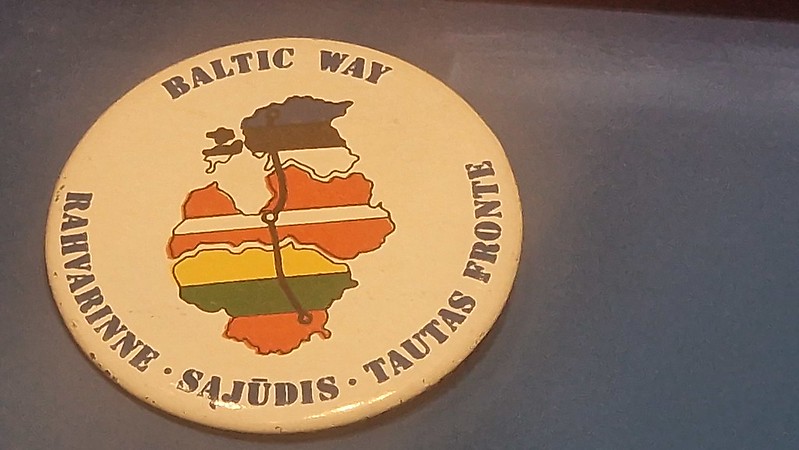
  • Tallinn Trip – Estonian History Museum (Baltic Way Badge)

    Tallinn Trip – Estonian History Museum (Baltic Way Badge)

    20241010_144144

    The Baltic Way, also known as the Baltic Chain, was a pivotal moment in the history of Estonia, Latvia, and Lithuania. On 23 August 23 1989, approximately two million people joined hands to form a human chain stretching 675 kilometres (419 miles) across the three Baltic states. This peaceful political demonstration marked the 50th anniversary of the Molotov-Ribbentrop Pact, a secret agreement between Nazi Germany and the Soviet Union that led to the occupation and annexation of the Baltic states. It’s worth remembering that the Soviets lied about this for decades, desperate to hide the truth from the people.

    The Baltic Way was a culmination of angry people who were fed up with the disaster that was the USSR and they wanted freedom for their nations. The demonstration was organised by the national movements of the three countries, Rahvarinne in Estonia, Tautas fronte in Latvia, and Sąjūdis in Lithuania. On 23 August 1989, two million people held hands in a remarkable show of solidarity. The chain stretched from Tallinn, the capital of Estonia, through Riga, the capital of Latvia, to Vilnius, the capital of Lithuania. The event was accompanied by the singing of national anthems and the ringing of church bells, with this badge being worn by one of the members of the crowd, although the museum doesn’t mention who the owner was.

    What did the Soviet Government do about the Baltic Way? Absolutely nothing other than panic a bit. Two of the most evil men in twentieth century politics, Nicolae Ceaușescu and Erich Honecker, actually offered troops to force the break-up of the human chain. Honecker was fortunate not to suffer the fate of Ceaușescu, both guilty of crimes against humanity. The event is commemorated annually in the Baltic states and is a reminder of how freedom was taken away from the people. The house of cards is always near to toppling over in dictatorships.
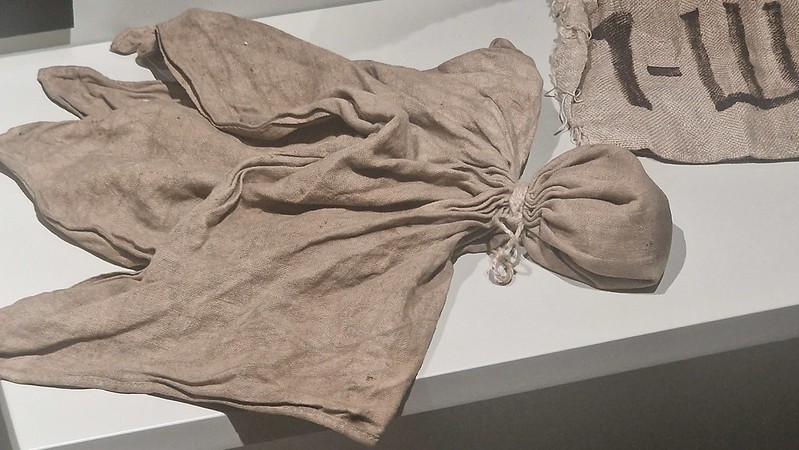
  • Tallinn Trip – Estonian History Museum (Enno Piir’s Soil from the Fatherland)

    Tallinn Trip – Estonian History Museum (Enno Piir’s Soil from the Fatherland)

    20241010_142822

    Enno Piir (1910-2006) went into hiding during the occupation regime as one of the Forest Brother resistance movement. This group really were heroes, I can only aspire to have been as brave as them. They hid in the forests and persisted in guerilla warfare against the Soviets between 1940 and 1941, then again from 1944 to 1978. Fearing persecution (and rightly fearing this, the Soviets were big on executions), he took a false name after the Second World War as the Soviets went on the hunt for the members of the resistance movement, arresting hundreds of them. He was found in 1952 in Viljandimaa and arrested, being sentenced to 25 years imprisonment and sent to a prison camp in Komi land where he would have been subjected to hard labour. In this bag is a symbolic pocketful of soil from Estonia and he wanted some put in his grave, as he was sure he would die and never make it back to his homeland. However, he survived the prison camp and return to Estonia in 1957, keeping this bag until he died in 2006. A brave patriot.

  • Tallinn Trip – Estonian History Museum (1942 Grave Marker)

    Tallinn Trip – Estonian History Museum (1942 Grave Marker)

    20241010_142706

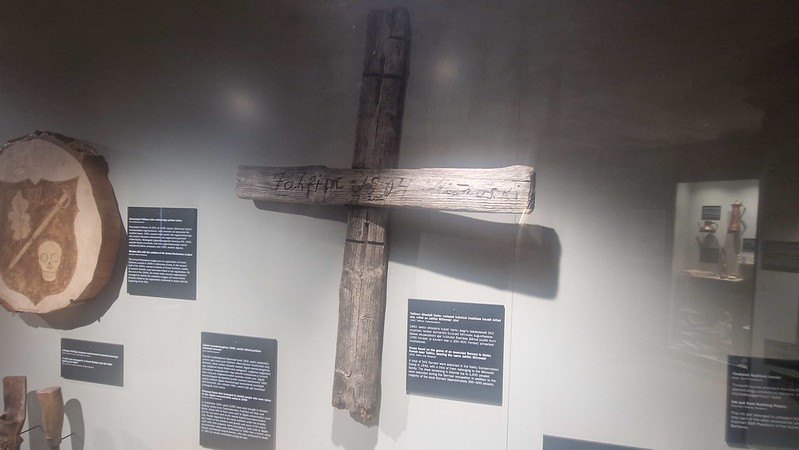
    This wooden cross was found by the grave of Jahfim Mitrovski, a member of a local Romani family, in Harku Forest near Tallinn. 243 Romani were executed in the Harku Concentration Camp in 1942, a third of them being members of the Mitrvoski family. The Romani population in Estonia hadn’t been large before the outbreak of the Second World War, around 1,000 people and they already faced discrimination and social marginalisation. Matters got much worse after the Germans occupied the country, member of the Romani population had to register with the authorities and were often sent to do forced labour. Given the relatively small population size, there was limited opportunity for resistance and it’s thought that over half of the community perished during the conflict. I can’t find out anything more about Jahfim Mitrovski, so perhaps all that remains is this grave marker displayed in the museum as a silent testimony to the suffering that the Romani people experienced.

  • Tallinn Trip – Estonian History Museum (1940 Street Sign)

    Tallinn Trip – Estonian History Museum (1940 Street Sign)

    20241010_142444

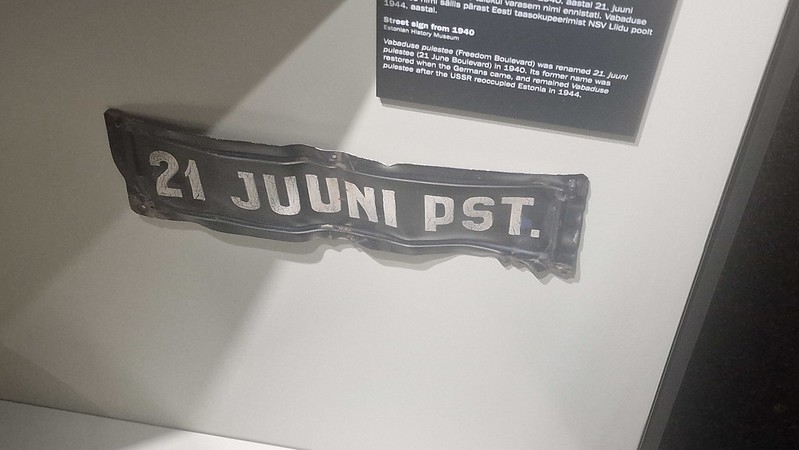
    This is another of those exhibits that I find fascinating, and I’m imagining someone at the museum does too given its on display, because of the period of history which this street sign represents. This street was originally known as Heina turg (Hay Market) and it was a bustling marketplace outside of the city walls. In the late nineteenth century it all became a bit more decadent with the construction of a grand boulevard with elegant buildings, somewhere fashionable for the elite of Tallinn to live. As it was near to the site of the 1905 Revolution, it was named Vabaduse puiestee (Freedom Boulevard) in 1918, but the Soviets renamed it 21 June Boulevard shortly after they invaded Estonia, in reference to the date they claimed the thrilled residents took part in a “worker’s demonstration” in Tallinn as they were so pleased they had been occupied. The Germans renamed it Victory Boulevard when they seized Estonia in 1941, but the Soviets restored the original name in 1944, not that they much believed in freedom. The street still bears the same name to this day and this sign is a reminder of the rather less than optimal time when the country was under occupation.

  • Tallinn Trip – Estonian History Museum (Old Estonian Flag)

    Tallinn Trip – Estonian History Museum (Old Estonian Flag)

    20241010_140703

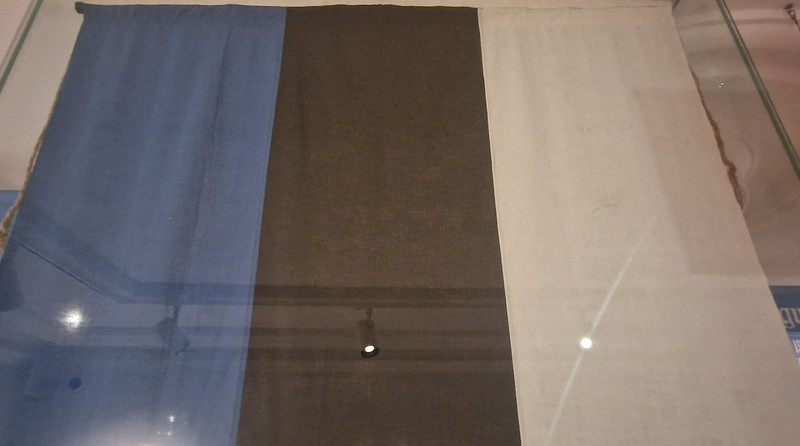
    The museum isn’t quite sure, but they think this might have been the flag that was flown at the proclamation of the Republic of Estonia in Pärnu on 23 February 1918. It was discovered in 1969 in the attic of a house where stage manager Aleksey Rodyonov lived and he was one of three men who helped a flag on the roof of the theatre when the Manifesto of Independence was read out from the balcony of the Endia Theatre in the city. The flag was hastily made and the museum notes that the age of the cloth gives reason to believe that it was the tricolour that flew at that important moment in Estonia’s history. The flag design is only from the late nineteenth century, but it had become the flag of the nation by the time it became independent. It serves as a tangible and interesting link to a pivotal event in Estonian history and symbolises the nation’s enduring pursuit of self-determination and freedom.

    There was a fire in the Endia Theatre in 1944 and it was never repaired, but its symbolic link to Estonian independence was important and so the Soviets blew it up in 1961. Today there is a monument in its place and the old balcony has been recreated and it’s possible that this flag was there at the time. There’s an image of the theatre at https://visitestonia.com/en/monument-to-declaring-the-independence-of-the-republic-of-estonia and so that’s another place I’ve decided that I want to go…..

  • Tallinn Trip – Estonian History Museum (Barbed Wire)

    Tallinn Trip – Estonian History Museum (Barbed Wire)

    20241010_141035

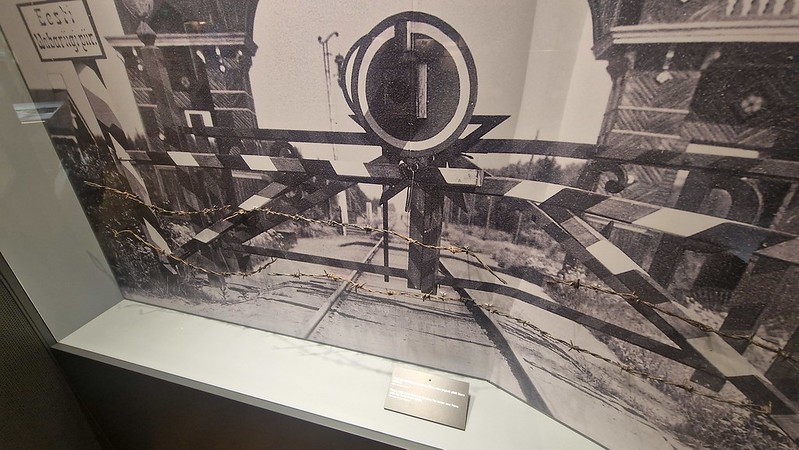
    This is the sort of random exhibit that I like in a museum, some old and slightly rusty barbed wire. Irrelevant in itself, but it at one stage marked the border between Russia and Estonia following the Treaty of Tartu. This was a good deal for Estonia, they got their independence and also a cash handout, whilst Russia were able to stop having to worry about the Estonian War of Independence which had been going on since 1918. The skilful deal was signed by Jaan Poska, who would have likely made an incredibly competent second hand car salesman, on behalf of Estonia and secured their independence until what transpired to be the Second World War. The barbed wire is from near the border with Narva, a crossing which has recently seen reduced access because of the whole Russian war thing. And it’s a reminder that sometimes rusty old things in museums have seen more drama than on a reality TV show.

    Anyway, apologies to my two loyal blog readers that I’m now writing about barbed wire and apologies that there isn’t much Bev, Steve, Ross or Susanna gossip here. Ross had pretty much completed the museum, Steve had nearly completed it, I was about 30% of the way in and Susanna and Bev were still reading about Estonia in the fourteenth century.

  • Tallinn Trip – Estonian History Museum (Bust of Jaan Poska)

    Tallinn Trip – Estonian History Museum (Bust of Jaan Poska)

    20241010_140410

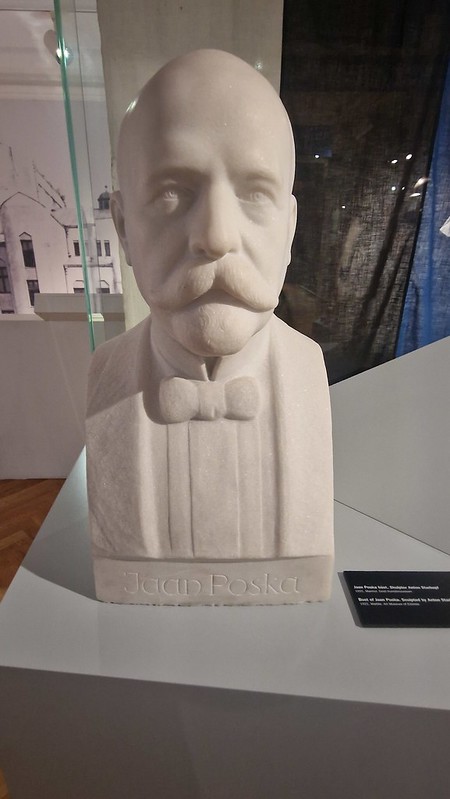
    Jaan Poska was something of an Estonian powerhouse, born in 1866 he was a lawyer turned politician. However, he negotiated with Bolsheviks, sort of charmed the Tsar, was a reforming Mayor and managed to carry off quite an impressive moustache. His mission was very much of putting Estonia on the map and not letting the country be the doormat of Russia, or indeed any other nation.

    After studying law, Poska became the first Estonian-speaking lawyer in Tallinn and quickly gained a reputation for being a competent legal expert. In 1913, Poska became the Mayor of Tallinn, and the city got a serious upgrade. He became the ultimate city planner, fixing healthcare, building schools and focusing on the well-being of the citizens. Then came 1917, and Russia went a bit bonkers with the whole revolution thing. But while everyone else was busy stockpiling vodka and building barricades, Poska saw an opportunity. He seized the moment and declared Estonia an autonomous region. OK, it was a bit more complex than that, but he was astute and knew what he wanted.

    In 1918, Estonia declared full-on independence and Russian considered this as sub-optimal. He managed though to secure peace with Russia at the Treaty of Tartu, when they realised that Estonian wasn’t coming back. I mean, actually it did after the Second World War when they were suppressed, but matters are more acceptable again now.

    Sadly, Poska’s story has a bittersweet ending. He died in 1920 at the young age of 54. Estonia had lost its champion, but his legacy as one of the fathers of Estonian independence remains intact. This bust of him was created the year after his death and was sculpted by Anton Starkopf (1889-1966).

  • Tallinn Trip – Estonian History Museum (Punishment Twigs)

    Tallinn Trip – Estonian History Museum (Punishment Twigs)

    20241010_135924

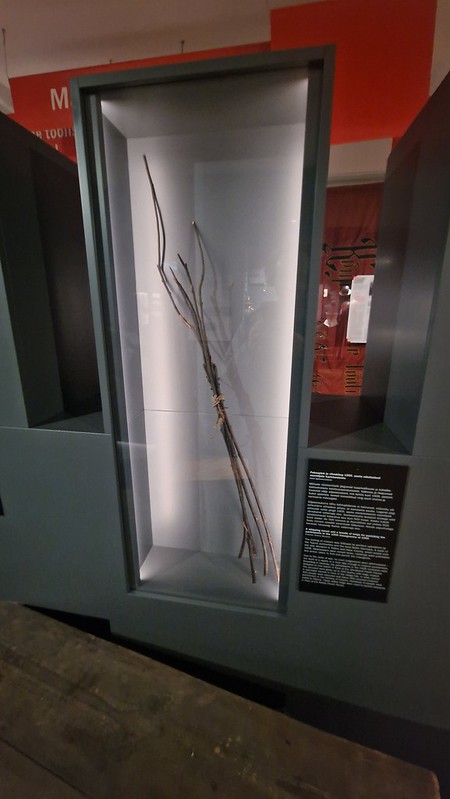
    I accept that “punishment twigs” sounds almost whimsical, like something out of a fairy tale where misbehaving children are playfully swatted with willow branches, but the reality was far from a fairy tale. The Russian authorities didn’t like the 1905 uprisings against them and although initially political parties were allowed, the Tsar soon ordered newspapers to be closed down, meetings prohibited and revenge punishments were meted out to those responsible. The introduction of martial law meant that the court process was suspended and that the word of a local landowner or vicar was enough to impose a punishment. Those accused on taking part in the uprisings were sentenced to 500 lashes of twigs which had been soaked in salt-water barrels, a punishment designed to maximise pain and almost literally add insult to injury.

    The twigs on display at the museum were used to punish wrong-doers in front of the Kohila Parish House. Kohila is in northern Estonia and in the uprising in the town, the manor house was badly damaged in the disputes. Fourteen of the rioters were sentenced to death by Russian troops and the Lord of the Manor was so shaken by the whole thing that he sold the site to a paper pulp factory. But whatever freedoms the Russians tried to limit, the resilience of the Estonian people fought them off and there’s a lesson for history….

  • Tallinn Trip – Estonian History Museum (1905 Memorial Cross)

    Tallinn Trip – Estonian History Museum (1905 Memorial Cross)

    I mentioned the 1905 uprising in Tallinn in my last post.

    20241010_135630

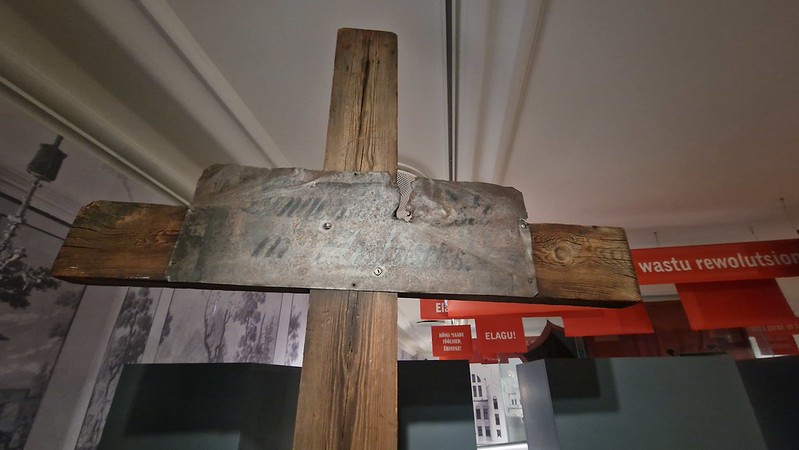
    This is the original wooden memorial cross that was erected in New Market (Vabaduse väljak) in Tallinn to commemorate those who died during the demonstrations.

    20241010_135648

    The museum didn’t say where this had been stored for over 100 years, I’m partly surprised that the Soviet overseers didn’t have it hidden away somewhere during their period of occupation after the Second World War. This is such a symbolic exhibit that it feels a little understated, a solemn reminder of the sacrifices made in the pursuit of Estonian independence.

  • Tallinn Trip – Estonian History Museum (At the New Market on 16 October 1905 by Aleksander Peek)

    Tallinn Trip – Estonian History Museum (At the New Market on 16 October 1905 by Aleksander Peek)

    Back to artworks, this one is in the Estonian History Museum.

    20241010_135712

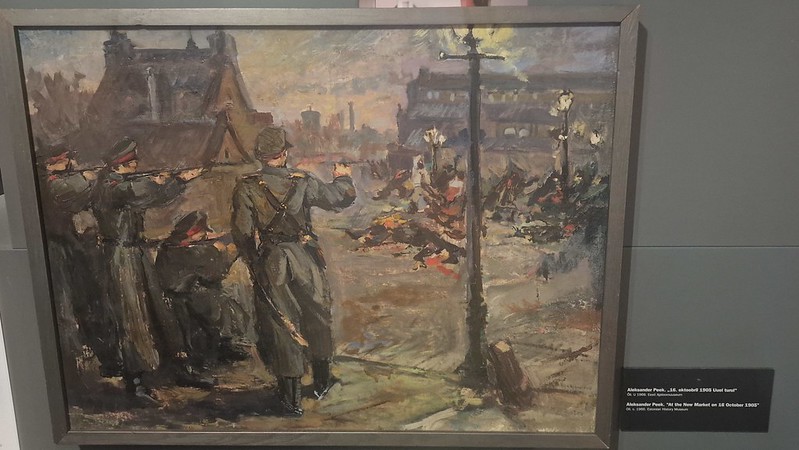
    Painted by Aleksander Peek in 1966, this painting depicts the events of 16 October 1905 (or what is now 29 October due to changes in the calendar) in Tallinn (then called Reval) when a general strike had spread due to widespread dissatisfaction with the authorities. The strike had become violent and a number of those not taking part had their houses looted and burnt by a mob, who then went to the Town Hall to demand political liberties and large amounts of cash. The Mayor, who didn’t have much choice here, gave them the money but couldn’t do much about the liberties that the mob demanded. Shops were plundered and the mob got drunk and then started singing revolutionary songs as anger against the Russians continued. This wasn’t unique to Estonia either, there were uprisings across the Russian Empire which was starting to crumble.

    The Governor said that political liberties might be given, but demanded that the mob break up. They refused and thousands of people went to New Market Square to demand revolution, but Russian army Captain Nikolai Mironov said that the troops would fire on them if they didn’t disperse. It’s hard not to feel sorry for the Russian army here on the ground, they tried what they could to get people to disperse as they didn’t much want to shoot anyone, much as the senior officers seemed unconcerned by the violence that was to follow. The crowds that had now reached 10,000 people didn’t disperse so the Russian army were ordered to fire on them, killing 94 and injuring over 200 more. Order was restored for that evening, but the long-term impact was more serious for the Russian Government. History is told by the victors and all that, because this moment has gone into history as one of the defining moments of Estonian independence and it led to Tsar Nicholas II introducing legislation to allow for political parties to form in Estonia. Every single party that was created effectively wanted the end to Russification and wanted national self-determination, but only weeks after political parties were allowed the people of Tallinn found themselves living under martial law.

    It’s a dark painting which is deliberately grim, the soldiers are given no humanity by having their backs shown, a terrifying moment. The lampposts light up those fleeing for their lives and dissolving into the surrounding chaos.  chapter in their history.