Category: Vienna

  • Vienna – Kunsthistorisches Museum (The Island in the Tiber by Gaspar Adriaensz van Wittel)

    Vienna – Kunsthistorisches Museum (The Island in the Tiber by Gaspar Adriaensz van Wittel)

    20250630_131143

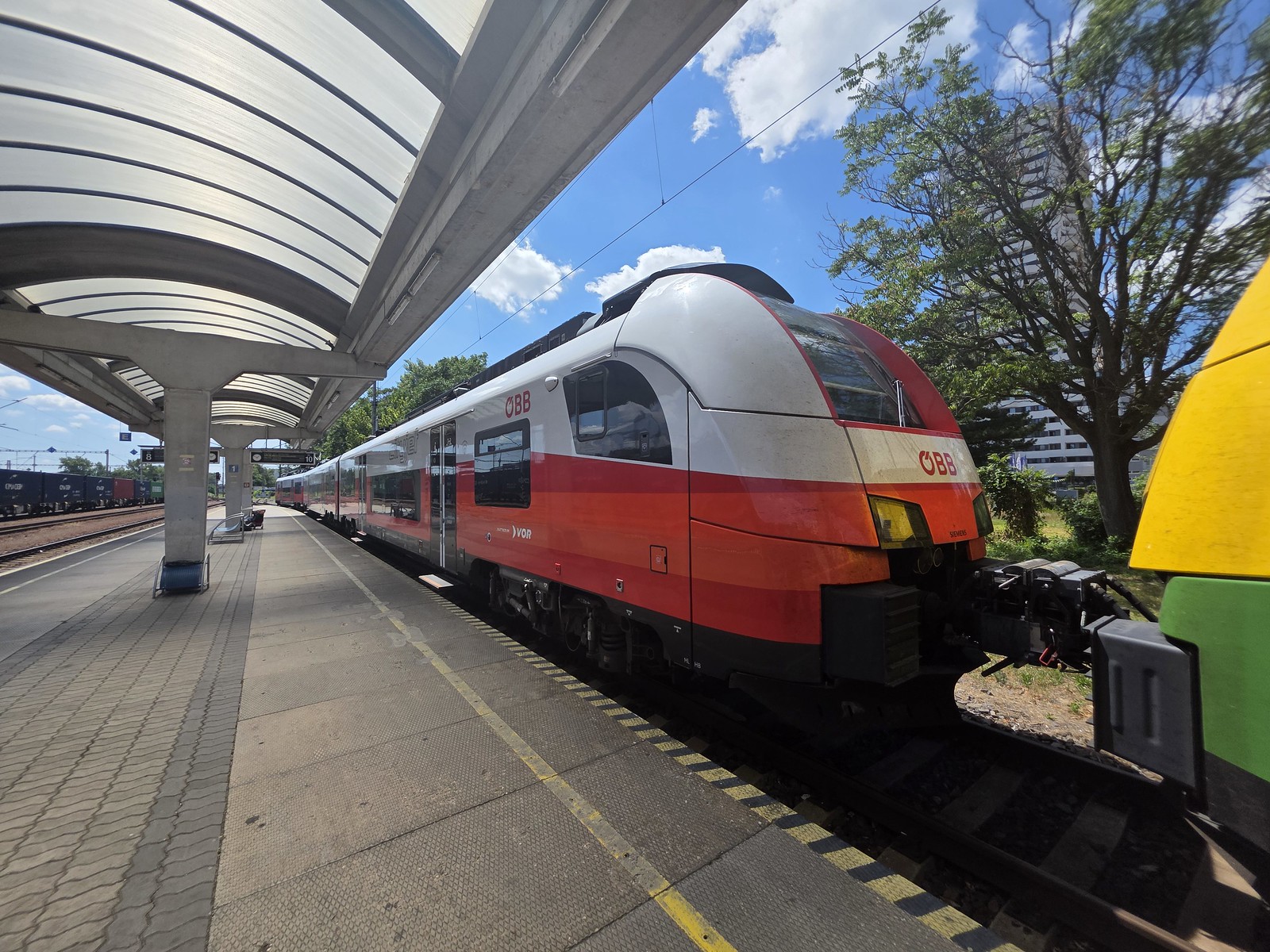
    This is the Island in the Tiber by Gaspar Adriaensz van Wittel (1647-1736) and there’s a romanticised serenity that might make someone forget the Tiber was, in reality, a rather murky and unpredictable river. Adriaensz has gone full atmospheric here with soft golden light, a gentle sky, calm waters and not a whiff of disease, sewage, or the occasional Roman mischief that the island would have actually witnessed. It’s a cityscape where everything behaves itself, the domes stand proud in the distance, the bridges look sturdy, and the locals potter about at the water’s edge like they’ve got all the time in the world. But there’s meant to be, and indeed is, some element of realism here as this is a veduta, or cityscape, and the artist was one of the first to paint in this style, no doubt inspiring later painters such as Canaletto. One of the biggest collectors of van Wittel’s works was Thomas Coke or Holkham Hall in Norfolk and there are still five of the paintings at the hall.

    20250630_131147

    Assuming that my friend would come and organise this, would I have it on my wall? Definitely and not just because it’s likely worth quite a lot. It’s the perfect illusion as it’s Rome without the traffic, the chaos or the occasional whiff of the Tiber on a hot day. It’s really rather lovely, and a nice reminder that even in the seventeenth century, artists were basically curating the Instagram version of life.

  • Vienna – Kunsthistorisches Museum (The Lute Player Painted by Bernardo Strozzi)

    Vienna – Kunsthistorisches Museum (The Lute Player Painted by Bernardo Strozzi)

    20250630_131217

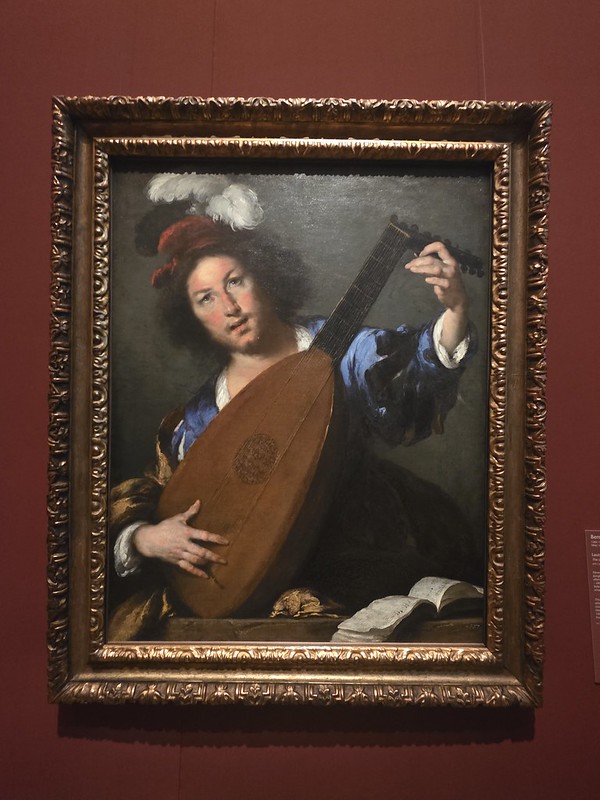
    This is the Lute Player by Bernardo Cavallino (1616-1656), a seventeenth-century Neapolitan painter who clearly knew how to dramatise a jam session. There’s a musical score casually splayed on the table, perhaps an indication that the lute player has composed a little something earlier in the day given that’s rather obviously the star of the show in this painting. The gallery notes that this is a “genre picture that is characterised by incidents observed from real life in a seemingly spontaneous manner” rather than a more formal painting. The whole thing is slightly moody, theatrical and ever so slightly over the top, a rather different style of artwork from the staid character portraits that are littered about the gallery.

  • Vienna – Kunsthistorisches Museum (Doge Francesco Erizzo Painted by Bernardo Strozzi)

    Vienna – Kunsthistorisches Museum (Doge Francesco Erizzo Painted by Bernardo Strozzi)

    20250630_131229

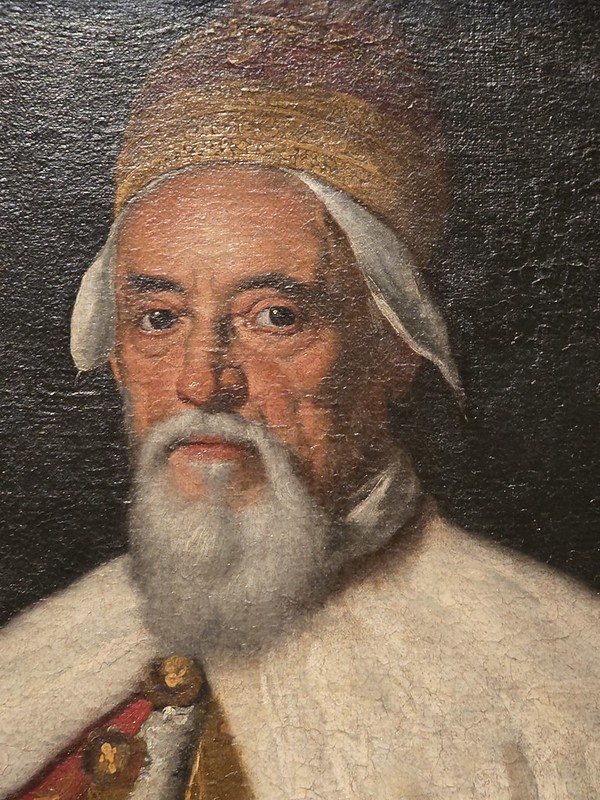
    This is a rather splendid portrait of Doge Francesco Erizzo, painted by Bernardo Strozzi in around 1640, and now residing quite contentedly at the Kunsthistorisches Museum. Strozzi, who had been active in both Genoa and Venice, had a knack for his rendering of velvet and fur with some precision, although it’s all a bit decadent for me. I can imagine my friend Richard rushing to have his painting done whilst wearing this sort of outfit though. Erizzo himself, looking every inch the dignified head of the Venetian Republic, is clad in his state robes and a corno ducale which is a ceremonial hat. The gallery notes that they acquired this artwork from the Palazzo Ducale in 1824, but that’s when Venice was under Austrian control (as it was between 1815 and 1866) and so I don’t imagine that the palace authorities had much choice.

    20250630_131231

    Francesco Erizzo was elected Doge in 1631 and held the post until his death in 1646, a period during which Venice managed to maintain its precarious independence while trying not to get completely outmanoeuvred by the likes of the Ottomans, the Habsburgs and other assorted ambitious neighbours. Erizzo was known for being relatively pious and uncontroversial, which in Venetian political terms means he mostly avoided being poisoned, stabbed or dramatically exiled. He did though in 1645, a year before his death, start a war with the Ottomans, although that was something which was something of a running issue over the centuries.

  • Vienna – Kunsthistorisches Museum (Head of a Child from 1589)

    Vienna – Kunsthistorisches Museum (Head of a Child from 1589)

    20250630_141831

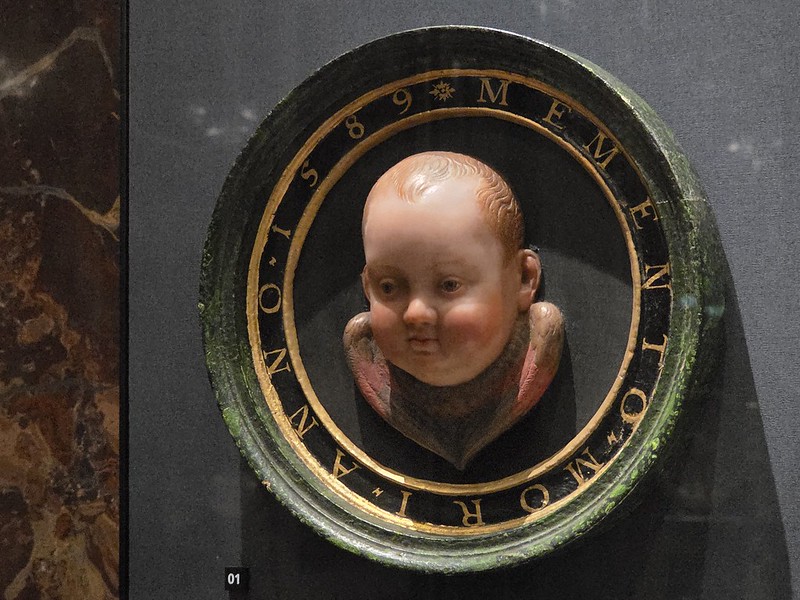
    This is of a similar age to the head of a sleeping child which is displayed next to it. Once again, it’s a wax and wooden model of a baby’s head and the ‘Memento Mori’ reminds us of our mortal fate. It’s Austrian, it’s unsettling and I’m not sure why anyone would want to own this, I’d feel I was being stared down by a Renaissance toddler that could somehow see into my soul.

    It’s all part of the trend at this time in early modern Europe to be reminded about death and life ending soon, there was an element of cheerful little skulls, skeletons dancing about the place and then this small child’s head to ensure there’s some existential dread to the whole arrangement. It was probably located in a private devotional space and, to be fair, there’s something quite admirable about this period’s attempt to make death part of the conversation, a sentiment we could perhaps learn from today, even if we choose to express it with slightly fewer haunted wax babies.

  • Vienna – Kunsthistorisches Museum (Head of a Sleeping Child from 1589)

    Vienna – Kunsthistorisches Museum (Head of a Sleeping Child from 1589)

    20250630_141835

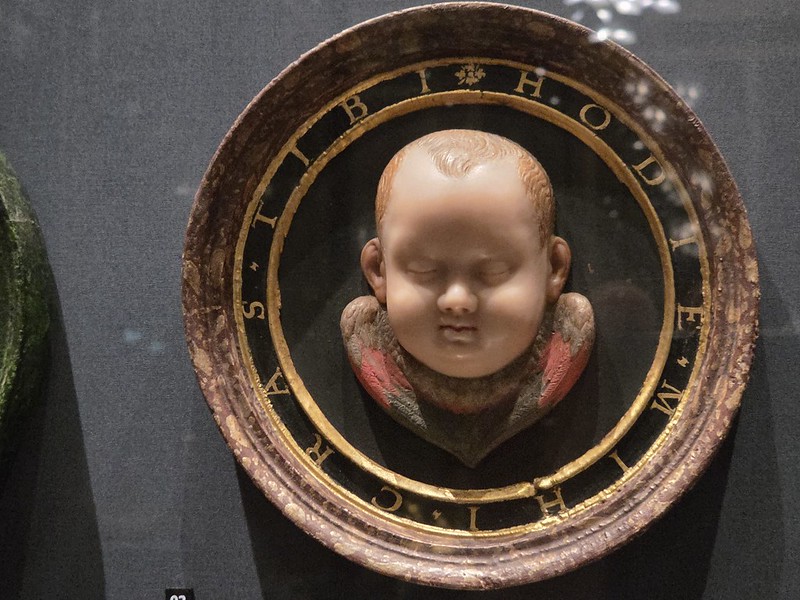
    This is a sixteenth century wax head of a sleeping child, mounted like a holy relic in a carved wooden tondo. I’m really more showing off there that I have learned a tondo is a circular work of art…. This is another piece of Habsburg-era oddness, a 1589 Austrian creation and I more wonder whether this child is at rest or quietly plotting something. Made of wax and wood, this disembodied cherub seems to me to be more of a masterpiece of serene discomfort. The inscription around the frame, “Hodie mihi, cras tibi”, translates loosely as “Today me, tomorrow you” which is not exactly comforting, especially when delivered via a child’s severed (albeit sleeping) head. It was likely designed as a memento mori, a not-so-subtle reminder of the fleeting nature of life, which I’m not sure people living at this time needed additional reminders of. The museum notes that these are fragile and rarely survive, although I suspect someone shoved it in a cupboard as I think it’s more unsettling than beautiful. But each to their own…..

  • Vienna – Kunsthistorisches Museum (Stirrup Cup from c.1580)

    Vienna – Kunsthistorisches Museum (Stirrup Cup from c.1580)

    20250630_141800

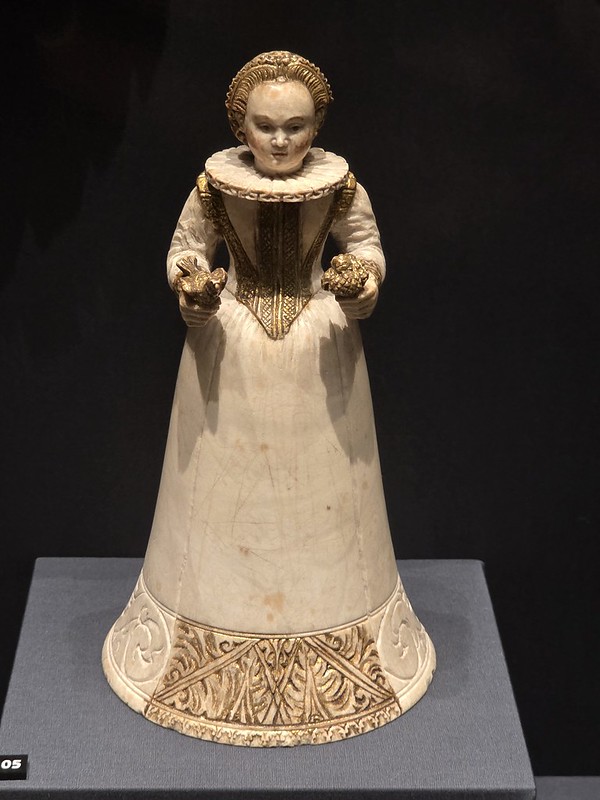
    A stirrup cup, for those unfamiliar with such decadent pre-departure rituals (to be fair, I had to Google it), was a parting drink offered to guests as they mounted their horses, one foot in the stirrup and the other edging towards a long and bumpy journey. It was meant to be fortifying, a little swig of something boozy (I doubt craft beer, but you never know) before you trotted off into the mud and misery of early modern travel. Most surviving stirrup cups take the form of animal heads such as foxes, hounds and stags, all very hunting-lodge chic. But every so often, someone went for something a touch more eccentric, and that brings me to this rather stern-looking Tyrolean lady. The museum say it’s a girl, which is possible, but I prefer the idea that it’s a grumpy middle aged woman. I’m really not sure that I would want to be given this, but perhaps that’s ungrateful.

    Dating from around 1580 and carved with exquisite skill, she was almost certainly never meant to be exactly cuddly. Made of alabaster and gilded for effect, she looks like she’s about to lecture the owner on their choice of footwear or inform them that they’ve scandalously forgotten their gloves. I imagine that it was somewhat unnerving to drink from her, which might explain why guests were encouraged to down the contents quickly before she could judge them further. If I ever get a horse, which is unlikely if I’m being honest, I might get myself a stirrup cup, but not one looking like this….

  • Vienna – Kunsthistorisches Museum (Holy Roman Emperor Sigismund of Luxembourg)

    Vienna – Kunsthistorisches Museum (Holy Roman Emperor Sigismund of Luxembourg)

    20250630_142542

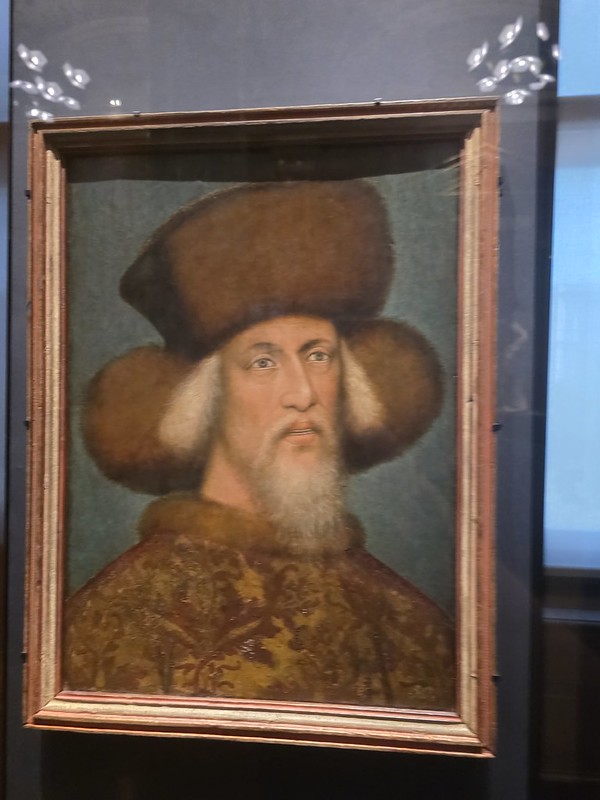
    This is a portrait of Holy Roman Emperor Sigismund of Luxembourg and although the artist is unknown, I suspect that whoever it was had quite a lot of fun with the fur millinery. Let’s face it, there are hats, and then there is this hat which is a magnificent, if slightly ridiculous, statement piece. I like that the museum makes an effort to show the provenance of their artworks, which is also useful given they’ve inevitably got issues trying to resolve Nazi thefts, but this has been located in the gallery since at least 1772.

    Sigismund (1368–1437) had one of those lengthy, overly complicated careers as he was King of Hungary, King of the Romans, King of Bohemia and finally Holy Roman Emperor. He’s perhaps best remembered for his role in organising the Council of Constance (1414–1418), which resolved the Western Schism by convincing three rival Popes to step down so a new one could be elected, which seems like the ecclesiastical equivalent of herding cats through treacle.

  • Vienna – Kunsthistorisches Museum (Painting of Maximilian I, Holy Roman Emperor)

    Vienna – Kunsthistorisches Museum (Painting of Maximilian I, Holy Roman Emperor)

    20250630_142250

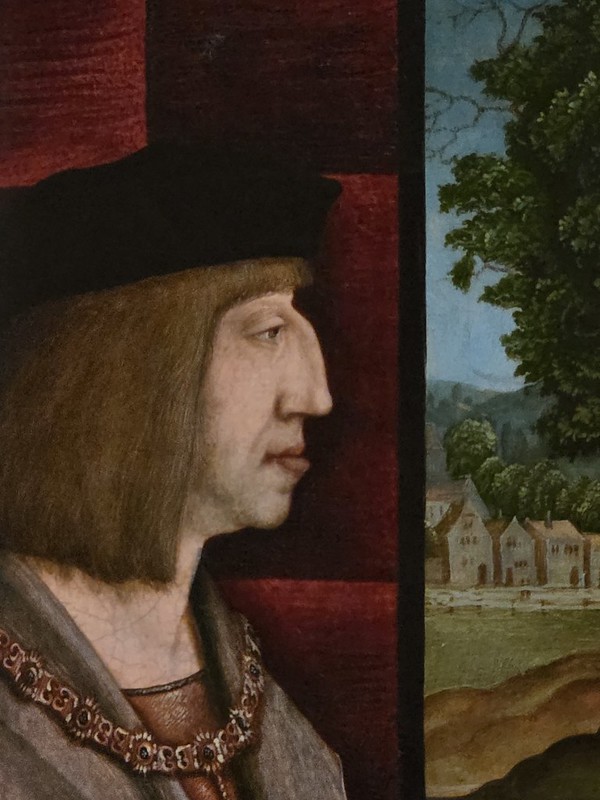
    This formidable profile belongs to Maximilian I, Holy Roman Emperor, as depicted in a late sixteenth-century copy after Bernhard Strigel. It now lives in the ever-rewarding Kunsthistorisches Museum in Vienna, where the galleries are so stuffed with imperial grandeur that this little gem is easy to overlook. Although my two loyal blog readers will be surprised and delighted to discover that I took several hundred photos in this museum, so there will be plenty more of this riveting series about the artworks that they hold.

    20250630_142254

    Strigel’s original work dates to the early 1500s, but this later copy, which was made by an unknown artist with a steady hand and a healthy respect for the Habsburg nose, carries on the visual tradition of showing Maximilian in all his stately glory. It’s got everything, the velvet backdrop, the finely detailed clothing, the meditative stare into the middle distance, and of course, that profile.

    Now, it would be terribly unfair to criticise a man’s face 500 years after the fact, but even his contemporaries might have quietly agreed that Maximilian’s features were distinctive. But this portrait doesn’t try to soften anything and nor should it. It’s an honest portrayal of dynastic power and in an age before soft-focus filters and PR advisers, that sort of thing was all the rage. He’s not smiling, of course, Habsburgs rarely did, but he had a lot to think about, perhaps he’s just remembered the size of his empire and the fact that half of it was currently at war. There’s a charming little manor in the background, complete with gables and a decent bit of shrubbery. Whether this was symbolic of imperial reach or just the painter filling in the space with some pleasant countryside I have no idea, but I like the idea of him (and it was probably a male) doing the latter.

    Maximilian I, Holy Roman Emperor from 1508 until his death in 1519, was born in 1459 the son of Frederick III and Eleanor of Portugal, and to be frank, he didn’t waste much time on hobbies when there were marriages to arrange and bits of Europe to hoover up. His marriage to Mary of Burgundy in 1477 gave him a claim to the vast Burgundian lands, and he spent a good part of his life either defending them, diplomatically squinting at maps, or enthusiastically marrying off his descendants to unsuspecting European royalty. The man essentially arguably invented Habsburg real estate strategy which was don’t fight too many wars, just marry aggressively and wait. While he never made it to Rome to be crowned by the Pope, largely because the Papal calendar was apparently a bit sub-optimal when it came to welcoming awkwardly ambitious emperors, he went ahead and started calling himself Elected Roman Emperor anyway. Fair play. Maximilian was a reformer in a rather haphazard way, dabbling in early postal systems, legal centralisation and he was a cultured guy.

    Anyway, I have digressed a little, but this is certainly a memorable painting…..

  • Vienna – Beaver Brewing

    Vienna – Beaver Brewing

    20250629_151932

    I wouldn’t say that it’s easy to get craft beer in Vienna, but it is out there and hopefully it will grow in availability in future years. This is Beaver Brewing’s taproom, which was highly reviewed on-line, and it’s not too far from the city centre.

    20250629_135128

    It was hot outside and that’s where most people were sitting whilst embracing the sun, but I wanted to sit inside in the cold and near a fan with all of its rotating excitement. There was a friendly welcome from the team member behind the bar and this felt like my sort of venue. I had just eaten at another bar, but the American food options looked tempting and interesting.

    20250629_135123

    They had nine beers available and I asked if they did flights. I was surprised and delighted that they not only did flights, but I could have one with all nine beers. This saves me choosing (I don’t need all that sort of stress in my life), I thought that this was a good idea and it cost around £10 for the flight which I thought was very reasonable.

    20250629_135244

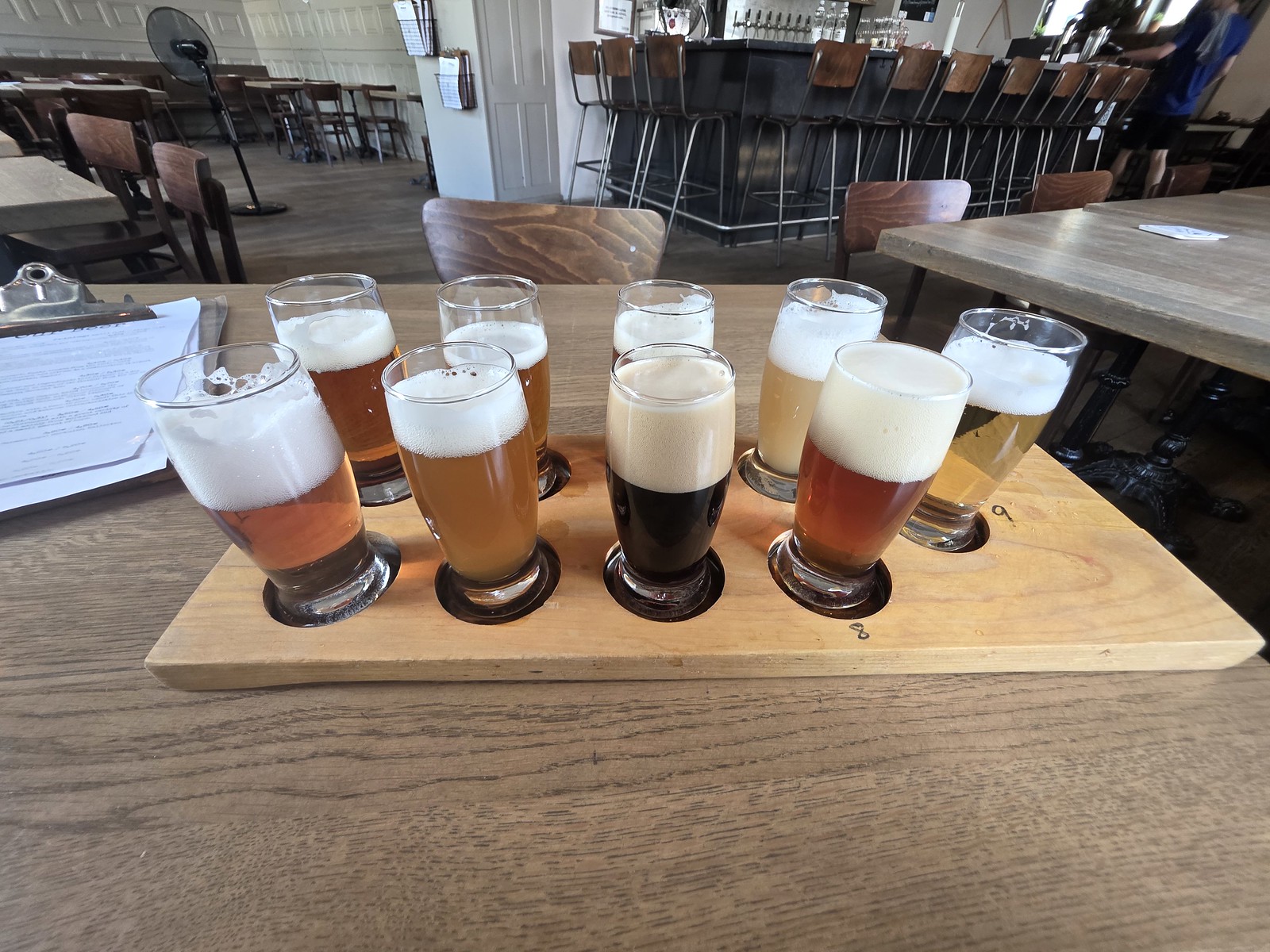
    And here we are, all of these are from Beaver Brewing Company. The numbering is 1 to 9 with 1 to 4 on the back row, 5 to 8 on the front row and then number 9 on the far right.

    (i) Happy Trails – this didn’t taste its ABV, it was light, hoppy with a touch of citrus and maybe some tree sap.

    (ii) Sunny Day – a rounded hop flavour, light, clean and smooth.

    (iii) Globetrottin’ – I’m not sure that I’ve actually had a proper Vienna lager before, I try and avoid anything lager related, but this is an innovative spin on this beer style using some global hops. Slight toffee, malt and sweetness to it, but my lager friends such as Ross would probably hate it.

    (iv) Bharbara – for just 3.2% this is very good, with a suitable level of sourness and tartness, lots of rhubarb and refreshing.

    (v) Forbidden Pils – the forbidden here refers to the use of rice, it’s sweet and I’d rather more pils used this as an ingredient.

    (vi) Pomona NEIPA – there’s strawberry punching through here with the beer being creamy, fluffy, fruity and very smooth. A rather lovely NEIPA.

    (vii) Fireside – malty, roasty, liquorice. Delightful even though it was a very hot day (I might have mentioned that it was too hot in Vienna).

    (viii) Witches Brew – I was surprised that this had a low Untappd score, it’s herbal, floral and admittedly tastes of pot pourri, but innovation is of the key… This harks back to the historic of brewing before hops and I rather liked the innovation going on here.

    (ix) Big Lake Lager – clean, crisp and inoffensive.

    I very much liked this bar, I had a rather lovely 90 minutes or so here. The welcome was friendly, the surroundings were clean and informal, with an excellent beer selection. The standard of their craft beers was towards the higher end of the scale, with some real innovation and experimentation going on here.

  • Bratislava to Vienna – Rail Journey

    Bratislava to Vienna – Rail Journey

    20250628_134022

    The journey between Bratislava and Vienna is relatively easy, it’s a train that runs every hour which doesn’t require a prior reservation and there’s only one class of ticket available. There are delays at the moment electrifying the line in central Bratislava, so that meant that I had to take the REX6 train from Bratislava Petrzalka station.

    20250628_134105

    The whole thing did seem a little dated and as if it was last restored in the 1980s, but it was clean and the signage was clear. I purchased a single ticket from the ticket office and managed to somehow get a return ticket (maybe they just wanted me back), but that has worked out well. They could ideally use some ticket machines though to smooth this element out.

    20250628_134403

    Mine was the 15:16 train.

    20250628_134132

    My train was departing from Platform 1 and I realised that it arrived early, so I thought I’d go and have a look at it.

    20250628_134847

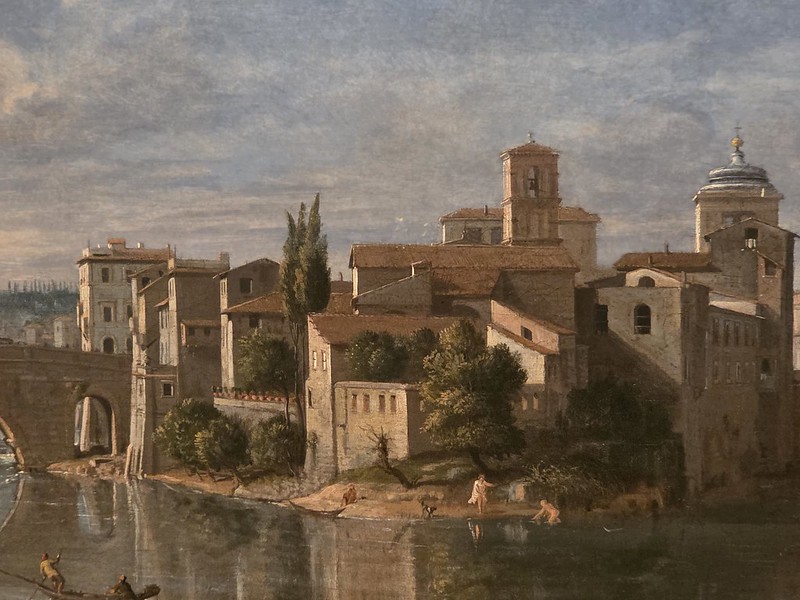
    In a typical European compromise, half the train is Slovakian and the other half in Austrian. This is the Slovakian bit.

    20250628_134947

    And here’s the Austrian bit.

    20250628_135017

    The Austrian half had no tables, no power points and no air conditioning. It was also noticeably dirtier than the Slovakian half, but that must have been bad luck as I can’t imagine they have different cleaning teams (or maybe they do….).

    20250628_135327

    Which meant that I went to sit in the Slovakian half. There’s nothing decadent about either half of the train, neither have First class and neither have catering.

    20250628_135523

    I’m not convinced that this is the best place to put the power outlet, but there we go.

    20250628_152402

    Safely into Vienna’s main station on time. It was a smooth journey, costing just under £10 and taking just over an hour. There are no ticket barriers, but my ticket was checked en route and the staff member seemed friendly and personable, with the whole arrangement feeling organised with announcements in Slovakian, German and English. Crossing borders has never been so easy…..