Blog

  • Bawdeswell – All Saints’ Church (Destruction During the Second World War)

    Bawdeswell – All Saints’ Church (Destruction During the Second World War)

    20250511_143623

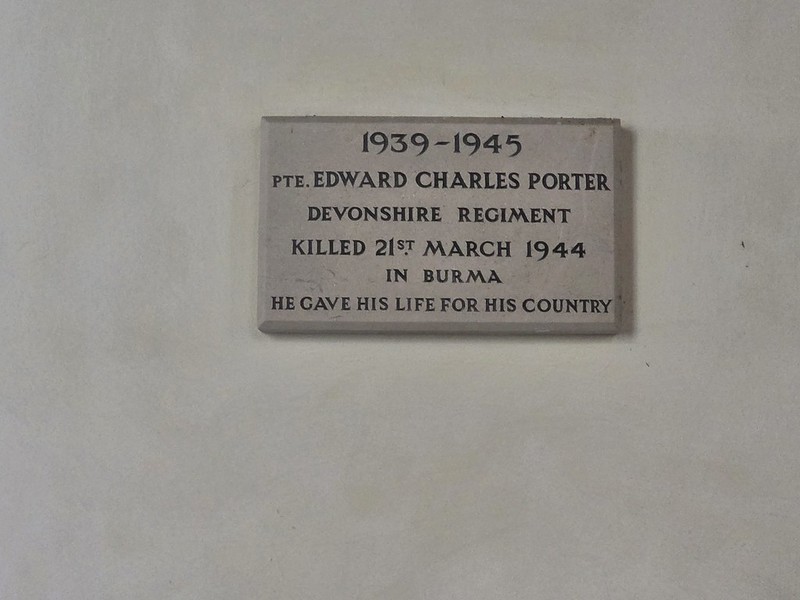
    On 6 November 1944, an aircraft accidentally crashed into All Saint’s Church in Bawdeswell and effectively destroyed it. Two British pilots, James McLean and Melvin Tansley, lost their lives in the tragedy.

    20250511_143641

    Part of the aircraft has been kept as a reminder of the tragedy.

    20250511_143355

    There’s a photo in the church of the damage done to the building that night. Two houses were also badly damaged during the incident, which caused a large fire in all three buildings. The church was rebuilt to a different design after the end of the war.

  • Bawdeswell – All Saints’ Church (Grave of Edward Peterson from 1733)

    Bawdeswell – All Saints’ Church (Grave of Edward Peterson from 1733)

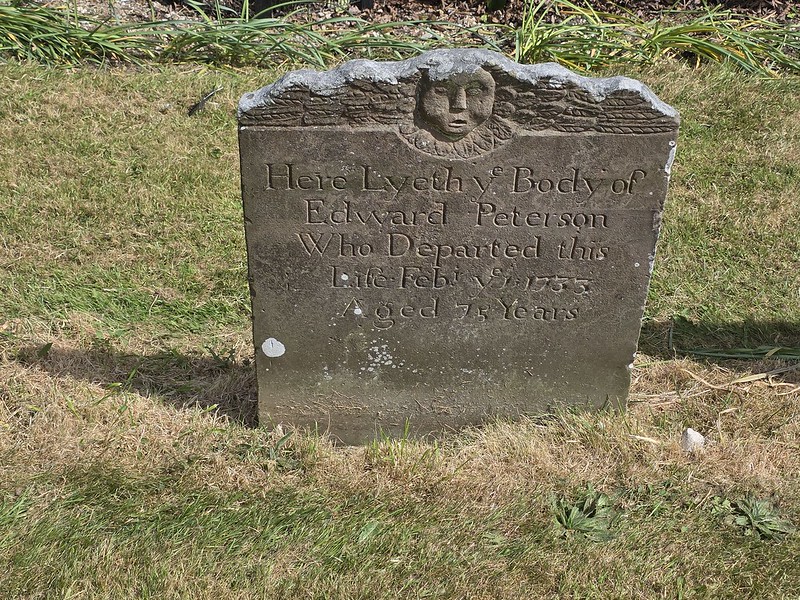
    20250511_143957

    I am completely puzzled by this and although my being confused isn’t rare, I can’t really understand what has happened here. There is the oldest grave that I can recall seeing in a Norfolk churchyard and it commemorates the life of Edward Peterson who died in 1733. All Saints’ Church has an odd history as it effectively fell down in 1739 and was rebuilt, before a plane crashed into it during the Second World War and it was entirely rebuilt once again (and not to mention the Victorian rebuilding). This gravestone shouldn’t really have survived for so long, so it seems likely that there are some special circumstances that apply here. I’ve sent Google Gemini on a long mission to find a solution, but it has come back without any documented evidence, just its best guess.

    The gravestones were moved in the late Victorian period, so I can only assume that the gravestone had been in a protected area until then. Perhaps it moved position during that time to tidy the churchyard up and it has just been made from a sturdy limestone that has protected it, but it has also certainly been moved since the plane crash in 1944 which destroyed the church so it’s likely been in a few locations over the centuries. But, it’s relatively rare to find gravestones from the eighteenth century, let alone one so early on in the century. However, Google Gemini has tried to consider all possibilities, even mentioning:

    “The general environmental conditions of Bawdeswell, situated in East Anglia, involve a temperate maritime climate with moderate rainfall and seasonal temperature variations that include regular frosts in winter. This provides the overarching weathering regime. Historically, as a rural village, Bawdeswell would likely have experienced lower levels of atmospheric pollution compared to industrial urban centres during the 18th, 19th, and early 20th centuries.”

    And it suggested a very real possibility that:

    “Burial, particularly in well-drained soil, can offer significant protection from atmospheric weathering agents such as acid rain, freeze-thaw cycles, direct solar radiation and the colonisation of surface-dwelling organisms. If the Petersen stone was subsequently uncovered and re-erected during one of the churchyard clearings or the formal re-laying of memorials 11, it would likely have emerged in a considerably better state of preservation than if it had remained continuously exposed for the entirety of its existence. This period of unintentional interment could be a crucial, albeit undocumented, factor in its current condition.”

    Or, maybe, the gravestone was even inside for a period, although this feels unlikely. A little of Edward life is known, he was born in 1658, the son of William Peterson and Margaret Peterson, and he was baptised at Hackford with Whitwell Church on 9 April 1658. He died on 11 February 1732, but the year discrepancy on his gravestone is likely because the burial is so early it dates back to a period when the year end was late March and not December. Anyway, I suspect that his gravestone was made of high quality limestone, it’s been protected in some form and it has been fortunate to have been placed in well drained areas. But it intrigued me by being quite so old….

  • Great Bealings – St. Mary’s Church

    Great Bealings – St. Mary’s Church

    20250504_174421

    St. Mary’s Church in Great Bealings was mentioned in the 1086 Domesday Book, with reference made to Anund, the first priest, but there’s evidence that there might have been a pagan burial site here before that. I’m a little confused about the age of the church, the listed record dates it to the sixteenth century with substantial alterations in the nineteenth century, but parts of the nave seem older than that to me. But, I’m not a church historian, so there we go….

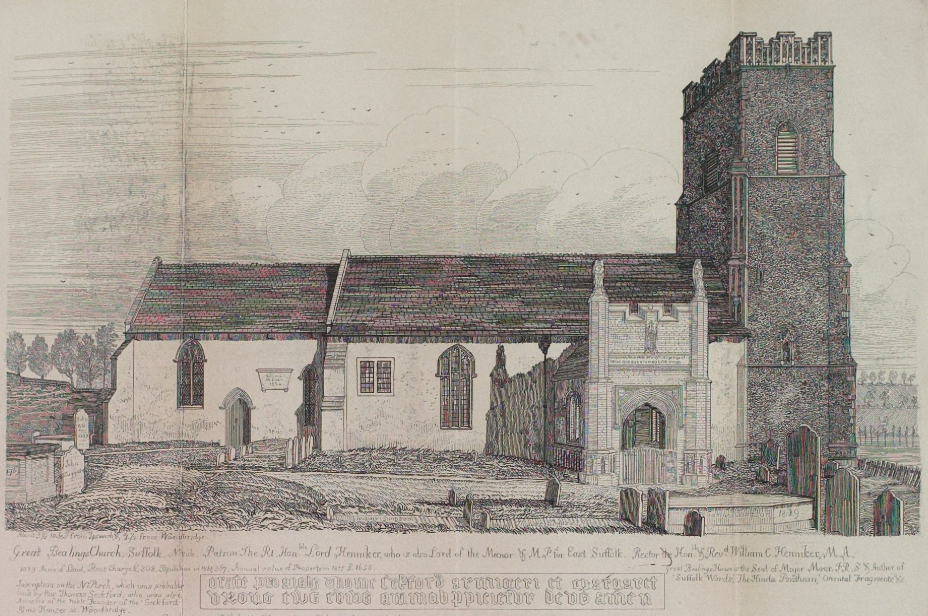
    The church in the early 1840s, before the Victorians faffed around with it. Comparing it with my photo above, it’s an excellent way of seeing just how much of this church was rebuilt in the subsequent renovations and the Victorian obsession with fiddling with these historic buildings.

    20250504_175355

    From the other side of the building, the tower of the church is later, likely from around the 1450s, although this date again isn’t tying into the listed building record. When we parked, which took Richard some time although I obviously didn’t comment, we parked on Lower Street where it meets Boot Street.

    This felt an odd piece of land and it transpires (and is evident from the above map) that this is where the Manor House was located until it was demolished in 1775 and relocated nearby.

    20250504_174510

    This is mentioned to be an original Tudor wooden door and portal into the nave, although it’s in notably decent condition.

    20250504_174541

    The interior is bright with the large windows and gives something of a Georgian vibe at first look.

    20250504_174550

    Bench end carvings and that black and white floor dates from the late eighteenth century when it was relaid in the Georgian period.

    20250504_174606

    The pulpit is Jacobean, from the early seventeenth century and is made from oak, although it was faffed about with the in the Victorian period to add more decoration.

    20250504_174626

    The Seckford Memorial was erected in 1583 to commemorate the life of Thomas Seckford, who died in 1575. It’s notable that there are no effigies, although since they’d only recently gone through the Reformation when a lot of them had been destroyed, perhaps they thought that was wise.

    20250504_175113

    The Seckford Porch, made from brick and added here in the 1520s, which was really when the church was arguably at its greatest power and influence following the reconstruction and patronage.

    20250504_174743

    This is the Clench Monument, which was erected in 1628 for John Clench and his wife, a notable piece of Jacobean art. There was an attempt to depict the Puritan piety and the emphasis on religious commitment.

    20250504_174658

    The chancel which has a strong nineteenth century feel to it.

    20250504_174759

    The stained glass windows are mostly from the Victorian refurbishment.

    20250504_174816

    Looking back down the nave, designed in the early English Gothic style.

    20250504_175018

    I’ve already written about the church’s font (which is one of the earliest items still in the church as it dates from the thirteenth century), the link with the Mayflower Pilgrims and the grave of John Julian Ganzoni.

    20250504_175657

    The village war memorial in the churchyard and I’ve also written separately about the only casualty from the village in the Second World War, Edward Charles Porter.

  • Norwich – Compleat Angler [Old Receipt]

    Norwich – Compleat Angler [Old Receipt]

    Why is this old receipt here?

    Firstly, that Stella wouldn’t have been for me…. And it reminds me of just how over-priced the pub was back then, that’s still quite a punchy price for a Pepsi even today.

  • Old Receipts and Images – What’s This Rubbish?

    Old Receipts and Images – What’s This Rubbish?

    There might be (well, there will be) quite a lot of posts of random receipts and old images appearing on this blog over the next few weeks. The back story is that I’m deleting a large tranche of Evernote data and I can’t bear digital things to be lost and I also like looking back on prices for over a decade ago. Now, I accept this isn’t exactly riveting blog content, but since it’s my blog and I’m the one stuck with this entertaining use of uploading time, it’s going to happen anyway. But in case anyone wonders what is happening, that’s the reason….

  • Food from Every Stall on Norwich Market (2025 Edition) – Week 11 and Go Crepes

    Food from Every Stall on Norwich Market (2025 Edition) – Week 11 and Go Crepes

    20250508_131933

    This week’s visit on our quest to eat at every food venue at Norwich Market was Go Crepes, which we visited when we did all this before in 2023. I must admit that I briefly forgot that we had done it before when the number was randomly drawn to come here, but it was last visit that we did and so perhaps my memory was clouded with sadness that it was all over…. I have to add here that every lunchtime is getting more ridiculous as it’s now turning into a “how many times will someone say hello to James?” as we walk around the city, it’s usually about five different people. This having lunch with a social supernova is getting quite exhausting.

    20250508_131501

    The menu board, which is now a price free enigma, but the increases have been moderate over the last two years and seem to be around 50p for each crepe.

    20250508_131623

    In addition to the sweet and savoury crepe options, there are some pasta options as well which I think might be a relatively new addition and James was tempted to go for one of these, but the pricing was a little punchy. The service here was friendly and immediate, with the stall taking both card and cash payments. There wasn’t the engagement that I remember from the stall holder a couple of years ago, but it was still welcoming and everyone was served in turn.

    20250508_131644

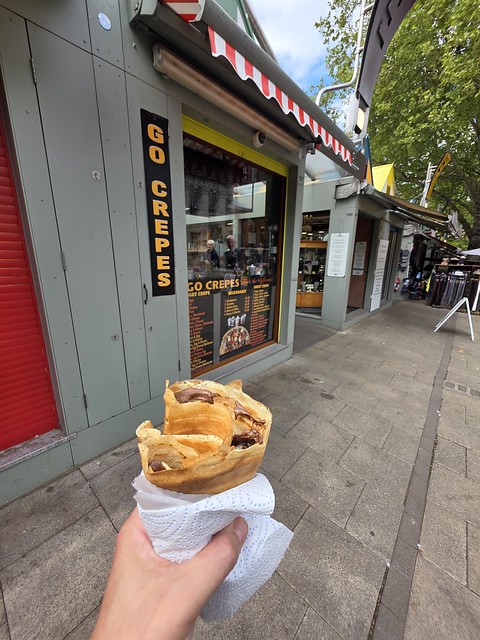
    There’s my crepe cooking and I must admit that I’ve broken my intention of always having something different. I went for banana, Nutella and coconut, forgetting that’s what I had before. It came to £5.50, which is an increase of 50p. There was an entire banana included, along with a generous amount of Nutella and coconut flakes.

    20250508_131930

    And there we go. This isn’t my sort of go to food for lunch, but it was warm, generously filled and it had a depth of flavour. I thought that it represented decent value for money, it was quick and a handy lunchtime snack.

    IMG-20250508-WA0002

    James faffed about getting a classy photo of his crepe with Norwich Castle in the background. Unfortunately, in his eagerness to eat, the strategic intent of the photo failed.

    IMG-20250508-WA0005

    So James has drawn it in. He went for a cheese and a pepperoni crepe and I asked him about the food and he said:

    “Upon presentation, the galette délicieuse, a thin farinaceous creation of Gallic origin, enveloped a savory melange of lactescent curd and thinly sliced suine preparations, yielding a surprisingly replete sensation upon consumption. The constituent elements exuded an aura of recent provenance, their individual gustatory profiles harmoniously intermingling to produce a discernible and rather pleasing savor. Furthermore, the entire culinary opuscule was ensconced within a sumptuous and texturally refined cellulose-based towelling, hinting at an elevated level of epicurean consideration.”

    He was particularly keen that I mention that he liked the quality of the paper towel that was used, which isn’t something I think that I would have otherwise added here.

    I’m not sure that the lunch was quite as filling as some of the other market options, but that’s basically because I’m quite greedy and isn’t a criticism of the stall as their portion size for what I ordered was generous. The service was friendly, the food was freshly made and I felt that there was reasonable value for money.

  • Great Bealings – St. Mary’s Church (John Carver and the Mayflower Pilgrims)

    Great Bealings – St. Mary’s Church (John Carver and the Mayflower Pilgrims)

    20250504_175031

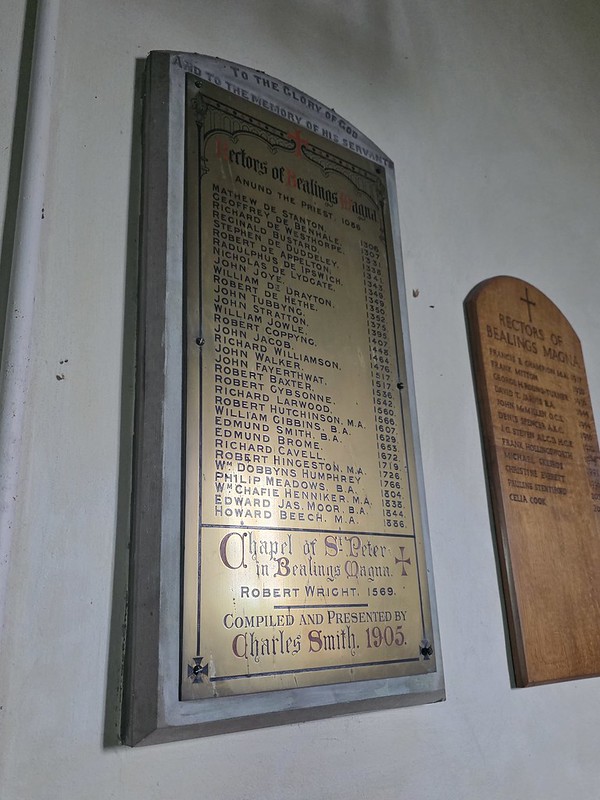
    This is the list of rectors at St. Mary’s Church in Great Bealings and there’s something interesting that took place during the period that Richard Larwood was the rector here and at this font. This is the baptism of John Carver in the church on 12 March 1580/1581 and there’s more information about this at https://mayflowerhistory.com/carver-john and some of this might be recent discoveries as older documents don’t mention it. He appeared in the records of the local Seckford Hall but he sold off all of his holdings there in 1605 and then disappeared from the record before reappearing in Leiden.

    Carver was a member of the Leiden congregation of Separatists who fled religious persecution under the Church of England. Deeply involved in organising the Mayflower voyage, Carver played a critical role in securing funding and negotiating the charter that allowed the Pilgrims to settle in the New World. Carver was elected governor of the colony shortly after the Mayflower arrived in November 1620 and was a key figure in drafting the Mayflower Compact, the first governing document of the colony. Known for his leadership and diplomacy, particularly in maintaining peaceful relations with local Wampanoag peoples, Carver’s tenure was tragically brief and rather sub-optimal. He died in April 1621, likely from illness brought on by the harsh conditions of the first winter, and was succeeded by William Bradford. His legacy remains as one of the founding leaders of early colonial America.

  • 200 Years Ago in Norwich : Madame Tussaud Visits Great Yarmouth

    200 Years Ago in Norwich : Madame Tussaud Visits Great Yarmouth

    And another in my series of posts from articles and adverts in the Norwich Mercury from 200 years ago this week, this advert was placed in the newspaper in the first week of May 1825.

    “MADAME TUSSAUD, ARTIST,

    Has the honour most respectfully to announce to the Ladies and Gentlemen of Yarmouth and its vicinity, that by the kind liberality of the Worshipful the Mayor, she will have the honour to Exhibit her Collection as above announced, where she hopes to meet with that acknowledgement which Yarmouth is known to afford to Exhibitions of merit.

    The Collection consists of TWO MAGNIFICENT CORONATION GROUPS, one representing the AUGUST CORONATION of his MAJESTY GEORGE IV.; the other the CORONATION of BONAPARTE; the whole got up at an immense expense, and such as have never failed of giving general satisfaction, having been viewed in Liverpool, Manchester, Birmingham, Bristol, and Bath, by 136,000 Persons.

    There will be a PROMENADE every Evening from Seven till Ten, accompanied by a MILITARY BAND.

    ADMITTANCE ONE SHILLING. SUBSCRIBERS’ TICKETS FIVE SHILLINGS EACH. OPEN EVERY DAY From Eleven till Four, and from Six in the EVENING till Ten.”

    Marie Tussaud (1761-1850) has been unable to return to France as a result of the Napoleonic Wars, so she spent most of her time in England. She started a touring exhibition in 1824, which is the one that reached Great Yarmouth, and in 1833 she eventually settled on a permanent location in Baker Street in London. The growth of the galleries meant that new premises were needed in 1884, where Madame Tussauds is still located today. This must have been quite a sight to behold for the lucky denizens of Great Yarmouth.

  • 200 Years Ago in Norwich : A Case of Poisoning in Great Yarmouth

    200 Years Ago in Norwich : A Case of Poisoning in Great Yarmouth

    Part of my occasional series of newspaper articles from the Norwich Mercury from 200 years ago this week.

    The year 1825 saw the Neal family – Mary, and her adult children Susan and William – at the centre of a grave accusation which was the attempted murder of shoemaker William Halls (or Hales) and his family through arsenic poisoning. Arsenic, readily available and difficult to detect in that era, was a feared agent of clandestine violence, and its alleged use in this case invoked particular societal horror. The crime was not only shocking for its malicious intent but also for its familial dimension, with a mother and her children implicated in a conspiracy against their neighbour and employer. The trial was held at the Great Yarmouth Quarter Sessions and presiding over the whole arrangement was Robert Alderson.

    This is quite a long and interesting article from the newspaper, which I’ll quote in full:

    “From its being generally known that the trial of the Neals for poisoning would be the first on Friday morning, the Court was crowded to excess, and the Recorder took his seat. Mary Neal, aged 42, Susan Neal, aged 21, and William Neal, aged 18, were placed at the bar, charged with having feloniously put a quantity of white arsenic into a boiler containing beef broth, with intent to cause the death of William Hales and his family. It appeared in evidence that Mr. Hales is a cordwainer, residing in Howard-street, Yarmouth.

    His family consisted of himself, Mrs. Hales, three children, and a servant. On the day previous to that on which his family were taken ill, Mrs. Hales boiled a piece of beef in an iron boiler for dinner, of which they all partook, but they did not experience any illness from it. The liquor in which the beef was boiled remained in the boiler, as Mrs. Hales intended to make it into soup the following day for the family. The boiler was placed in a room under the keeping room, and in which Mr. Hales and his apprentices worked at their business. On the following morning the boiler was put upon the fire a short time before dinner, with the liquor in it, and when hot, Mrs. Hales took about a teacup full out of the boiler to taste, and gave her little boy (about three years of age) some at the same time. The servant was then ordered to put in the different ingredients to make it into soup.

    In about ten minutes after Mrs. Hales had taken the liquor, the little boy complained of illness, she therefore took him up-stairs and laid him down on the bed. Mrs. Hales had scarcely done this when she herself was taken ill. Mr. Hales, with his other two children and servant girl, then sat down to dinner, having of course no idea of the cause of Mrs. Hales’ illness. They all at table partook of this soup, and shortly after they were seized with similar symptoms, which caused Mr. Hales to suspect they had been poisoned. He therefore immediately sent for a surgeon, who, on his arrival, administered proper antidotes, which had the desired effect, or a few hours more would have terminated their existence. The whole family were under the surgeon’s hands for some time, but Mrs. Hales and one of the children still retain the effects of the poison, and are very likely to do so. The surgeon took the remaining part of the soup out of the boiler, some of which he gave to a dog, which immediately ejected it: the remainder he submitted to Mr. Davies, an eminent chemist on the Quay, who, on analysing it, found it to be deeply impregnated with white arsenic. It was afterwards discovered that Mrs. Neal and her daughter had purchased a pennyworth of arsenic at the shop of Mr. Suthern, a chemist in Gaol Street.

    They were in consequence, with Mr. Hales’ apprentice, immediately taken into custody, and on their examination before the Mayor, Mrs. Neal stated she was not troubled with rats or mice, nor did she know what arsenic was; but on her being confronted with the young man who sold her the poison, she could no longer conceal the fact, but she said she bought it to kill the mice with which her house was troubled; she, however, had previously stated that they had none in the house. On being questioned as to what they had done with the poison, an altercation ensued between the mother and daughter, as to the possession of it, the mother saying she gave it to the daughter, and the daughter saying she gave it to her mother; the daughter, however, at last informed the officer where he might find it, and on going to the house he discovered it on the top of the clock-case. On examining the paper in which it was enveloped, the chemist’s assistant stated that about one half of the quantity which Mrs. Neal and her daughter received had been taken out. Mrs. Neal stated that the part missing from the paper had been put on some bread and butter, and placed in different parts of the house, for the destruction of the mice.

    Mr. Hales stated that he had been lately compelled to take Wm. Neal, his apprentice, before the Mayor, for misconduct at two different periods, and that his mother wished him to leave, but that he refused to give up his indenture. On the evening previous to the day on which the family were poisoned, Mr. Hales went to his club, leaving Wm. Neal in the kitchen alone, where he was asked, and where the boiler was placed with the liquor in it. The apprentice did not board or lodge with the family. Mr. Hales also stated that Mrs. Neal, the mother, had contracted a debt with him, for the settlement of which he had repeatedly pressed her, but he had as repeatedly been abused by her; and she had lately expressed her fears to a neighbour that he intended to summon her before the Court of Requests. The whole of the evidence against the prisoners being entirely circumstantial, the Recorder stated the law upon the case with his usual ability and perspicuity, and left it to the Jury to consider whether the prisoners at the bar were guilty or not guilty of the dreadful offence of which they stood charged.—The Jury deliberated for a short time, and returned a verdict of guilty against all the prisoners. Sentence of Death was therefore recorded. This trial commenced at half-past nine in the morning, and did not terminate until half-past six in the evening.”

    The crime is one of the most infamous that took place in the town in the nineteenth century and it was followed widely with some considerable interest. The sentence was the final ever death sentence issued by the Great Yarmouth Sessions Court as it lost that power in 1835. And, in this case, it was decided to commute the sentences to transportation. They were held at the Tolhouse Gaol in Great Yarmouth and then sent to Australia for life on different ships.

    Mary Neal, the mother, was assigned to the female convict ship Midas which sailed from London on 24 July 1825 carrying 108 convicts. The ship’s master was James Baigrie, and the surgeon superintendent responsible for the health of the convicts was Charles Cameron and he noted that Mary was “very much emaciated” and she unfortunately died en route on 5 October 1825. The fate of Susan Neal, the daughter, isn’t known but there’s a high chance that she also died during transportation.

    William Neal, the son, was sent on the convict ship the Medway on 2 August 1825, arriving in Van Diemen’s Land (Tasmania) on 14 December 1825. He married Eliza (Clayton) Rowley on 31 December 31 1847, in Avoca, Tasmania. At the time of his marriage, his occupation was listed as a shoemaker which was the very trade he was learning as an apprentice under Mr. Hales, the man he was convicted of trying to poison. He and Eliza had several children and I do wonder whether he actually ended up having a better life with more opportunities than he might have had staying in Great Yarmouth.

  • Great Bealings – St. Mary’s Church (Memorial to Edward Charles Porter)

    Great Bealings – St. Mary’s Church (Memorial to Edward Charles Porter)

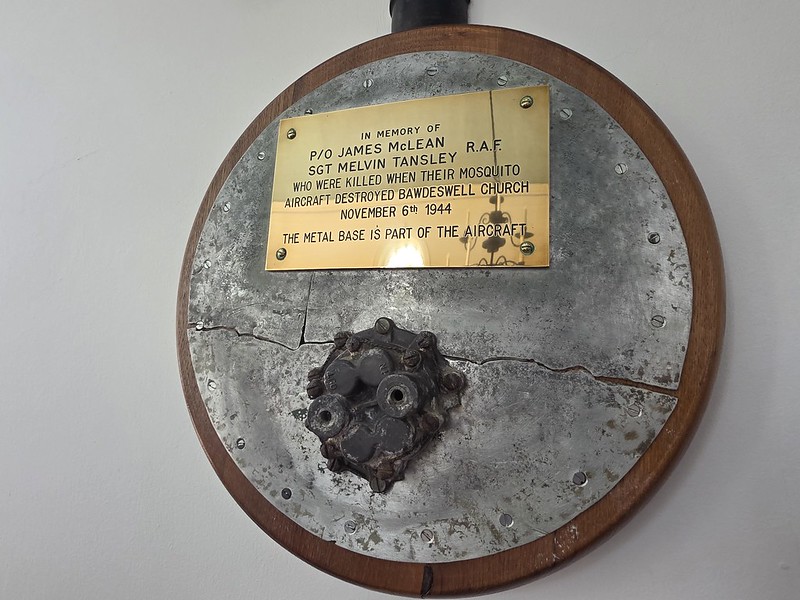
    20250504_174616

    This memorial to Private Edward Charles Porter is located in St. Mary’s Church in Great Bealings and he was the one villager to lose his life in the Second World War. Edward was born on 18 June 1924 and he was the son of Ernest Albert and Florrie Annie Porter from the village. At the 1939 Register, he’s listed as living at ‘Homeby’ on Boot Street and was working as a market gardener labourer.

    Edward served in the 1st Battalion of the Devonshire Regiment and his service number was 14371165. By October 1943, the 1st Battalion of the Devonshire Regiment was actively engaged in operations near Tamu, a strategically important area in Burma close to the Indian border. Their duties involved extensive patrolling in the Kabaw Valley and along the line of the River Chindwin. This period of patrolling and reconnaissance placed them directly in the path of the impending Japanese offensive.

    The anticipated Japanese offensive, codenamed “U-Go” was launched in March 1944 with the ambitious aim of invading India and capturing the key Allied bases of Imphal and Kohima. As this major offensive began to unfold, the 1st Devons found themselves playing a critical role in the defensive battles. They were heavily involved in defending the series of hills that ran along the vital Tamu Road as this road was a crucial artery for communication and supply, and its control was paramount for both the advancing Japanese and the defending Allied forces.

    The War Diary of the 1st Battalion, Devonshire Regiment, provides specific details about the action in which Private Porter lost his life. On 21 March 1944, the battalion launched an attack against a small, enemy-held hill. This assault was initiated from a feature known as “Devon Hill”. The designation of this starting point as “Devon Hill” suggests it may have been a position recently captured by, or significantly associated with, the Devonshire Regiment, a common practice for naming features in a rapidly evolving battlefield. The attack involved A and B Companies of the 1st Devons and during the assault, B Company, along with the Battalion Headquarters element, came under heavy machine gun fire from well-sited Japanese positions. Two men from the battalion were killed in this specific attack and one of these was Private Edward Charles Porter, dead aged just 19.

    His body wasn’t recovered and he is commemorated on the Rangoon Memorial in Myanmar, a very long way from home. Edward, whose nickname was Jack, gave his life for his country, as the memorial states. His father, Ernest Albert Porter died at the age of 1983 at the age of 95, that’s a long time where he was likely grieving for his lost son, and his mother Florrie Annie Porter died in 1967.