

The Museum of Jewish Culture was included with my Bratislava Card, although I do try and visit these Jewish museums and synagogues when I can.

The entrance is through this vaulted ceiling area.

As the signage notes, the building was constructed in the eighteenth century and is known as the Zsigray Mansion, which has been the home of the museum since 1994. It’s located on Židovská ulica (Jewish Street) which was mostly demolished in the 1960s for infrastructure changes, although that must have hurt given what had happened here in the 1940s and because they pulled down a synagogue to complete the works.

There are exhibits over two floors although there was a school group when I was there, but I was able to dodge them by changing the order of my visit somewhat. There were no other visitors in the museum when I visited, it didn’t seem to be a tourist hotspot shall we say.

There are numerous themes, including Jewish music.

There’s a section of Jewish food and the importance of how food is served and kept separate.

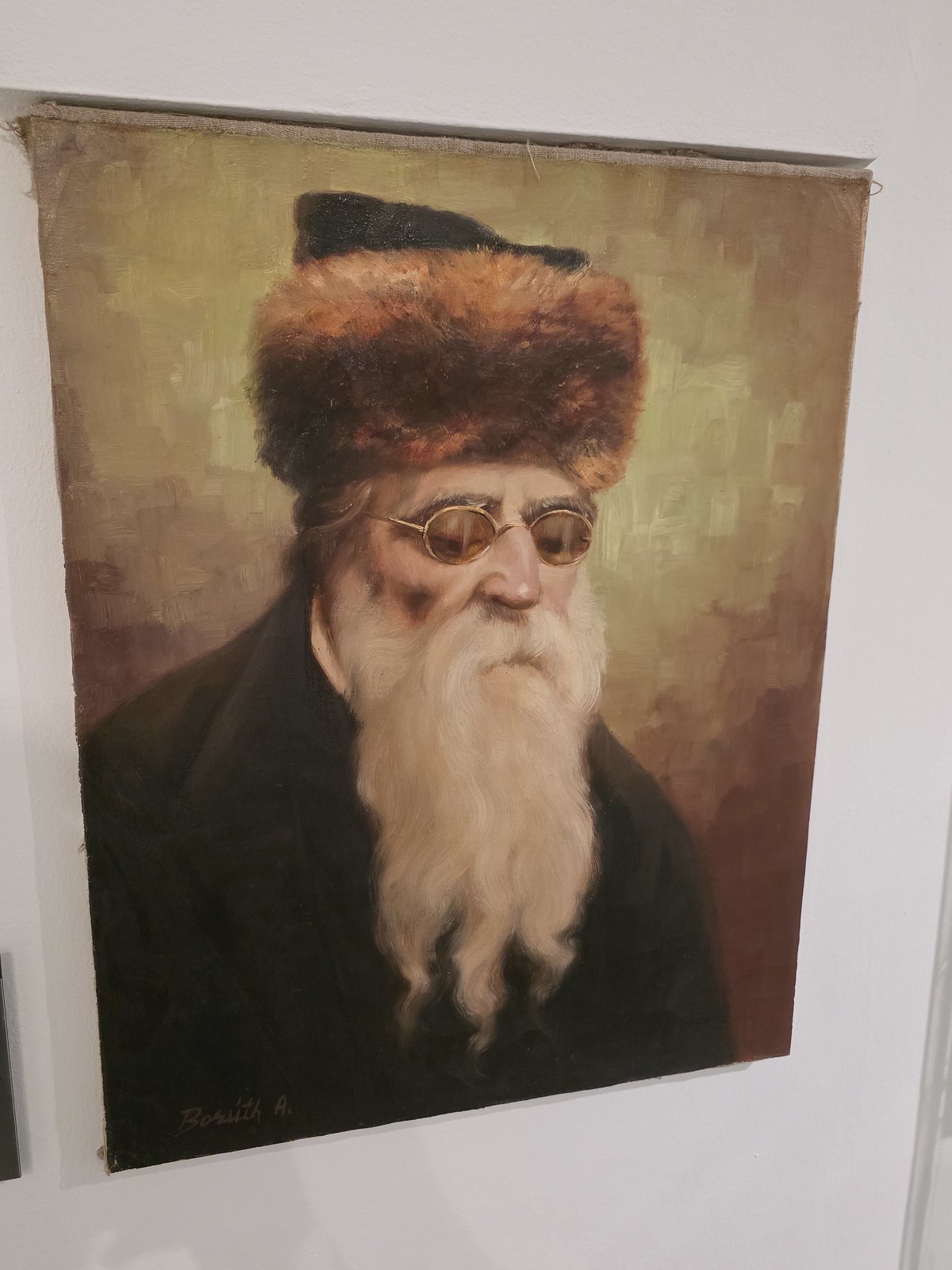
A Jewish elder.

A floor tile from a former synagogue.

For me, the highlight of the museum was the special exhibition about Jozef Veselsky, often known as Joe, who was born in Trnava, Czechoslovakia in October 1918, just days before Czechoslovakia declared its independence. He trained as a banker, but his life took a dramatic turn with the rise of Nazism. At the age of 20, when Hitler invaded Czechoslovakia in 1938, Joe joined the Resistance. He remained active in the underground throughout the war, using his language skills as an interpreter. In 1944, he participated in the Slovak National Uprising, carrying out missions in the Carpathian Mountains, where he witnessed extreme hardship, with very few of his fellow fighters surviving the harsh winter. Tragically, his parents and elder brother were murdered in Auschwitz.
After the war, Joe captained the Czechoslovak table tennis team, but life under the new communist regime became difficult. In August 1949, seeking to escape the political climate, Joe, along with his wife Katarina (Kathy) and their two children, Peter and Kate, emigrated to Ireland. They had initially intended to go to Australia but faced difficulties obtaining the necessary papers. In Ireland, despite having limited English and no prior experience in the field, Joe successfully established a jewellery business. He continued his deep involvement in sport, serving as the non-playing captain of the Irish national table tennis team for over two decades and later becoming Life President of the Irish Table Tennis Association. He also had roles in football, serving as a director for Shamrock Rovers Football Club and as vice-president at UCD Dublin. Joe was a founding member and long-serving president of the Swaythling Club International, an organisation for distinguished figures in table tennis.
And, incredibly, Joe is still alive and he is Ireland’s oldest man having reached the age of 106 in October 2024. This is certainly some story, he could have easily have died during the Second World War, but 90 years on he is still here and has been honoured with a heap of awards, including the Commander of the Slovak Order of the White Double Cross and in 2016, Trinity College Dublin honoured him with an Honorary Master of Arts degree, acknowledging his contributions to Irish life and his inspiring example of lifelong learning, as he became the university’s oldest student.
Back to the museum, the staff member at the ticket desk was helpful and personable, with everything feeling organised and well signed. The displays are nearly all in English and they have been creative in their displays and themes, with the special exhibition on Jozef Veselsky being a highlight. They’ve chosen to really focus on Jewish culture and heritage rather than having to tell the story through the prism of the Second World War, a decision that to me is sensible and positive. However, they possibly could have told a little more of the Second World War story, I was left unsure what happened to the Jews of Bratislava and that seems to be part of the story that can’t really be left untold. However, having noted that, one reviewer says they covered this in detail, so perhaps that was either a temporary exhibition or I’ve missed a room out or something (I’m terrible for managing to get lost in museums if there aren’t arrows everywhere on the floor). Either way, Yad Vashem have information about the story of the Jews in Bratislava.
Anyway, this was a fascinating little museum and although it only takes an hour or so to visit, it’s worth the time to have a meander around. Admission is free with the Bratislava card, although it’s usually €6 and it’s open from Sundays to Thursdays from 11:00 until 17:00.