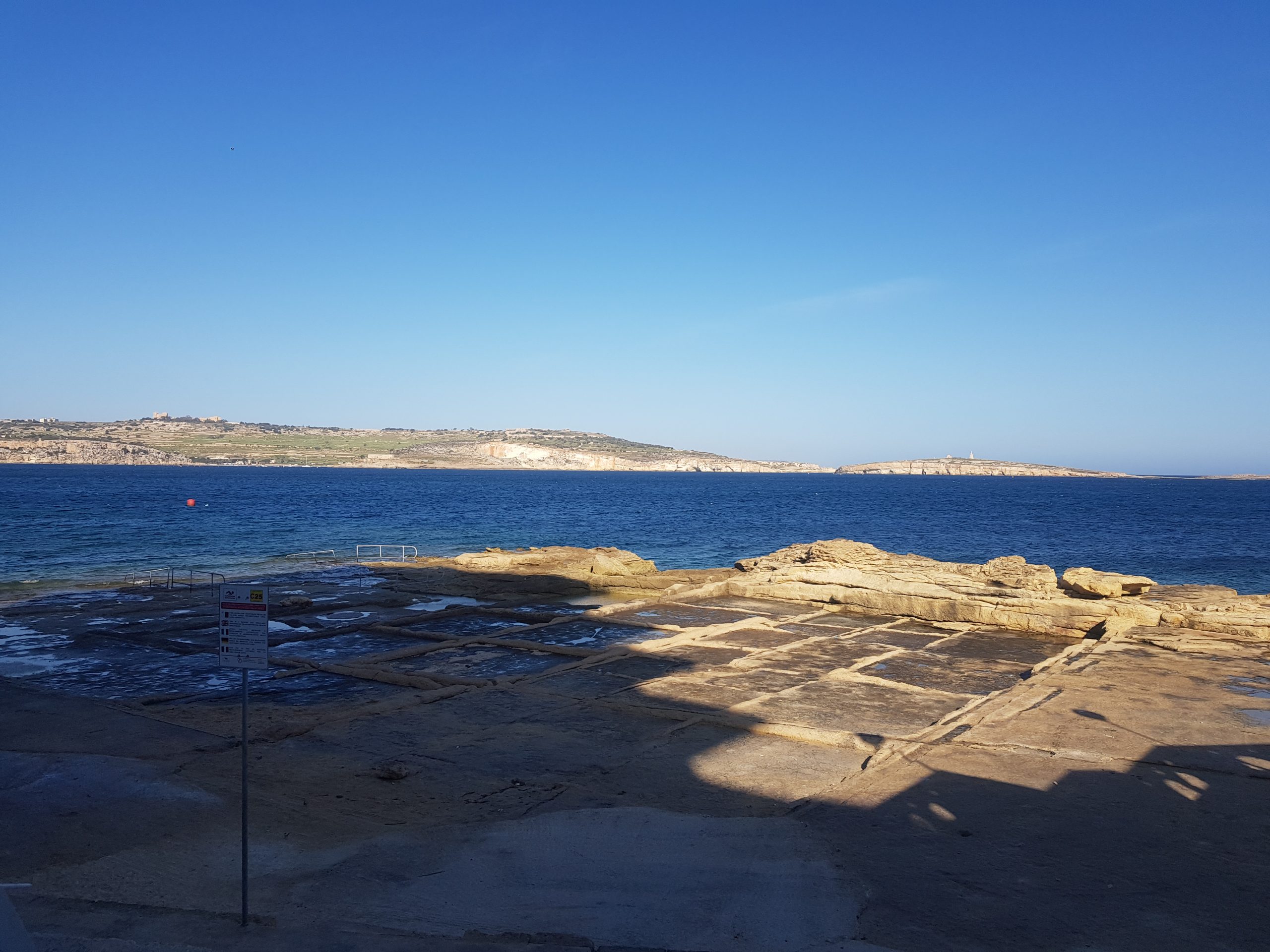
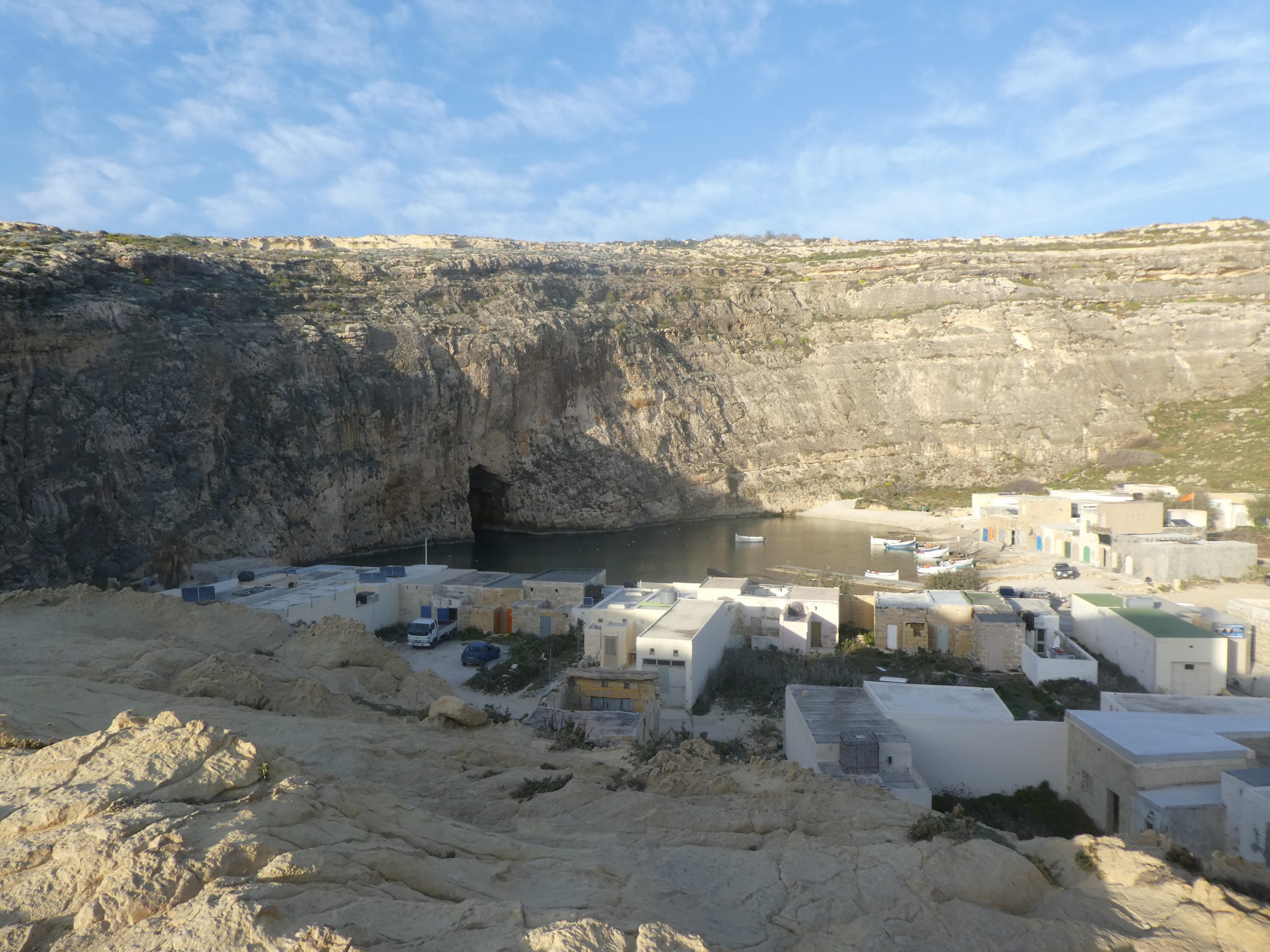
The Inland Sea is a small lake which is connected to the Mediterranean Sea through a hole in the rock, which boats can pass through for fishing and tourism purposes. Although the water is shallow towards the edge, it gets deeper quite quickly towards the base of the cliffs. The assortment of huts doesn’t make the whole arrangement look as salubrious as it perhaps could, but the scale of the rock still makes the area an intriguing one. For those who want tours of the former site of the Azure Window, this is where most of the boats leave from. Hopefully at some stage an effort is made to beautify the area and remove some of the worst little additions that have been made.
Author: admin
-
Malta – Gozo – Victoria – Stanley’s Chippy (New Owners)
I don’t often go to the same place twice when away as there are so many different locations to explore. However, the food at this fish and chip shop was excellent last year (2019 review of Stanley’s…..) so I thought that Liam might like to try it.
We got to the cafe and something seemed wrong, the menu board at the side didn’t mention the fish and chips that the shop is noted for, but it was listed on the main menu board. It was clear that there were new owners and everything felt very different. The person who I think was the new owner came up to us and immediately said that they no longer serve fish and chips, but instead are a bistro with a range of freshly cooked meals which change on a regular basis.
I wish the owner well, but we decided to leave and risked looking like stereotypical Brits abroad….. It transpired that the cafe had only been open under its new owner for around two hours when we walked out, so I hope he wasn’t too offended. He does need to rebrand though, the Stanley’s name needs to go and the menu boards need to be replaced if he’s switching the menu to something different. Although he might well make more money from reverting to the previous menu……
So, onwards instead to the Black Cat cafe.
-

Malta – Gozo – Victoria – Black Cat Cafe
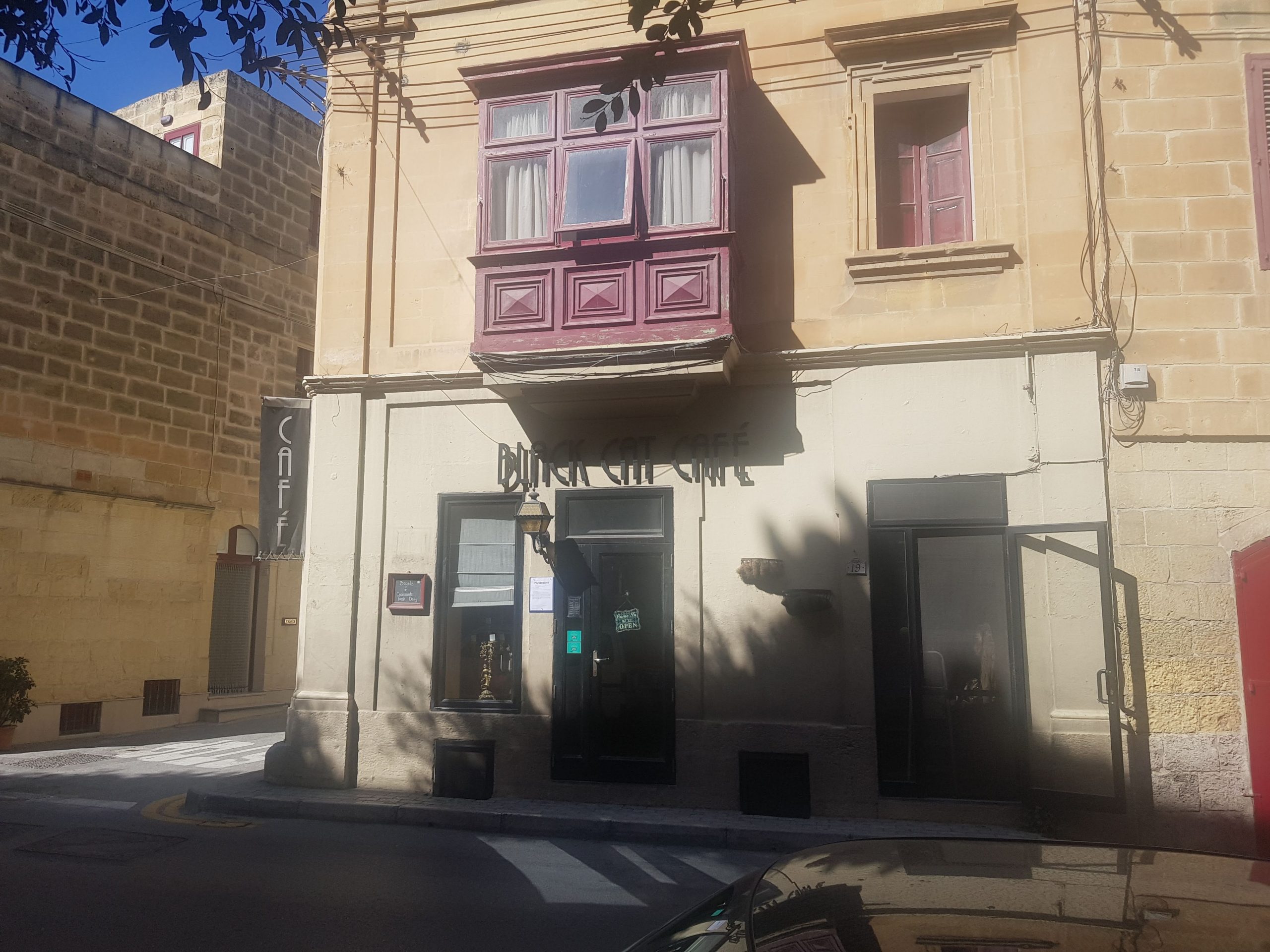
The lunch stop for today was at the Black Cat Cafe, a well reviewed location in Victoria in Gozo. A number of reviews said that it was difficult to get a table as it’s so small, but fortunately we were able to secure one of the last tables. It is a small cafe though, but this all adds to the atmosphere.

I particularly liked the coffee sign, which reads “drink coffee, do stupid things faster with more energy”.

A quirky menu, but there were some interesting options and alongside the specials board this gave a sufficient choice without the menu being too large in scope.
I was located near to the cake counter, so I couldn’t resist ordering the carrot cake as a starter. Liam was more sensible, he ordered the apple pie cake as a dessert, but I don’t have his patience.
The latte came first, pleasant flavour and all was good there.
The carrot cake, beautifully moist, flecks of carrot throughout and a sweet cream cheese, or similar as it might have been buttercream, topping. This was one of the best carrot cakes that I’ve had, very moreish.
Slightly marred by a hair across the top, but otherwise, this was a well presented plate of food with two hot samosas, sweet potato fries, a sweet chilli sauce dip and a side salad. It was a larger sized portion than I had expected for the price and the samosas had a rich flavour and the sweet potato fries were surprisingly tasty. The salad added some texture, but it was the tomatoes which took the salad crown here with their sweetness and flavour.
Liam’s scrambled egg with smoked salmon, which was apparently very lovely although Liam would have preferred more egg. But it’s all about the taste, and it wasn’t lacking here.
The service was personal and attentive, although the member of staff did have to return to Liam twice as first she forgot his drinks order and then she forgot his food order. But, it’s always best to check, although I’d have thought it was easier to write it down in the first place. Anyway, the environment was relaxed and informal, so it was a comfortable lunch and was also reasonably priced. The other customers also seemed to be enjoying their experience and I’d definitely recommend a visit here.
This is perhaps one of the most ridiculous reviews I’ve seen though:
“Extremely courteous service, the chocolate mousse cake tasted like a piece of heaven, four stars only because there was little space (I would like to give 4.95”.
This reviewer punished the cafe with a score of just 4/5 because it doesn’t have many seats, then left a comment saying they’d like to leave a review score of 4.95. Perhaps, rather than damaging their business, the customer could have just left a score of 5……
-
Malta – Northern Region – St. Paul’s Bay – Xemxija Café Lounge
Despite staying for three weeks last year around the corner from this cafe, I never made it inside. So, since we were looking for breakfast, it was a chance to finally see inside.
The cake selection in the cafe, a little more expensive than other similar locations that we’ve been to, but it was all well presented.
The breakfast options weren’t entirely clear as the menus on the tables really only mentioned waffles. It was all clean and tidy inside, but there wasn’t anything tempting for breakfast unfortunately. There were though some motivational messages on the wall for anyone who fancied some morning inspiration. There’s also a seating area outside and this has views over St. Paul’s Bay, albeit with a road between the cafe and the water.
The coffee was reasonably priced, rich in taste and most importantly of all, it came with a little biscuit. What more could anyone want for breakfast? The service was friendly and helpful, so I imagine that this is a good option for lunch or an evening meal. We were the only customers in the cafe during the time that we were there, but the environment was clean and comfortable.
The reviews for this cafe are nearly all positive, although I did note someone didn’t like the place a couple of years ago, but added:
“As I said, at the time I did not complain as I did not want to ruin the eve for my friend, however that is what sites like Tripadvisor are for.”
It isn’t really, sites like TripAdvisor are becoming pointless as restaurants don’t get a chance to deal with problems at the time, or at least in private after the event if they’re alerted to an issue. Anyway, a relaxing start to the day and I’d visit here again if in the area.
-
Malta – Gozo – Azure Window Ruins
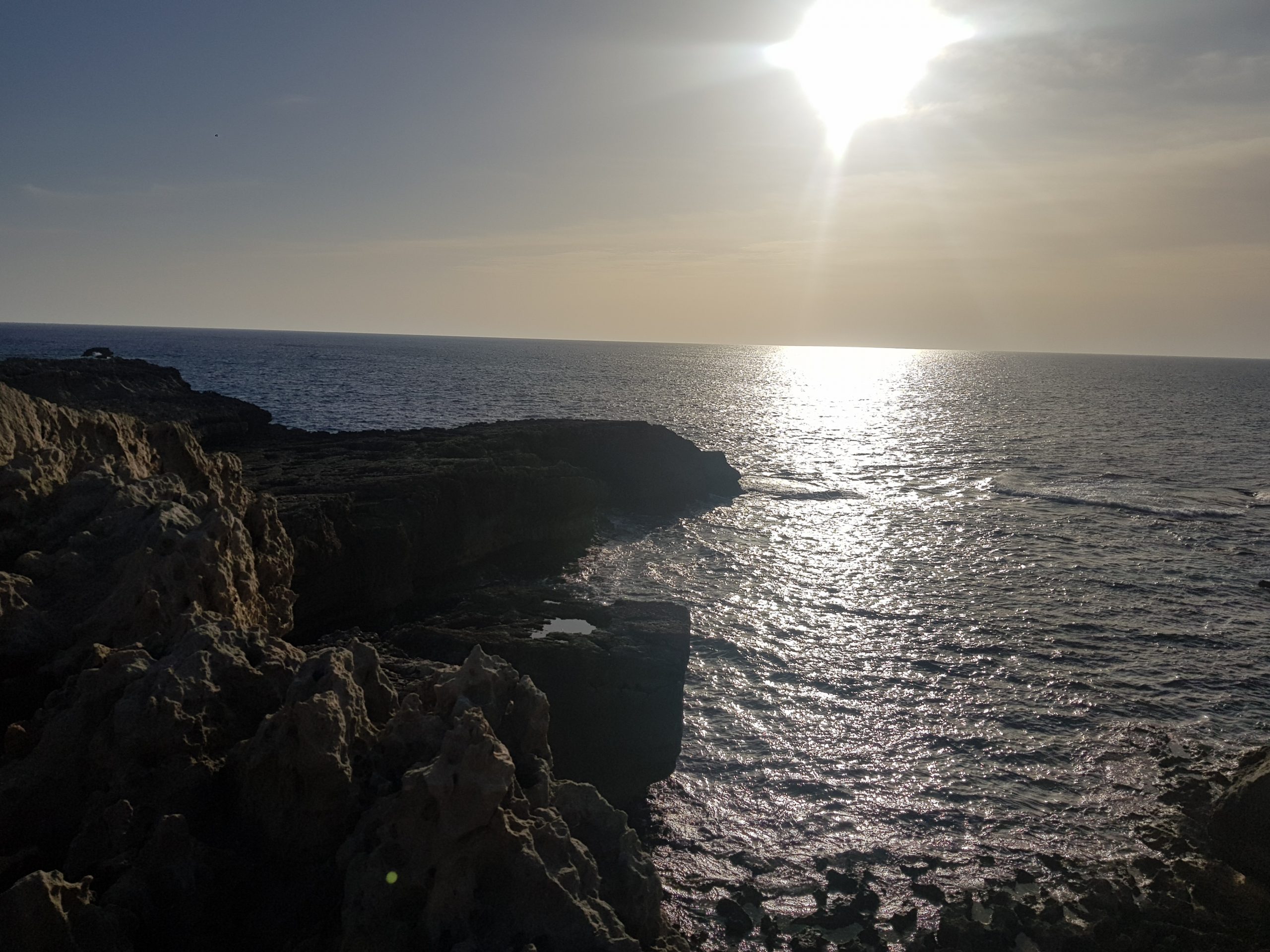
Just photos…. This is the piece of coastline along from the ruins of the Azure Window, which was once a famous arch but it collapsed a few years ago.
-
Malta – Malta Day Two
And the second full day in Malta started well as it looked hot, but not too hot, outdoors. It was the second day in our hotel at St. Paul’s Bay, an unexceptional but satisfactory accommodation.
We popped to a local cafe for a morning coffee where the service was friendly and welcoming. There was a slight lack of menus to encourage us to order food, so we decided against a more substantial breakfast.
Then there was just a little exploration around the local area, these are the cart ruts at St. Paul’s Bay that I saw last year, so I decided that Liam would be thrilled to see them too.
An old house that Liam decided to explore.
And another look at the area around the Roman baths which are built into the side of the ridge. I then decided that Malta was getting too hot, despite my earlier hopes for a more moderate day.
We are only booking our accommodation the day before to add some excitement to proceedings, with our hotel choice for this evening being on the island of Gozo. So, we boarded the ferry and here’s Liam preparing to set sail.
The water between Malta and Gozo is clear and blue, we were fortunate to see turtles and jellyfish on the journey.
The journey took around twenty minutes and the ferry then docked in Mġarr on the island of Gozo. There was a long queue for the buses which took people to their destinations around the island, but we waited for that rush to subside and then got on a rather lovely quiet bus to Victoria.
We then had to plan where we had lunch and I very much enjoyed going to Stanley’s fish and chips last year near to the basilica. Something seemed strange though, the blackboard no longer advertised fish and chips and the staff were different. However, one of the other boards advertised fish and chips, so we sat down to enjoy a rather English meal. The friendly and affable waiter, and I think owner, came over to tell us that he’s just taken over ownership and the fish and chips is no longer served, but he had a range of fresh Italian dishes. Having just spent a week in Italy, I decided against more Italian food, so we left as politely as we could, although I suspect we still looked like picky British travellers.
Anyway, we instead went to the rather lovely, and also small, Black Cat Cafe which was highly recommended. I’ll write more about this later on, but the samosas with sweet potato fries were a delight (other than the hair) and the carrot cake was an veritable delight as a dessert. Well, I had it before the main meal was served, but if I had waited like Liam did with his cake, it would have been a nice dessert.
After lunch, we went to have a look at the historic Citadel. This is the view from the Citadel over Victoria, or Rabat as it’s sometimes now called.
And the view over the local countryside.
With all that rather tiring eating and historical exploration out of the way, it was time to check into our accommodation at Gharb. We’re the only guests in this B&B and the Italian owner was lovely and welcoming. When I was in Gozo last year I didn’t get to see the Azure Window, or what was left of it since it has now collapsed, so we went on a little meander to see that. Lots more photos on that to come later.
Liam doing some climbing.
And some contemplating.
This is the view out from nearby to the Azure Window, all peaceful and serene.
We walked out to the water, which fortunately didn’t require any scrambling down steep cliffs. Liam would have done that like a shot. I wouldn’t.
And more water, where we stayed for around an hour before getting a bus part-way back to our accommodation and then walking the rest. No evening meal tonight, we decided to have a picnic of fine local artisan foods, which in my case was primarily crisps made in Malta. We’re back at the accommodation now, and I’m trying to calm my nerves after discovering that the wi-fi didn’t work. Fortunately, by sitting in a certain part of the room, order has been resumed and I can connect to the rest of the world. This is a lovely getaway trip, but I don’t want to getaway from the Internet.
-
Malta – Malta Day One
This is the first full day of my fourth visit to Malta and Liam’s first. We’re staying for the first two days of this trip in the same hotel that I spent three weeks in last year, but after that we’re moving to hotels which we haven’t booked yet. It adds a little adventure to proceedings and it’s unlikely that the hotels will be booked up in early March. I hope anyway.
Since we had a weekly bus ticket, we got the bus to the nearby town of Bugibba and then walked into its centre along the coastline. Palm trees always make a place feel just that bit more exotic….
The first plan was to get breakfast at Michele’s Cafe, which I’ve written about here, with this being my rather lovely Cannoli. Satisfied with our morning food we got the bus back to near the hotel at St. Paul’s Bay.
We then walked the heritage walk which I really liked last year (and wrote about here), but I was glad to do it again as I noticed a few things that I hadn’t seen before. It’s not that long a walk in terms of the distance, but there were plenty of caves, holes and the like to explore.
I had seen some caves on this walk last year, but I hadn’t noticed this one. Many of these caves were lived in until relatively recently, some of them looked like quite the prime real estate.
Liam in front of one of the caves. We had at one stage planned to spend this week doing a long distance footpath in Ireland where it would have likely rained, but we were congratulated ourselves on instead picking a slightly more relaxed week in Malta. We also told ourselves that we shouldn’t walk too far as that might somehow spread the Coronavirus, so we thought we’d stay in more urban areas and spend time eating. It’s a sacrifice that we’re prepared to make.
I had seen this apiary last year, but there was another one I hadn’t seen before, situated behind the oldest carob tree on the island. We had a look at the punic tomb although the peace and tranquillity was just a little marred by someone recording themselves playing some music….
After meandering along this heritage trail we tried to reach Mellieha by walking up along the road which switchbacks up along Mellieha Ridge. This worked, but the road comes out on a busy road which was unnecessarily difficult to cross, not the best piece of road planning that I’ve ever seen. I did mutter and moan about these situation for a short while, which I’d say was only thirty seconds, but was probably nearer to five minutes.
After our bravery with the road, we needed food, so this was the lunch stop at Tal-Puzzu, which I wrote about here.
After lunch we walked down to the Our Lady of the Grotto, which I wrote about last year here.
The Maltese flag flying high.
I had visited the parish church of Mellieha last year, but I had missed this located near to it, the Sanctuary of Our Lady in Mellieha. More on this in another post, but it’s a rather special building.
An interesting building construction and I like to think that the cave element is incorporated into the new building as some sort of cellar structure.
And talking about interesting structures, we didn’t create this, but we did watch the water flow into the moat and it was rather professionally created by someone…. Just to show how busy we had been in the morning, I had a little lie down near the beach to have a short nap. After that we had a little visit to Sundancer in order to get an ice cream and drink. I’ve had worse Sundays…..
After that we got the bus back towards Bugibba and we planned to have a little stop off at a little heritage site that I had visited last year, but the bus driver didn’t stop where we wanted (more because of a technical problem than because he hated us). So, we gave up with that plan for the day and just stayed on the bus all the way to Bugibba bus station, ready for a quick visit to a pub. Although this was when someone got onto the bus and seemed enormously unsteady, before he fell on a woman minding her own business and then he nearly stumbled into Liam.
A quick beer at the Cheeky Monkey pub, which I’ll write about later. I visited their other outlet in Valletta last year, I found this one a little less impressive, although the views over the water were decent. There is quite an absence of craft beer in Bugibba, it certainly hasn’t improved in that regard over the last year. The town of Bugibba was though busy, plenty of people visiting the local cafes and going for a walk, and had a relaxed feel to it.
Exploring the beach at Qawra Point Beach near Bugibba. Liam did try and make the jump to the piece of land on the right of this photo, but he claimed it was too difficult. Then we watched someone else go and do it…. I didn’t comment on how much braver the other man was than Liam, as I was too polite and kind.
A pillbox with extensive views over the sea, located near to what is now Malta’s National Aquarium.
Walking along the coastline at Bugibba as the sun started to set. After all this walking we quickly popped to McDonald’s for a drink, with the handy advantage that we got free fries after I filled in the restaurant’s survey. Bargain.
Walking back to the hotel, we didn’t bother getting the bus as the temperature was warm and it’s not the worst of views. Although the nights do seem to get quite cold, the evenings are just perfect. A rather lovely first full day, we’re moving in the morning to a new location in Gozo, which will mean taking a ferry and some more buses. Hopefully the weather will remain moderate and dry.
-

Malta – Northern Region – Oldest Carob Tree
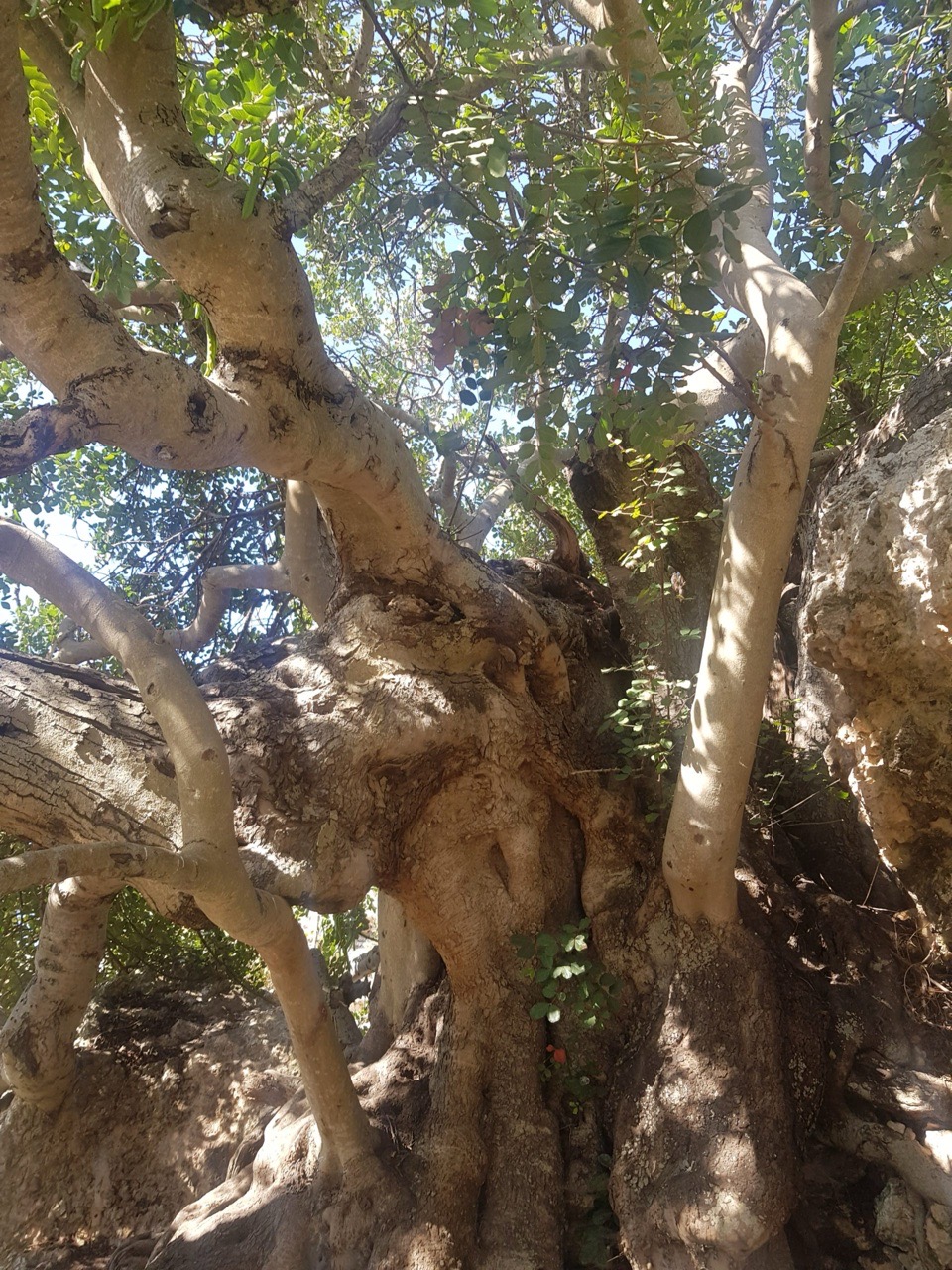
Not that I would have known this without the helpful nearby information board, but this is the oldest carob tree on Malta and it’s thought to be over 1,000 years old. Getting on for being 7.5 metres in circumference, it’s certainly a bulky little specimen. It’s suggested that the name of this tree is where the word carat, as in gold, comes from, a derivative of the Arabic word ‘qirat‘.
Some of the tree’s branches. The information board mentions that a home-made syrup has been made from the fruit of the tree, which is thought to be useful in alleviating the suffering from colds, and during the shortages of the Second World War it was also used as food.
And a little information board about the tree, which is apparently popular with bees. Just behind the tree is an apiary dating back to Roman times, which is where bees were farmed, or whatever the technical term is to get honey.
-
Malta – Northern Region – Mellieha – Sundancer
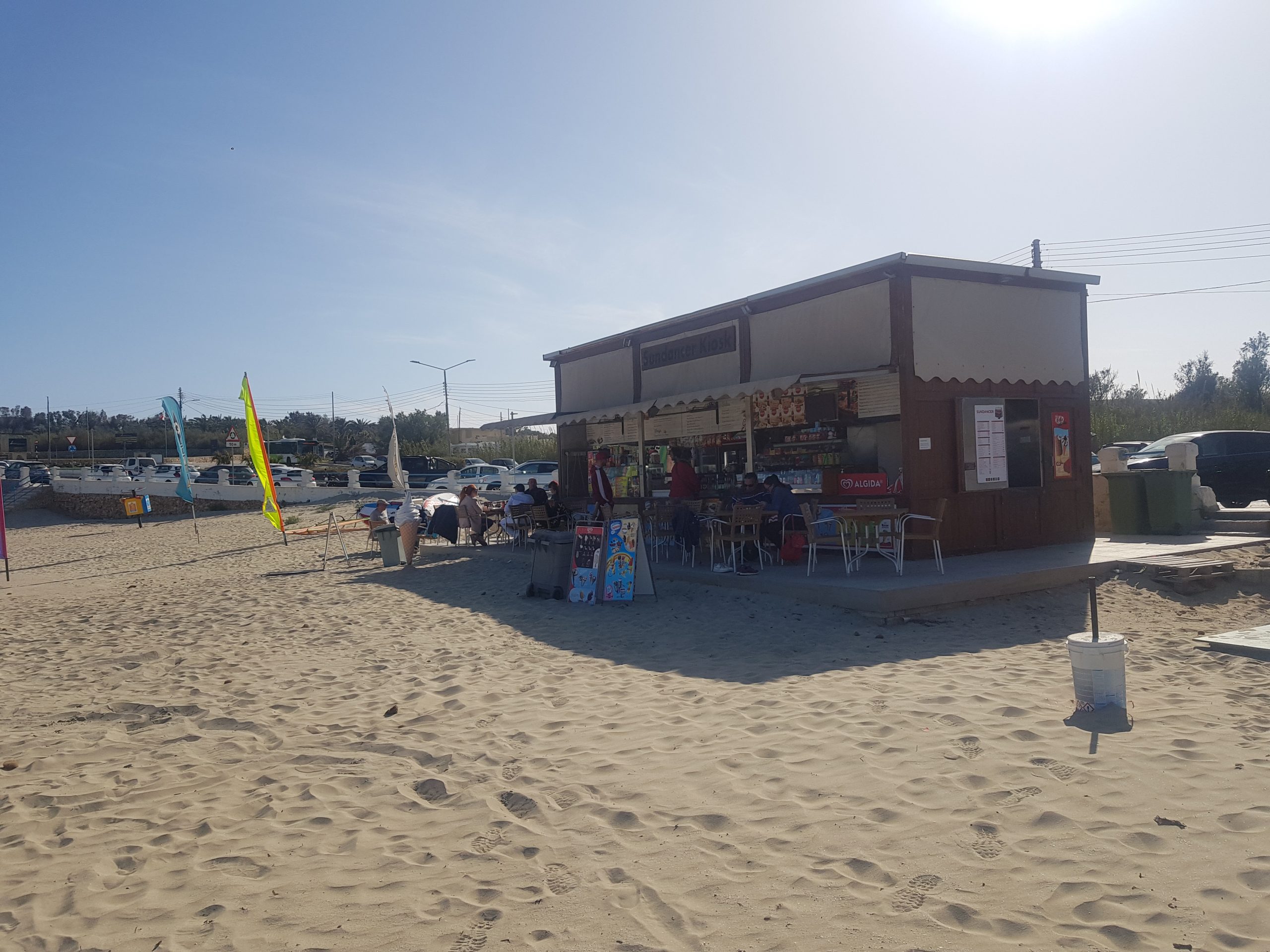
And after a busy morning of walking and food exploration, it was time for a little snack….. Mellieha beach was quite busy, despite it being the first day of March, with plenty of children enjoying playing on the sand. Judging by the photos of this beach in summer though, it gets much busier during the warmer months. Most of the food and drink kiosks were closed when we were visited, although Sundancer and a couple of other operators were busy and working as normal.
The snacks of ice creams and drinks, very welcome in what was becoming an increasingly hot Malta….. The staff at Sundancer were friendly and the prices were reasonable, and we were fortunate to get the last table outside of the kiosk. The kiosk did a relatively wide selection of food, such as pizza, burgers, chicken nuggets and other essential culinary delights, along with ice creams, crisps and drinks.
-
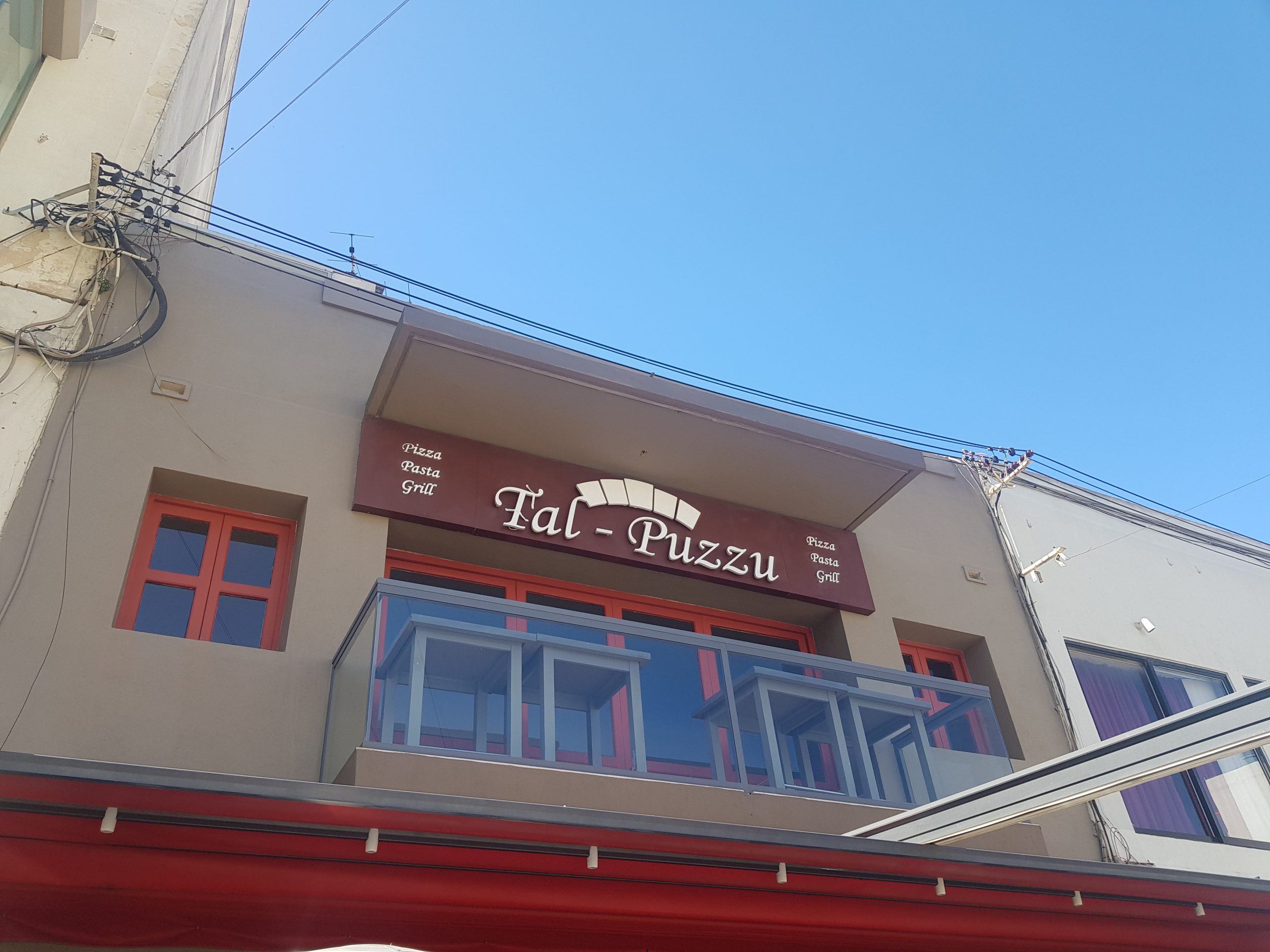
Malta – Northern Region – Mellieha – Tal-Puzzu
To celebrate not getting run over on the road (more on which later) we thought that a little stop for lunch would be useful. Our walk had ended in Millieha and I had a sudden craving for pizza, which isn’t an entirely rare experience (the craving for pizza that is, not ending up in Millieha).
I thought about beer, but a refreshing cold drink of Pepsi seemed more suitable, especially as craft beer wasn’t mentioned on the menu. This might be something that I go on about a lot this week….. We opted for the eating outside option at this restaurant and hoped that we wouldn’t be stuck with smokers nearby, although fortunately that eventuality didn’t come to pass. The restaurant was never full, but it remained suitable busy throughout, a mix of local and visitors to Malta.
And the diavola pizza, which was perfectly acceptable and I think they have their wood fired pizza oven. A thin and beautifully crisp base, lacking perhaps a little in tomato flavour from the sauce (I like a rich tomato sauce on the base), but the toppings had some heat to them and for a lunch-time snack it met my needs. A number of reviews said that the rabbit was one of the specialities of the restaurant, but I’m deliberately not eating that, however much of a national delicacy and tradition it might be.
Liam’s subtle little calzone, which had ham, mushrooms, tomato, mozzarella and, for some reason, egg, in it. But, it all worked well apparently. All the food seemed freshly made and was at the appropriate temperature, so I felt that we got value for money for the lunch.
The service at the restaurant was attentive and polite, everything arrived promptly and they had balsamic vinegar from Modena, reminding me of Richard and his gift buying last weekend in Florence. After the meal it was time for some more discovery of the country’s history, with Liam discovering just how tiring this life of exploration actually is. I tell people that, but they often don’t believe it.