
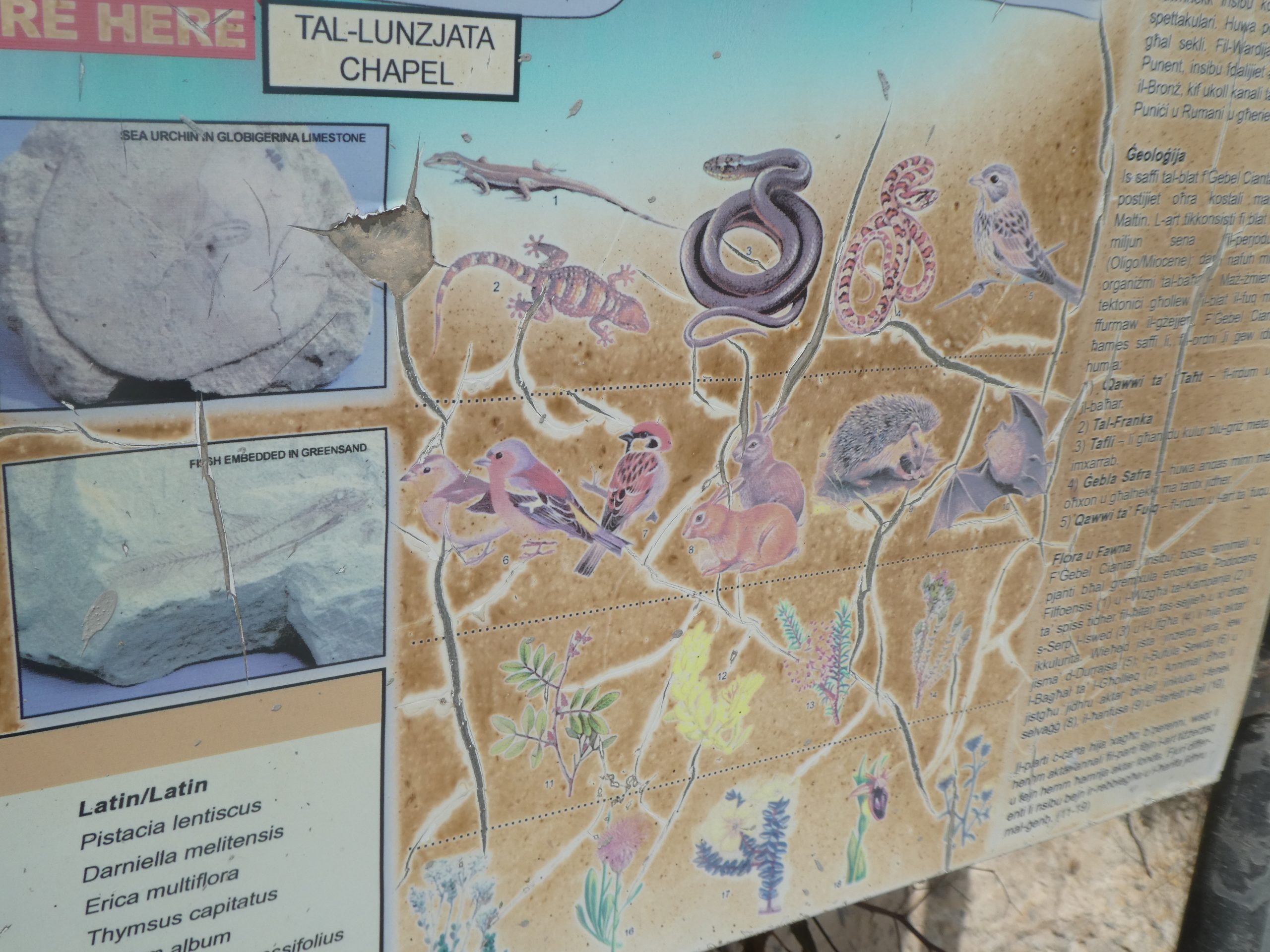
I wasn’t entirely thrilled to see this. Apparently there are black Western Whip snakes and Leopard snakes roaming around free and unhindered in the area….. I checked and the Leopard snake doesn’t eat prey the size of a leopard, it just has similar colouring and is also known as a ratsnake. The black Western Whip snakes can grow to as long as two metres in length, and although I’m sure it’s a very lovely animal, I don’t want to meet one in the wild. Fortunately, we didn’t see any snakes whilst in Malta, but I tried to walk quite heavily to scare any off that might be nearby.
Author: admin
-
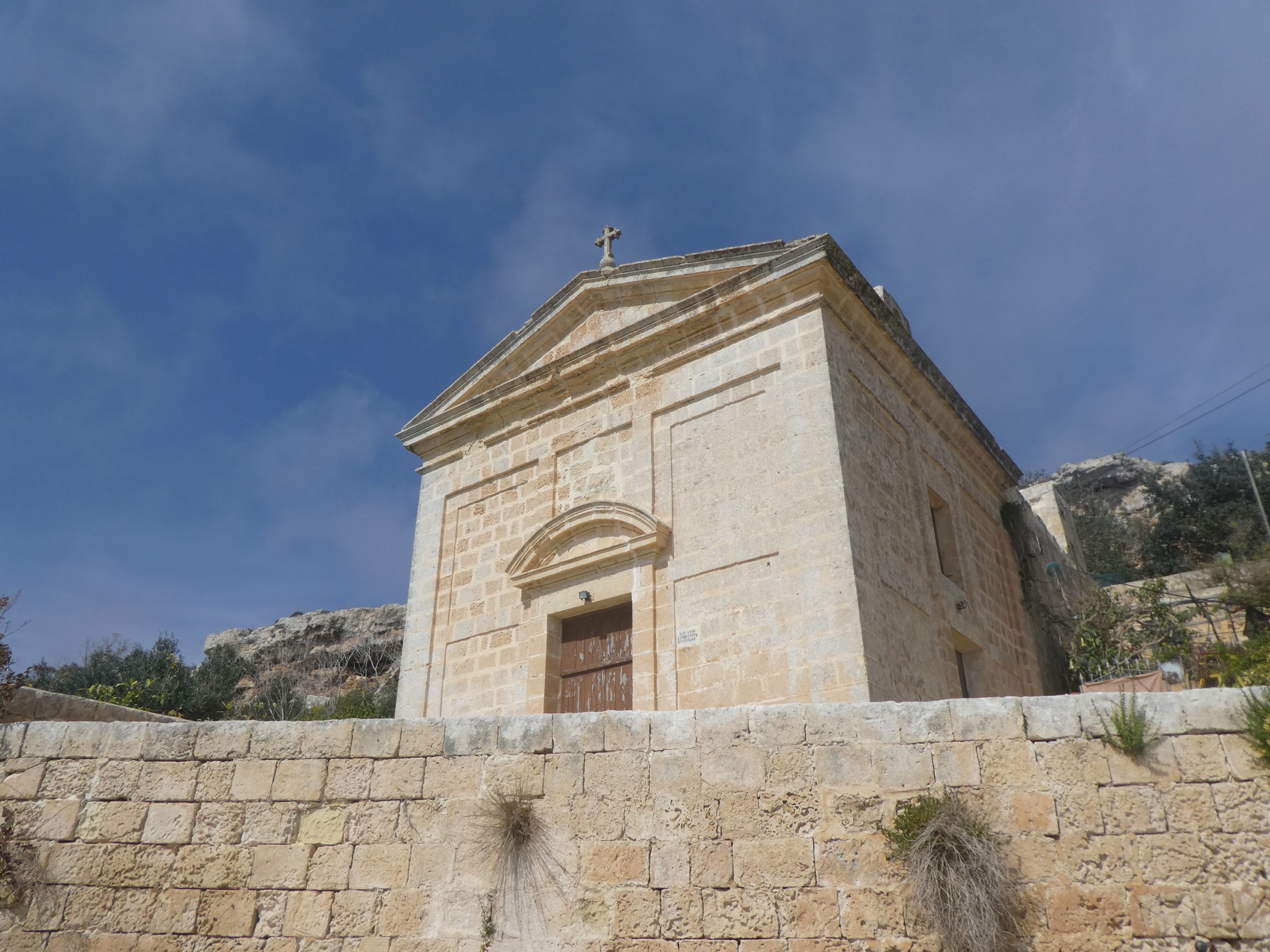
Malta – Southern Region – Fawwara Church of the Annunciation
There has been a church on this site since the early seventeenth century, although the current building primarily dates to the early eighteenth century. The earlier church had become a bit dilapidated and mostly fallen down, so it wouldn’t have been a difficult decision to make. The construction was funded by the Xiberras family and was constructed to a better design standard than the original structures, being dedicated in 1708.
The church wasn’t open when we walked by, although it remains in religious use. It was originally dedicated to the Assumption of Our Lady, although this was changed to the Annunciation of the Virgin Mary when it was reconstructed.
-
Malta – A Very Curious Custom
Still intrigued by the book about Malta written by Thomas MacGill in the 1830s, he tells of a very curious custom that it is fortunately long since consigned to history. Or, certainly in Malta at least.
“A curious custom exists in the Island of giving puppy broth to people pining away from a fright, and in some cases obstructions in young people. The puppy is thrown alive into boiling water, and boiled down to a strong broth, a basin of this is given to the patient, who is kept in ignorance of what it is made from, until it is eaten, then he is informed. He is shown the remains, the idea is that one disgust cures another, it is said to have a good effect.”
-
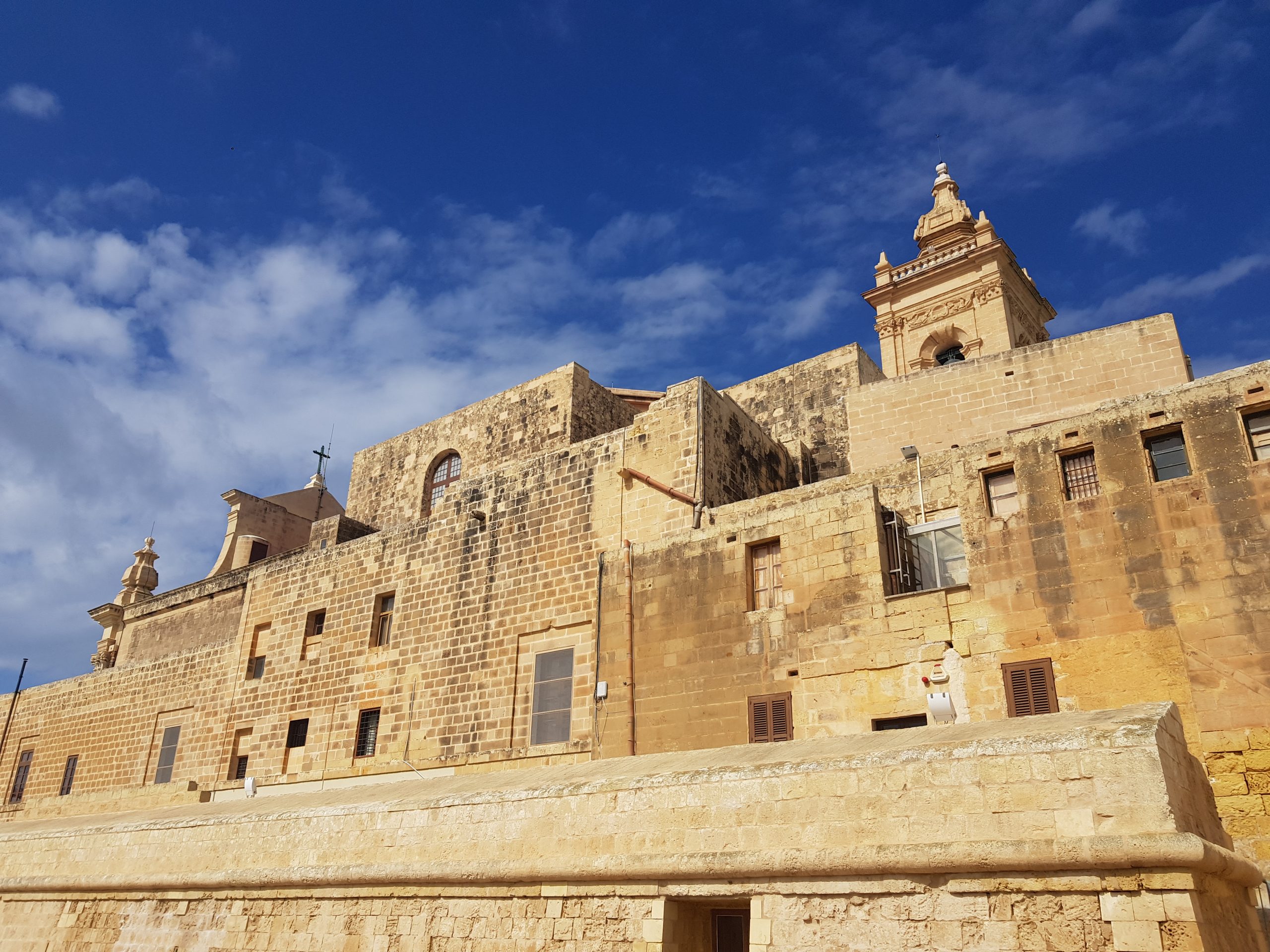
Malta – Gozo – Accommodation in the Early Nineteenth Century
Back to the book written by Thomas MacGill in the 1830s, I noticed his summary of the accommodation in Gozo. It seems that visitors weren’t always as well attended for as they are today. Referring to what was later renamed Victoria, he wrote:
“Only a very few years ago, strangers visiting Gozo, were forced to carry with them not only their bedding, but even the common necessities of life, and trust for cover to the hospitality of some Convent. But such is the march of improvement, that now, within the walls of the citadel, there is an excellent house of entertainment kept by an Englishman named Griffiths, where clean and comfortable beds can be had, and dinners, with good wines, in English style and at a moderate charge. In the town also, there are now some houses of reception, kept by natives and one kept by a man named Filippo is very comfortable”
I am grateful that today we have Google Maps which aids in finding hotel accommodation, I’d dread to return to a time when I’d have to ask the locals “where is Filippo’s accommodation?” in a bid to find somewhere to stay.
-
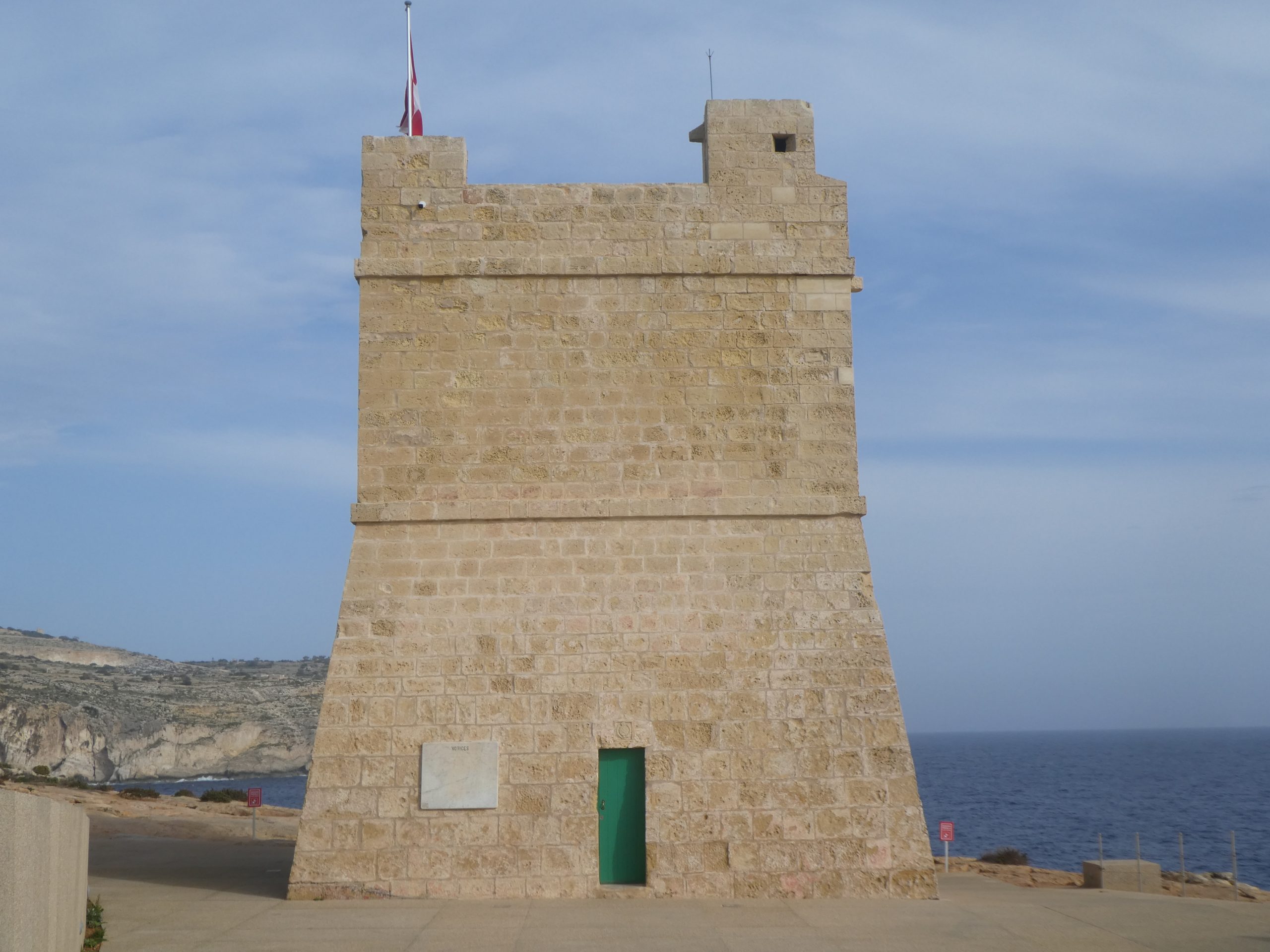
Malta – Southern Region – Sciuta Tower
This is one of the ten Lascaris Towers which were built 1637 and 1652, with nine of the towers still standing today. Sciuta Tower is located near to the Blue Grotto, making it one of the most visible of the towers given the number of passing visitors. This particular tower was built in 1638 and one of the De Redin Towers was later built relatively nearby to this one. It was used until the Knights of St. John were forced to leave Malta, with the British using it until 1873 when it then fell out of use as a military defence post other than for a brief period during the Second World War. It has since been used as a police station and storage tower, but has recently been renovated and restored.

The tower can now be accessed by the public, but it was closed when we walked by. It’s one of the last sights to see on the heritage walk which starts at Dingli Cliffs and anyone walking by it along the coast will see some excellent views of the Blue Grotto.
-
British Airways (Malta to Gatwick South) – Fourth Time
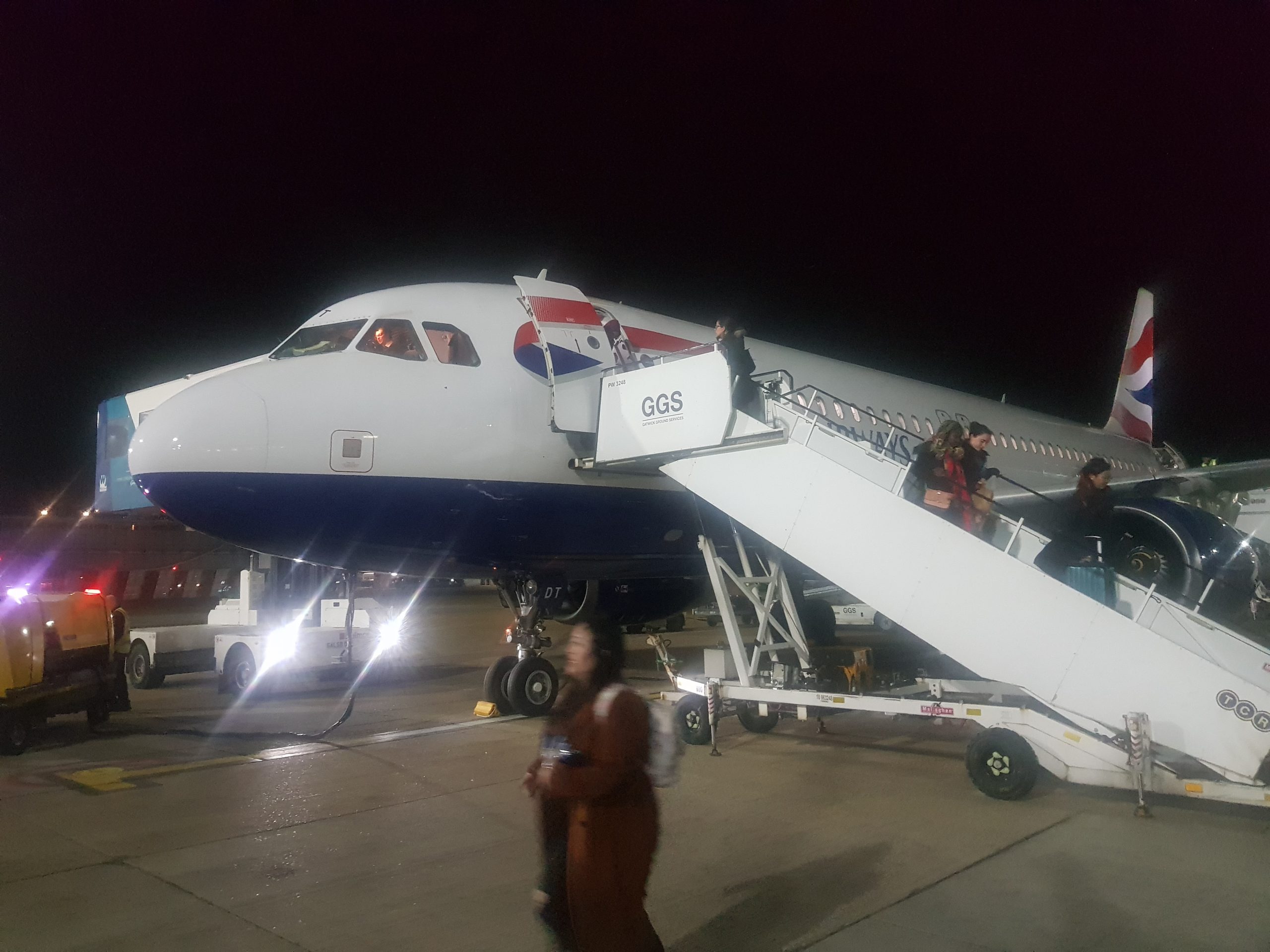
Above is the BA aircraft G-MIDT after we had arrived back into Gatwick on service BA2645. I haven’t flown on this particular aircraft before, it was brought into service in 2001 for use by bmi British Midland and then was taken over by BA in August 2012.

Boarding was smooth and without any delays, they called Groups 1 to 3 in one go and then Groups 4 and 5 went separately. There were sufficient seats in the boarding area for customers this time, something which isn’t always the case at Malta’s airport.

As seems usual in Malta, there’s a short walk to the aircraft and then customers use steps to board.

We had the aisle and middle exit row seats, with no-one sitting at the window, so Liam moved there. The cabin crew noted how sun-burnt Liam was to add to the occasion, with the crew always being efficient and pro-active during the flight. The loads were light, I’m not sure that the aircraft was even half-full in terms of the Euro Traveller cabin, a result perhaps of the current coronavirus situation. That did though mean that there was no shortage of space in the overheads and boarding wasn’t delayed whilst bags were shuffled around.
Boarding was though delayed as a result of French air traffic control, an element of which was on strike, which meant that we departed around twenty minutes later than expected. However, the pilots kept us informed and nearly all of this delay was made up en route back to Gatwick, a flight which took just under three hours. The flight itself was uneventful, all calm and comfortable, with the cabin crew making appropriate announcements, although the pilot seemed to get distracted when making her announcements, but I admit that it is rather more important to fly the plane.
Another perfectly acceptable flight from British Airways, with Gatwick South being well staffed so we had no delays getting through border control and then back to the long-stay car park.
-
Malta – Gozo – Nadur
Nadur is a quiet town in Gozo and we had opportunity to spend one night there this week in some farm accommodation. A handbook from 1839 noted that Nadur is:
“Nadur, on a hill, is cultivated to near its summit, here the finest fruits of the island are produced. Most people visit this fine hill, from its beautiful and extensive view of the island and its vicinity, and from the females being the handsomest on the island”.
The last line is hardly one that Lonely Planet or the Rough Guides would use today, but the rest of the information provided is true, the views from the town are certainly beautiful and extensive. Around 4,500 people live in the town today, which takes its name from the old Maltese word meaning ‘lookout’. It’s just a short walk from Nadur to Ġgantija, one of the oldest temple sites which is over 5,500 years old, suggesting that there’s been human occupation around this area for at least that long.


Here are the views.

The Basilica of St. Peter and St. Paul, which was unfortunately not open when we were there. It’s beautifully lit at night though and it is the centrepiece of the town.

Life feels relaxed on Nadur, there’s something quite timeless about the town.

A empty property in the town square, next to a bank and there are several bars and a couple of shops in the town. Our dining option in the evening, of which more in a separate post, was at the excellent Fat Rabbit.

These steps are in the main town square and I’m unsure what they led to, perhaps an air raid shelter.

A religious statue.

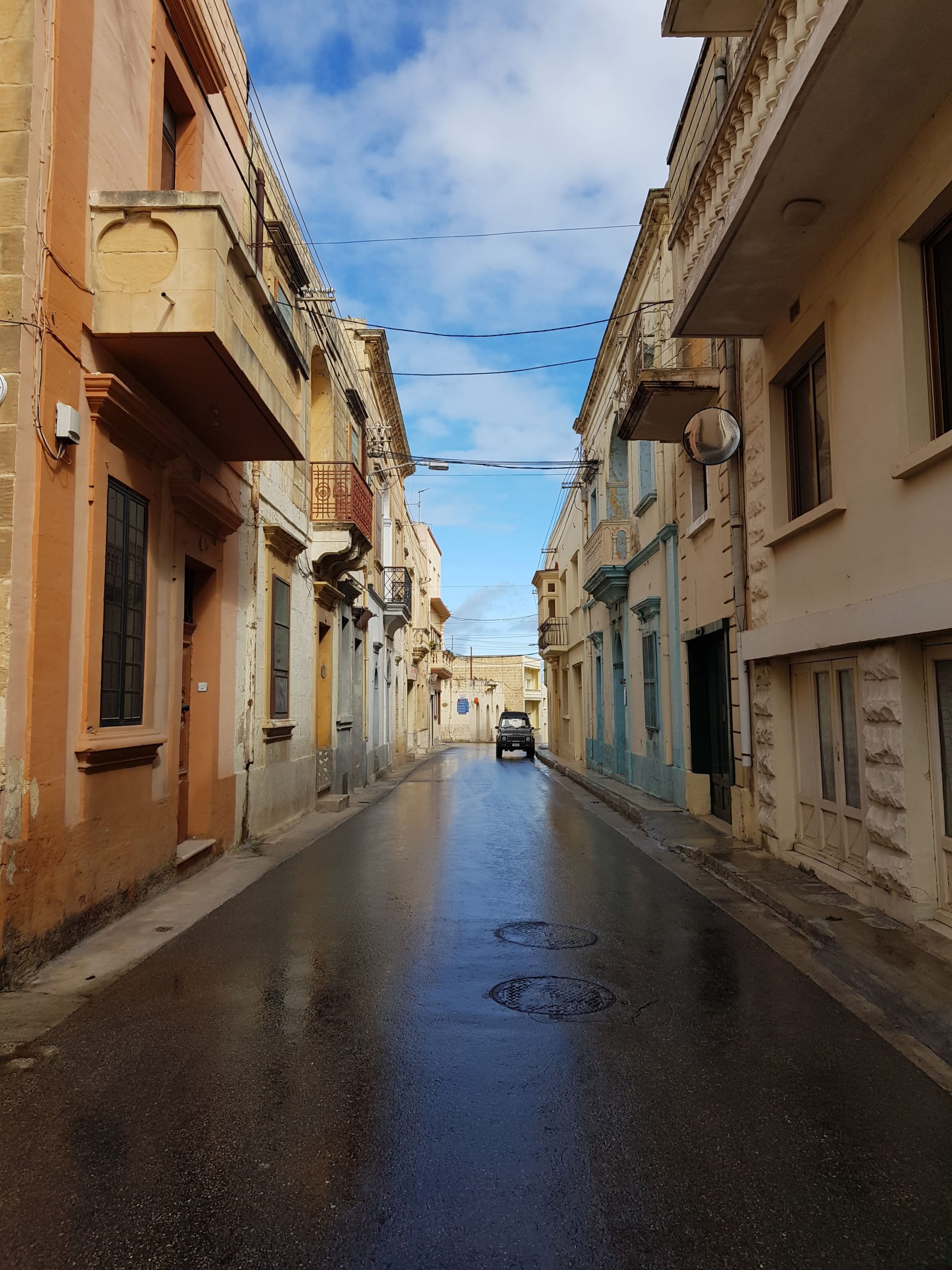
A street in the town.

A small park, located between the town and San Blas Beach.

There’s a road down from the town to Mgarr, which is Gozo’s harbour and gateway to the ferry service which goes to the main island. Unfortunately some of the road is missing at the moment, although there’s a makeshift path that pedestrians can use. If they like mud that is.
-
Malta – Gozo – Mgarr Harbour
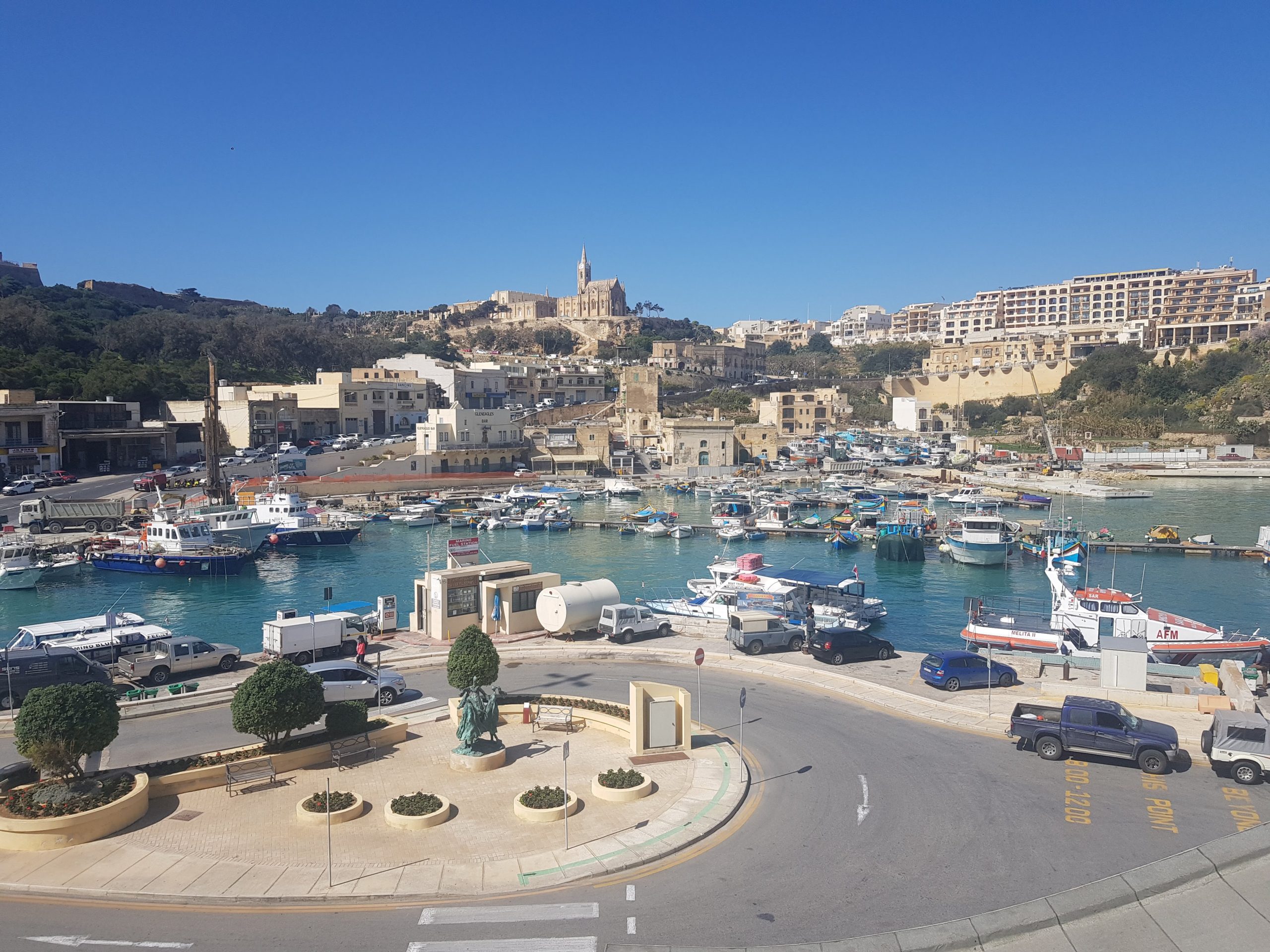
Visitors today disembark the ferry from the main island of Malta at Mgarr Harbour, at the south of Gozo. Although the new ferry terminal is relatively new, dating from the early part of the 21st century, there has been a ferry operating here since at least the early thirteenth century.

When a ferry comes into the harbour today, there’s quite a queue for buses, although in our case we just waited for the third bus which was much quieter. For the sake of a short wait, it made for a more comfortable ride. Anyway, what I liked was a guide book written by Thomas MacGill in 1839, who describes the scene back then in what he referred to as Migiarra.
“Migiarra offers no convenience to people landing, except a dirty coffee shop, the houses or huts on the beach are for the reception of fishermen and those attending the boats. But there are always in waiting an abundance of asses, to transport visitors into the interior and there are now also some calesses [carts] of a very ordinary description for those who do not choose to ride.”
Things have improved somewhat since then, but I can imagine the scene, the hustle and bustle of excitement of the incoming ferry and then the need to shuttle people to the centre of Gozo. In many ways, not much has changed, although I’m sure that the coffee shop situation is now much better.
-
Malta – Southern Region – Blue Grotto
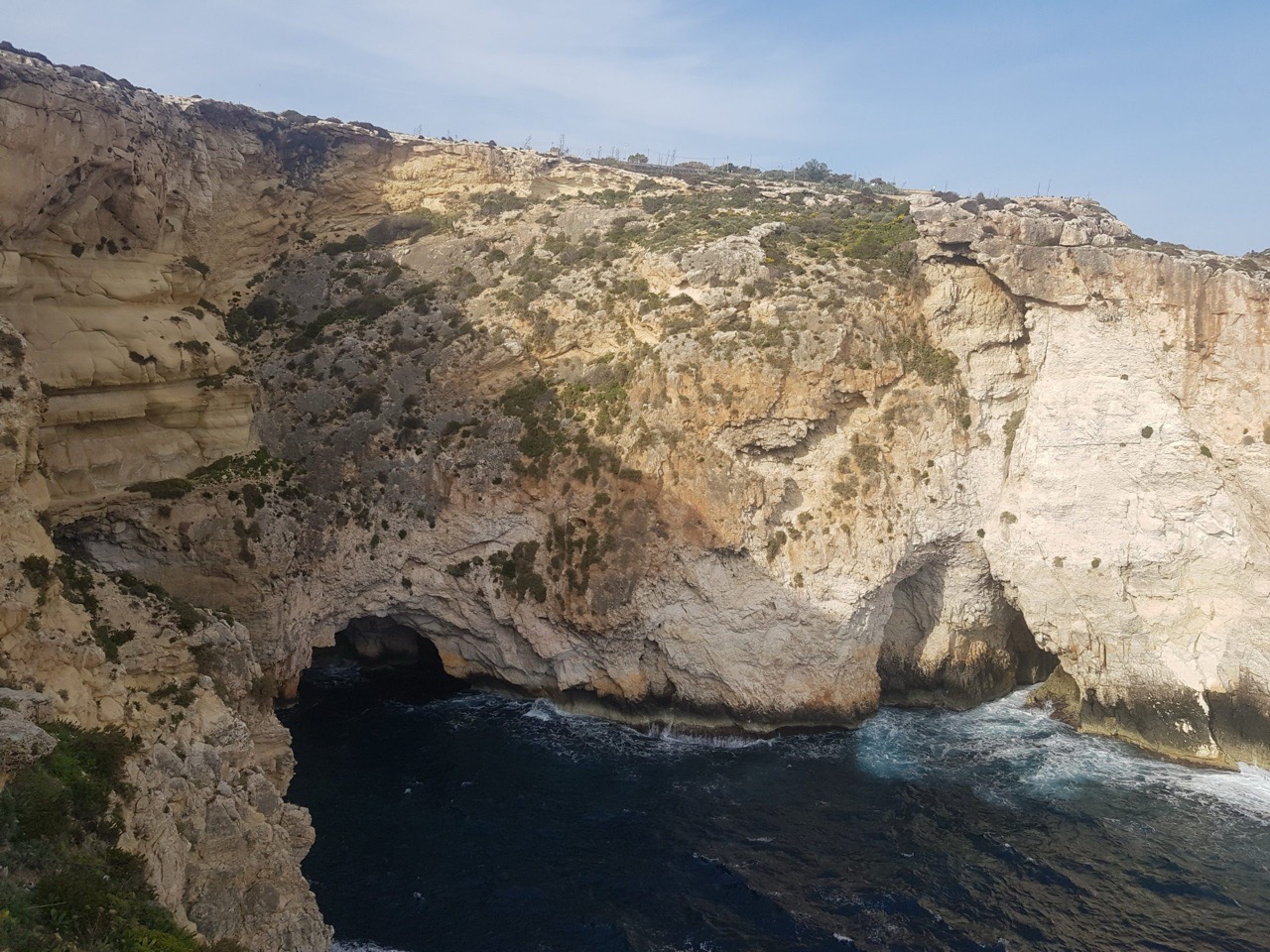
The Blue Grotto was at the end of our walk along the southern part of Malta, starting from the Dingli Cliffs. Taking its name from the bright blue water, something achieved by the sun and local flora, these caves are a popular destination. We didn’t have time to take a little boat ride around the caves, although I’d investigate that possibility on future visits, to get nearer to them.
The caves have been featured in numerous television and film productions, as well as being the backdrop for one of the Cadbury’s Milk Tray ads. I can’t find any mention to the Blue Grotto in the nineteenth century, with all the references being post-war, but the site has long since been a popular tourist attraction. There are some cafes and bars on site, as well as regular buses with run to Rabat and Valletta. It has all perhaps become a bit over-popular, but it’s still an impressive sight and there weren’t too many crowds during March at least.


-
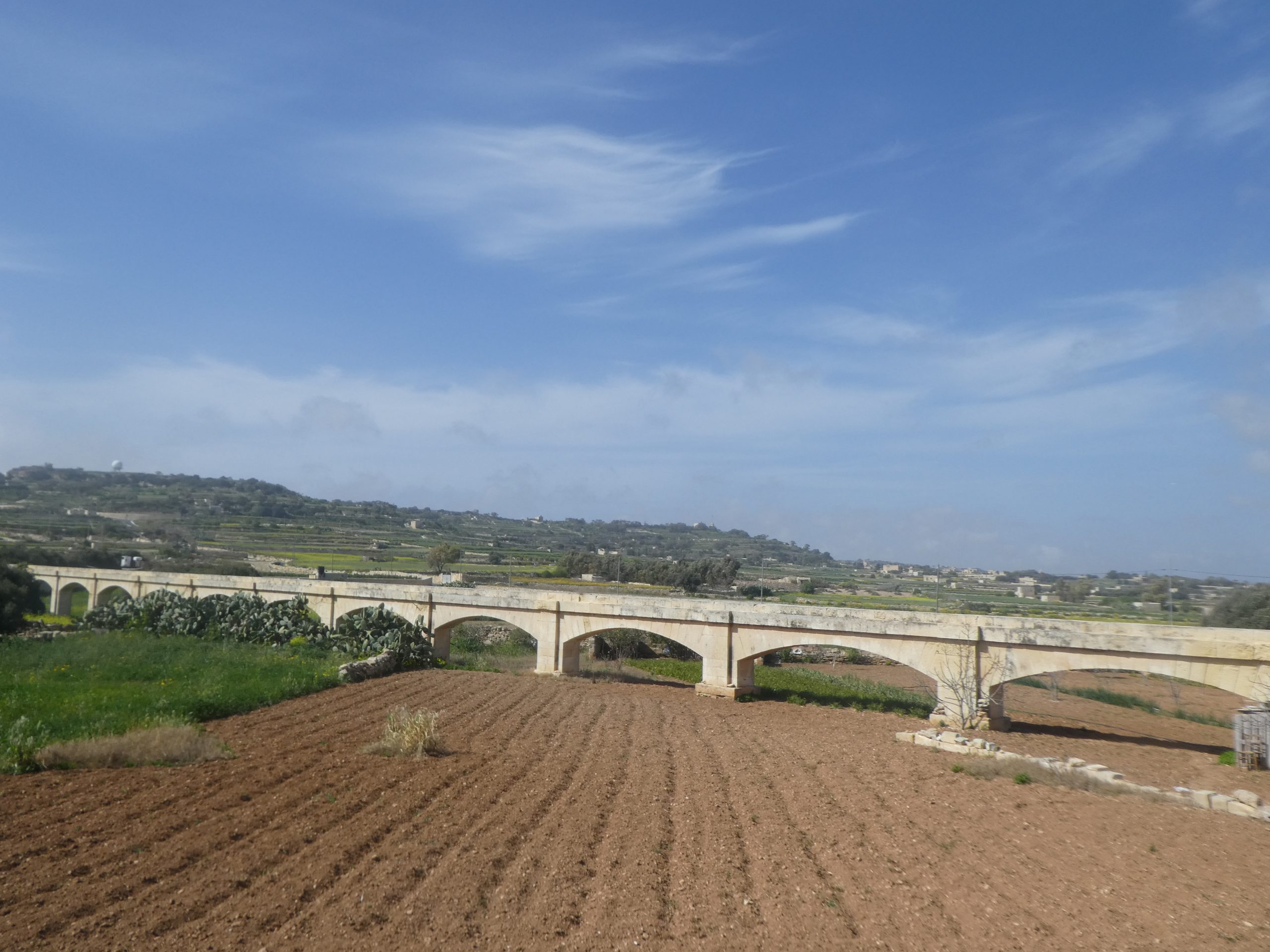
Malta – Southern Region – Fawwara Aqueduct
The Fawwara Aqueduct was the country’s second and was designed to transport water between Fawwara and locations such as Luqa, Tarxien, the Three Cities and Zabbar. It was commissioned during the period of Henry Bouverie’s governorship of Malta, a military man who held the role between 1836 and 1843. The aqueduct came into use in 1845 to try and allow water to reach as much of the island as possible.

The aqueduct could transport over 80,000 gallons of water every hour.

The aqueduct and Liam, with the route of the original stone structure being difficult to follow on an overhead map as much of it seems to have been destroyed without trace.


