Author: admin

  • Dictionary of the Vulgar Tongue – Day 107

    Dictionary of the Vulgar Tongue – Day 107

    The Dictionary of the Vulgar Tongue was first published at the end of the eighteenth century, and given that the current health crisis is giving too much time to read books, I thought I’d pick a daily word from it until I got bored….

    Drub

    This word has changed its meaning a little since the dictionary defined it as “to beat anyone with a stick, or rope’s end: perhaps a contraction of dry rub. It is also used to signify a good beating with any instrument”. Today, it’s more usually used as a way of suggesting that someone has beaten someone in a form of competition or sport, probably by quite some margin. It’s now thought that the word comes from the Arabian word ‘ḍaraba’, meaning a punishment by beating. It could though have come from the old English word ‘drepan’, meaning to hit or strike. I’m not convinced about the dictionary’s ‘dry rub’ argument….

  • Hoveton – St. Peter’s Church (George Neave)

    Hoveton – St. Peter’s Church (George Neave)

    The grave of George Neave (1803-1871) is in the churchyard of St. Peter’s Church in Hoveton. He was born in Smallburgh and he spent his life working as an agricultural labourer, initially living in Neatishead. George was listed on the 1841 census, living with his wife Elizabeth in Cangate Common in Neatishead, along with his 12-year old daughter Mary, his 10-year old daughter Clarisy, his 7-year old son William, his 5-year old son James and his 1-year old daughter Emily.

    In 1851, George was living with Elizabeth, as well as with his 16-year old son William, who worked as an agricultural labourer, his 12-year old daughter Emily, his 9-year old daughter Emma, his 6-year old daughter Sarah Ann, his 5-year old daughter Susan, his 1-year old daughter Jane, and his grandson William, aged 5. All of George’s children, and his grandson, had been born in Neatishead. Looking through the burial records at Neatishead, there is a 3-year old, Ann Neave, recorded as having been buried in the church in 1858 and this could have been one of George’s children.

    In 1861, George was living with Elizabeth, along with his 16-year old daughter Sarah, his 14-year old daughter Susan and the new-born George, who was George senior’s grandson. Unlike the others who had been in Neatishead, George, the grandson, had been born in Salhouse. That must have seemed just a little bit exotic….

    By the 1871 census, he was listed as living near the Common in the village, along with his wife Elizabeth and Hannah Hales, a servant out of situation. A few months after the census was taken, George died at the age of 68.

    George’s entry in the burials register for the church, the vicar was from the local Blofeld family of Hoveton Hall and the burial took place on Tuesday 30 May 1871. Elizabeth, his wife, was buried with George following her death in 1889, at the age of 85.

  • Hoveton – St. John’s Church (Elizabeth Agnes Thrower)

    Hoveton – St. John’s Church (Elizabeth Agnes Thrower)

    Located in the churchyard of St. John’s Church in Hoveton, this unusual grave marker is that of Elizabeth Agnes Thrower. Aged just 27 at her death, the grave marker was paid for by her husband, Alfred Thrower. Elizabeth died on 25 July 1892 and was buried on 31 July 1892, in a service overseen by the vicar Jonathan William Woolley. Sadly, that’s as far as I’ve got with the story of Elizabeth’s life, but her grave marker is near to the entrance to the church and is quite evocative of the period.

  • Hoveton – St. John’s Church

    Hoveton – St. John’s Church

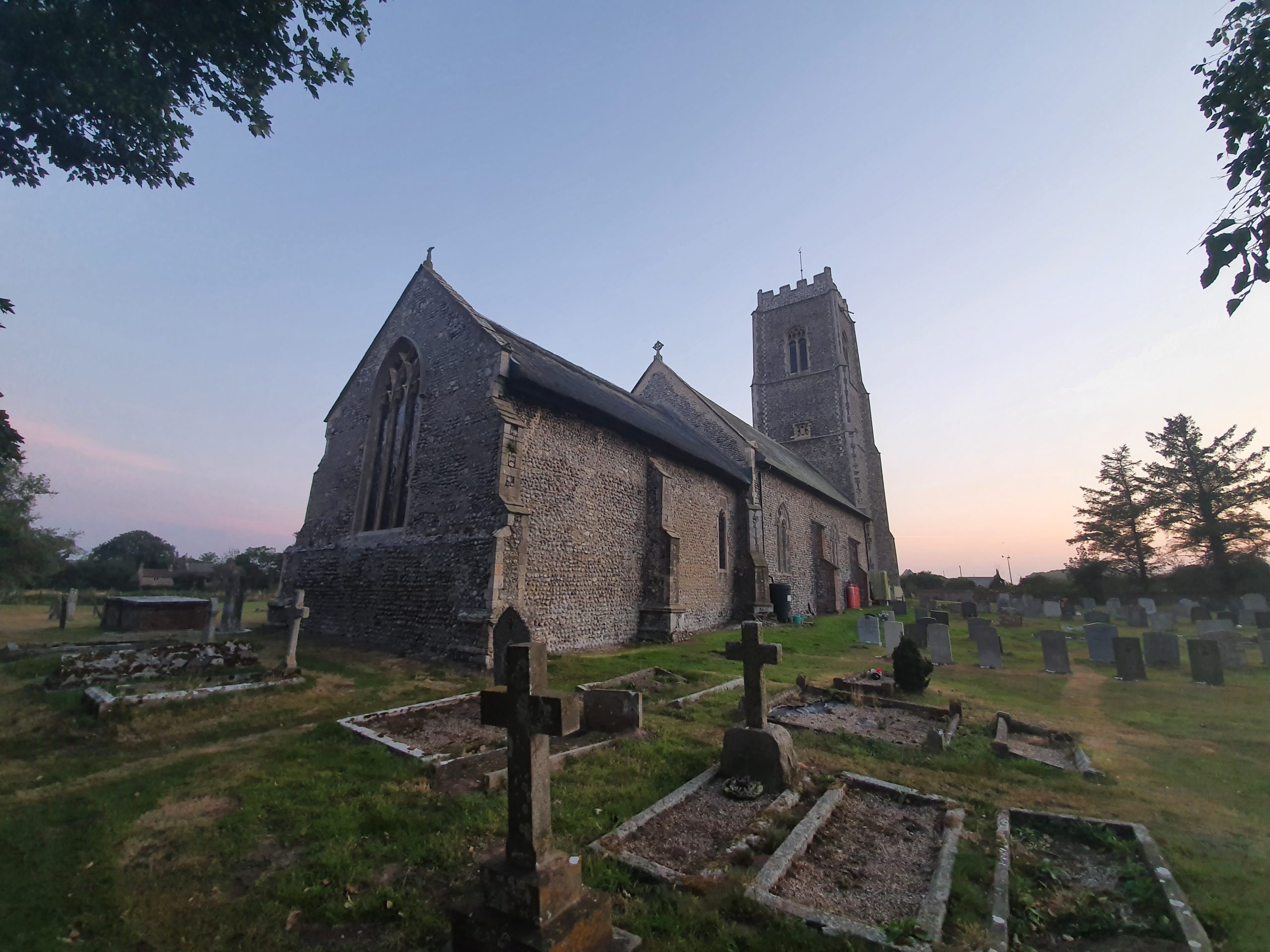
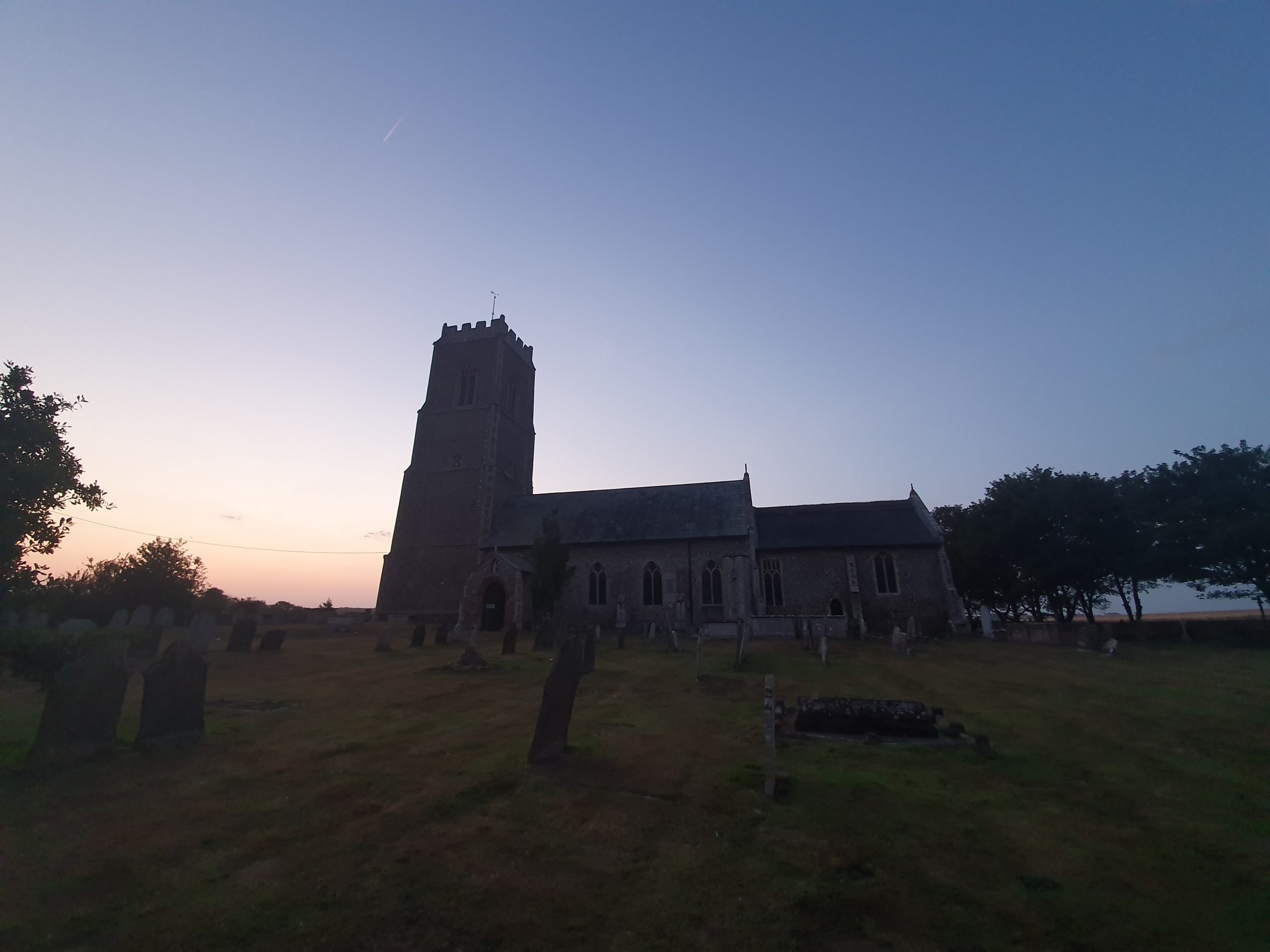
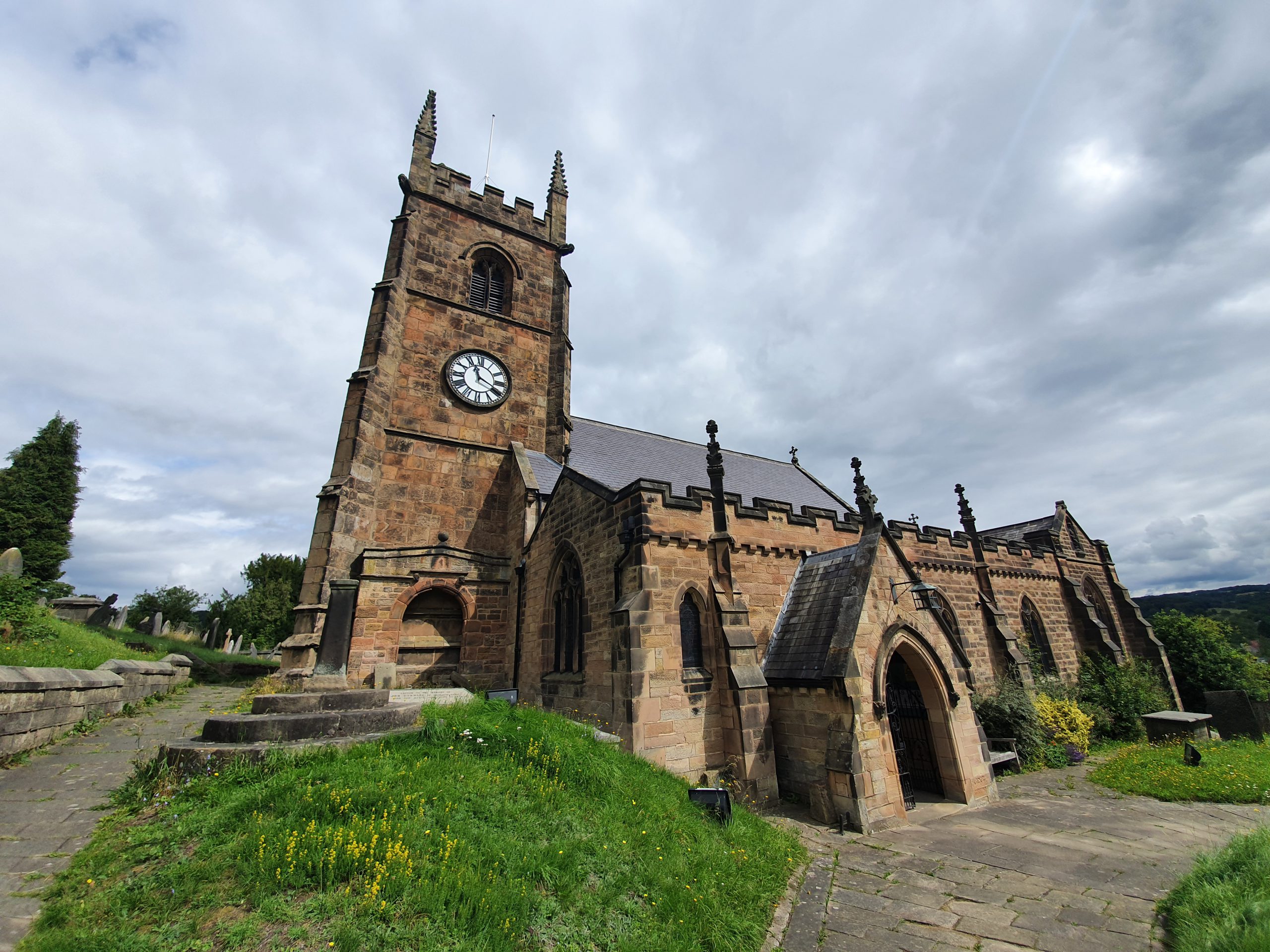
    The parish church of Hoveton is a short walk from the village centre, now dominated by Roys of Wroxham. The nave of the church dates to the late eleventh century, with the chancel being a little later and was finished at the end of the thirteenth century. The church was once alone at the top of a small hill that overlooked the village, but more modern building development has brought it into an urban setting.

    The brick tower was constructed in the 1760s.

    There are a few architectural styles here and the chancel door on the south side of the church has been bricked up, probably relatively early on.

    The church was modernised in 1890 under the supervision of HJ Green and in August 1889 the EDP mentioned the fund-raiser that was taking place to secure funds for this. There was a military band, lawn tennis, fish ponds, photography, fortune-telling, an art gallery, concerts and refreshments. That’s some considerable effort for a church bazaar, I’m impressed.

  • Hoveton – St. Peter’s Church (Solomon Hannant)

    Hoveton – St. Peter’s Church (Solomon Hannant)

    The grave of Solomon Hannant (1821-1901) is in the churchyard of St. Peter’s Church in Hoveton.

    At the 1841 census, Solomon was listed as being a farm labourer, although I can’t find him in the 1851 census (not that I’ve looked very hard). But there’s something interesting in the 1861 census, as a large family has formed:

    Solomon Hannant (40-year old agricultural labourer)

    Maria Hannant (37-year old housewife, born in East Ruston)

    George Hannant (13-year old agricultural labourer, born in East Ruston)

    Hannah Hannant (11-year old, at school)

    Harriet Hannant (9-year old, at school)

    Robert Hannant (6-year old, at school)

    Sarah Hannant (3-year old)

    Benjamin Hannant (1-year old)

    Solomon Hannant (81-year old pauper, born in Worstead)

    By the 1871 census, the family were living on Common Road in the village and Solomon, Maria, George, Robert, Sarah, Benjamin and Emily were living at home. Solomon (the elder) died at the age of 84 and was buried at the church on 24 March 1864. At the 1881 census, the children had all left home, other than Benjamin who was aged 21 and was working as a carpenter’s apprentice.

    By the 1891 census, Solomon and Maria was living on Plantation Road in Hoveton St. Peter and by now they were living alone. By 1901, Solomon and Maria were living at Upper Street in Hoveton, along with Sarah Hannant who was still single and by now was aged 43. By the time of his death, Solomon was paying £5 per year rent on his home, which is around £500 per year by today’s money and this is perhaps a sign of how much things have changed.

    And, with a touch of pathos, here is the burial register for St. Peter’s Church. Solomon was buried on 10 May 1901 and the next burial at the church was that of Maria, on 23 December 1901.

  • Travel Corridor Countries

    Travel Corridor Countries

    Well, this is good news, as it covers all of the countries I was visiting over the next few months. So, anyone returning from any of these countries (and Ireland, which was already exempt) doesn’t now have to stay at home for two weeks. That means a trip away is possible without hibernating inside for two weeks with no Greggs.

    Andorra Germany New Zealand
    Antigua and Barbuda Greece Norway
    Aruba Greenland Poland
    Australia Grenada Réunion
    Austria Guadeloupe San Marino
    Bahamas Hong Kong Serbia
    Barbados Hungary Seychelles
    Belgium Iceland South Korea
    Bonaire, Sint Eustatius and Saba Italy Spain
    Croatia Jamaica St Barthélemy
    Curaçao Japan St Kitts and Nevis
    Cyprus Liechtenstein St Lucia
    Czech Republic Lithuania St Pierre and Miquelon
    Denmark Luxembourg Switzerland
    Dominica Macau Taiwan
    Faroe Islands Malta Trinidad and Tobago
    Fiji Mauritius Turkey
    Finland Monaco Vatican City
    France Netherlands Vietnam
    French Polynesia New Caledonia
  • Norwich – Former St. Peter’s Methodist Church

    Norwich – Former St. Peter’s Methodist Church

    This is the former St. Peter’s Methodist Church on Park Lane in Norwich, currently being redeveloped.

    The photo is a little wonky as I had to put my phone over the fence to get an unobstructed view. But, what is visible here is the former frontage of the Wesleyan Methodist Church (see http://www.norfolkchurches.co.uk/norwichparklanemeth/St.Peter’s-Old%20Chapel(1d4).jpg) and this was all bricked over in the 1960s to create a flat frontage.

    This was the frontage and I have to say, the developers have done the building a huge favour in revealing what was once here. The developers of this site are turning the two former church buildings into residential properties, although they’ve run into some difficulties with the council. According to the EDP, Norwich City Council demanded £507,000 as a contribution towards affordable housing and the property developers offered £371,800. Anyway, after lots of negotiations and debate, Norwich City Council accepted £167,108. I mean, what an expert negotiation that was, £200,000 lower than the first offer. Anyway, I won’t get political here.

  • Buses – How Hard is It?

    Buses – How Hard is It?

    Before it looks judgemental, I’ve edited the above photo as I’m not interested in social shaming. I can be judgemental, but that’s normally about chicken bakes and craft beer. To be honest, I must admit that I thought First’s solution to make it obvious where to sit was pretty clear and simple. They’ve put wraps around the seats they don’t want used and huge signs saying that. It seems that perhaps that they might need to do more when one younger member of the public came to sit on a wrapped off seat… To be fair, they’d probably had a long day and just wanted to sit down, I find the directional arrows in Tesco to be entirely confusing so I can’t complain about mistakes by others.

    Anyway, my post isn’t about that, it’s that I was more humoured by the reaction from two other passengers nearby, both who tutted relatively quietly (they were moderately annoyed, but not enough to say anything out loud) and stared at the person for a good number of seconds before moving to other seats themselves. That seemed a particularly British solution that satisfied everyone.

    As an aside, there’s something moderately nice about sitting down and knowing that I’ll have lots of space around me, it’s making public transport feel much more comfortable. Although financially unsustainable….

  • Dictionary of the Vulgar Tongue – Day 106

    Dictionary of the Vulgar Tongue – Day 106

    The Dictionary of the Vulgar Tongue was first published at the end of the eighteenth century, and given that the current health crisis is giving too much time to read books, I thought I’d pick a daily word from it until I got bored….

    Draper

    The dictionary defines this as “an ale draper, an alehouse keeper”, the word origin is ‘draper’ meaning cloth and is usually referred to as a seller of textiles and fabrics. It gives the alehouse keeper something of an artisan feel though when used like this.

    The word was used in this manner, to describe publicans, from as early as the sixteenth century, but it had started to fall out of usage by the middle of the nineteenth century.

  • Norwich – Heigham Park

    Norwich – Heigham Park

    We meandered into Heigham Park on a group walk and it’s a park that I’ve never been to before. The decision to construct it was made in around 1919 as there was a plan to build on the former Heigham Playing Fields site and the council wanted some space devoted to a public park. That was some forward planning from the council and other projects from the same period include Wensum Park, Waterloo Park, Eaton Park and Mile Cross Gardens.

    There was originally a fountain and pool near to the sole entrance to the gardens, but this has now been filled in to become a large garden feature. The park feels quite spacious, but they’re only 2.5 hectares in size and they’re bordered on all sides by residential properties. Work started on the gardens in 1921 and they were completed in 1924 when the public was allowed entry.

    The Friends of Heigham Park have a useful and interesting web-site, with much more information about the park’s history. Anyway, photos from the walk: