Author: admin

  • Eat Out to Help Out Scheme in August

    Eat Out to Help Out Scheme in August

    I’m avoiding politics on this blog, but I’m amused by the Government’s introduction of this scheme. The reporting process is really secure, restaurants just have to tell the Government how many people they’ve given discounts to and they get a large payout. Certainly a brave use of Government funds.

    But, my favourite bit is that the Government explains that discounts can only be provided for eat-in meals. This means that takeaways cannot sign up for the scheme. However, this text is in the rules:

    “If a customer purchases a meal with the intention of eating it but then takes it away and leaves the premises, you can still apply the discount.”

    So, you can take the food away. Bizarre….

  • Dictionary of the Vulgar Tongue – Day 117

    Dictionary of the Vulgar Tongue – Day 117

    The Dictionary of the Vulgar Tongue was first published at the end of the eighteenth century, and given that the current health crisis is giving too much time to read books, I thought I’d pick a daily word from it until I got bored….

    Fam Lay

    Apparently (it says on Google), in 2020, Fam Lay is a famous rapper, but over 200 years ago, the dictionary defined this as “going into a goldsmith’s shop, under pretence of buying a wedding ring, and palming one or two, by daubing the hand with some viscous matter”. The term was used by the criminal fraternity and it seems quite a precise definition, probably never in common usage. The word ‘fam’ could mean the hand, and ‘lay’ in this instance is just a shortened version of layer, so it’s effectively a sleight of hand.

  • Attleborough – St. Mary’s Church (Theodosia Colman)

    Attleborough – St. Mary’s Church (Theodosia Colman)

    The grave of Theodosia Colman is located on a path, which isn’t really ideal, at St. Mary’s Church in Attleborough.

    Theodosia was born in 1752 as Theodosia Howes and she married William Colman on 6 February in 1778 in Besthorpe, a village near to Attleborough. Theodosia died at the age of 76 on 12 October 1828 and was buried on 18 October 1828 at a service overseen by the curate, John Fairfax Francklin.

  • Dictionary of the Vulgar Tongue – Day 116

    Dictionary of the Vulgar Tongue – Day 116

    The Dictionary of the Vulgar Tongue was first published at the end of the eighteenth century, and given that the current health crisis is giving too much time to read books, I thought I’d pick a daily word from it until I got bored….

    Fakement

    This word is defined by the dictionary as “a counterfeit signature. A forgery. Tell the macers to mind their fakements; desire the swindlers to be careful not to forget another person’s signature”. It’s a word that sounds like it should exist in English (adding ‘ment’ usually means to action the first part of the word), but it also sounds as though it has been recently been made up. It actually though dates back to at least the sixteenth century, although was more commonly used in the nineteenth century.

  • Attleborough – War Memorial

    Attleborough – War Memorial

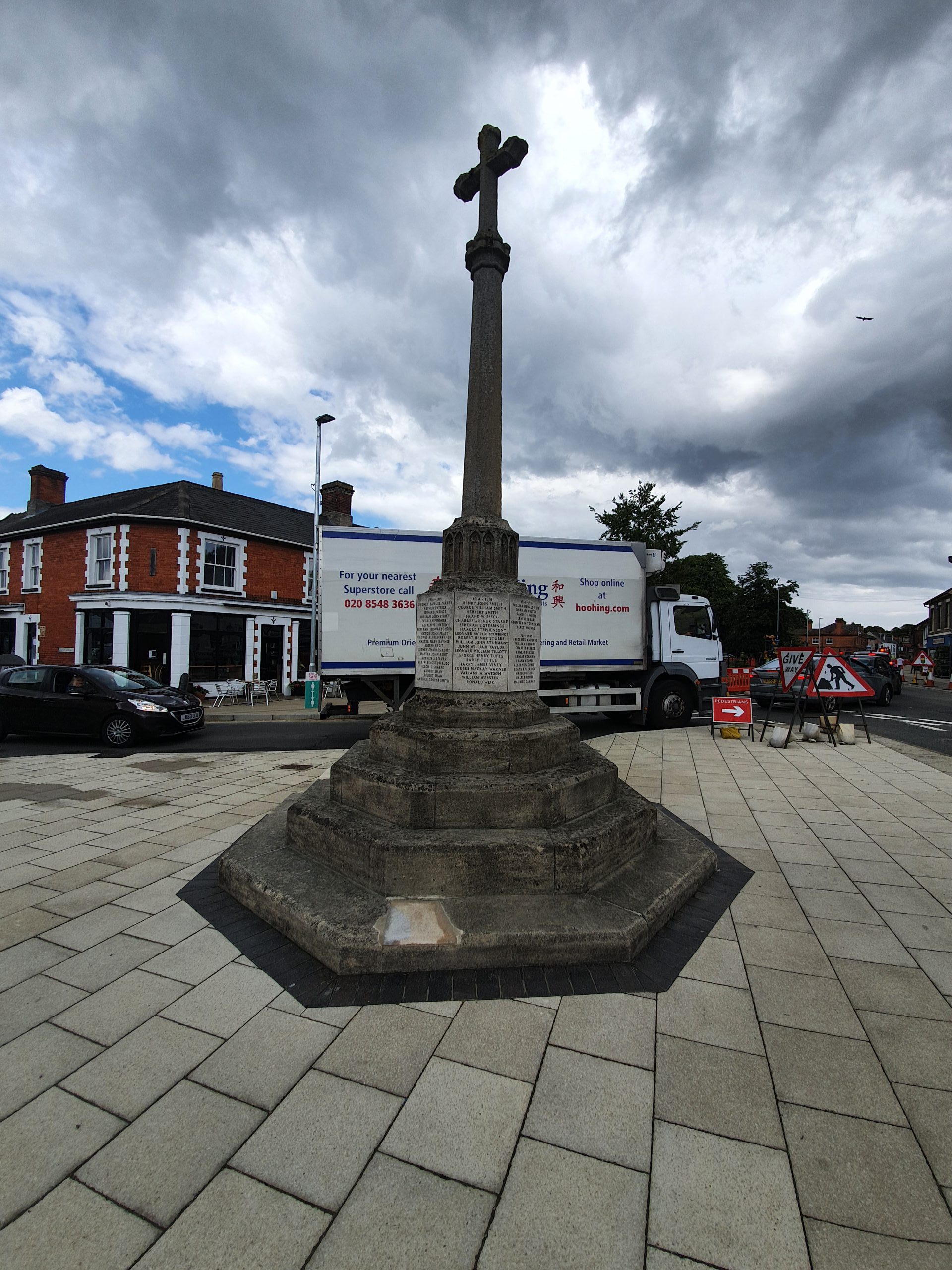
    The war memorial in Attleborough, located at the end of Queen’s Road, was designed by local sculptor AJ Harrison at a cost of £350, which was funded by public subscription. The memorial was unveiled on 27 June 1920 by Earl Albemarle at a ceremony attended by the Bishop of Norwich, which followed a service at St. Mary’s Church. Former servicemen and relatives of the dead walked to the memorial from the church whilst the Norfolk Regiment band played Beethoven’s Funeral March. At the end of the service, the Regiment band played Chopins’s Funeral March and finally, a bugler played the Last Post

    There are 101 names on the 20-foot high memorial from the First World War, with 24 names added following the Second World War and an additional name from the Korean War. The full list of names of those who died during the First World War is at the base of this post, below the photos of the memorial below.

    Barnard, Bertie
    Beckett, Leonard
    Bishop, Robert Sidney
    Blaxall, Ernest William
    Briggs, Elijah Samuel
    Briggs, Percy William
    Britnell, William Edward
    Butcher, William Clarence
    Chandler, Herbert
    Chaplin, Charles Edward
    Chapman, Bertie R W
    Chapman, George Henry
    Clarke, Alfred Bruce
    Codling, Sidney F W
    Coe, Cornelius Robert
    Crummett, Frederick E
    Cubitt, Terence A K
    Dagless, Alexander
    Dagless, Philip
    Daynes, Albert
    Daynes, Frederick John
    Dunnett, Percy A
    Dye, John William
    Eagling, Arthur Walter
    Edwards, Harry Ambrose
    Edwards, John
    Elvin, Ernest Robert
    Elvin, Syndey James
    Elvin, Wilfred Harold
    Etteridge, Robert W
    Fincham, Walter William
    Forster, Philip James
    Forster, Sidney Percy
    Gapp, Sidney Jack
    Gooda, Ernest George
    Gould, Edward
    Griffin, Arthur William
    Griffin, William Albert
    Halls, Frederick William
    Hawes, Albert William
    Hillier, Frederick William
    Hilton, William Charles
    Holman, William James
    Howlett, Harry
    Hunt, Arthur
    Hunt, Ted
    Hunt, William
    Johnson, Robert Frederick
    Lain, Frederick
    Lain, John
    Large, John Gerald
    Laurence, Alfred
    Lenney, George J W
    Lincoln, Charles
    Lincoln, Edward
    Orford, Lancelot E
    Ottaway, Walter James
    Parker, Sydney Samuel
    Patrick, Arthur
    Patrick, Edward
    Piercy, William John
    Pinnock, William
    Plumpton, Alfred
    Ponder, Bertram Thomas
    Pratt, Victor John
    Rayner, George Alfred
    Rayner, Walter Filby
    Redit, Joseph
    Redit, Sidney Charles
    Redit, Walter John
    Reeves, Arthur J
    Rudd, Henry Reginald Wallace Kingston
    Sharpe, Cecil G
    Shaw, Albert
    Shaw, Robert
    Smith, Arthur George
    Smith, George William
    Smith, Henry John
    Smith, Herbert
    Speck, Frank W
    Starke, Charles Arthur
    Stebbings, Bertram E
    Stephenson, Harold
    Stubbings, Leonard Victor
    Stubbs, Robert Henry
    Sturman, William John
    Taylor, John William
    Tillott, Leonard William
    Tufts, George Henry
    Tuttle, Harry
    Viney, Harry James
    Warner, Forbes Mackay
    Watson, Valiant A
    Webster, William
    Weir, Ronald
    Weir, William Oswald
    Welton, Norman
    Woods, David E H
    Yari, Ernest H
    Youngman, Geoffrey W
    Youngs, Percy

  • Attleborough – Thieves Lane Wesleyan Methodist Graveyard

    Attleborough – Thieves Lane Wesleyan Methodist Graveyard

    On this map of Attleborough from the early twentieth century, there’s B Gd. marked, or Burial Garden.


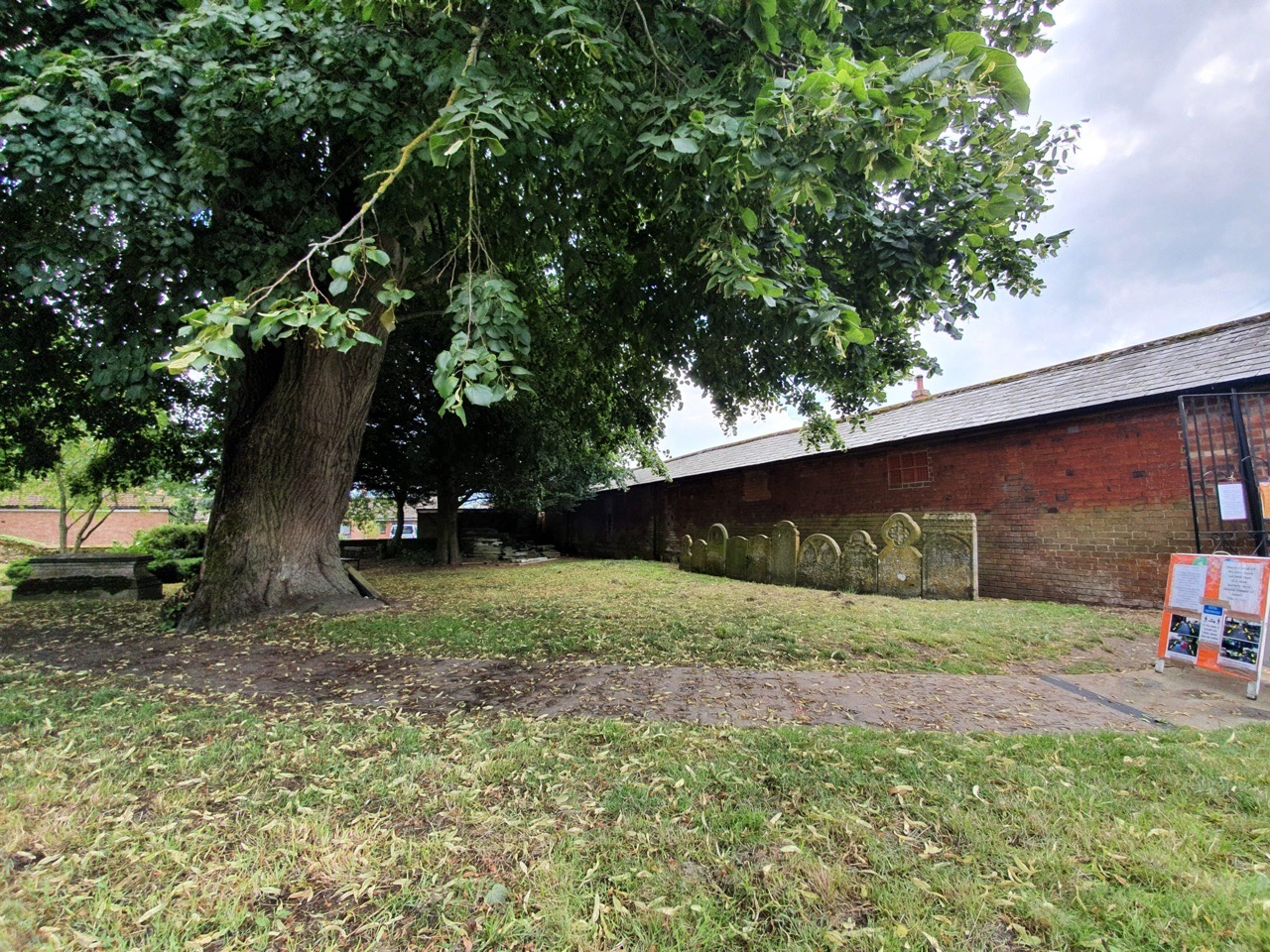
    I didn’t add much to the debate on how Thieves Lane got its name, but one legacy that remains along it is the burial garden that remains along the road. The Wesleyan Methodist church opened here in 1809 and in the following year, this graveyard was laid out. The church built new premises nearby in 1872, on Station Road, leaving just the graveyard behind in a similar manner to that in Swaffham.

    Today, the graveyard is a public park following its formal closure in 1991 for burials.

    Most of the graves have been placed by the wall of the neighbouring building.

  • Attleborough – Thieves Lane

    Attleborough – Thieves Lane

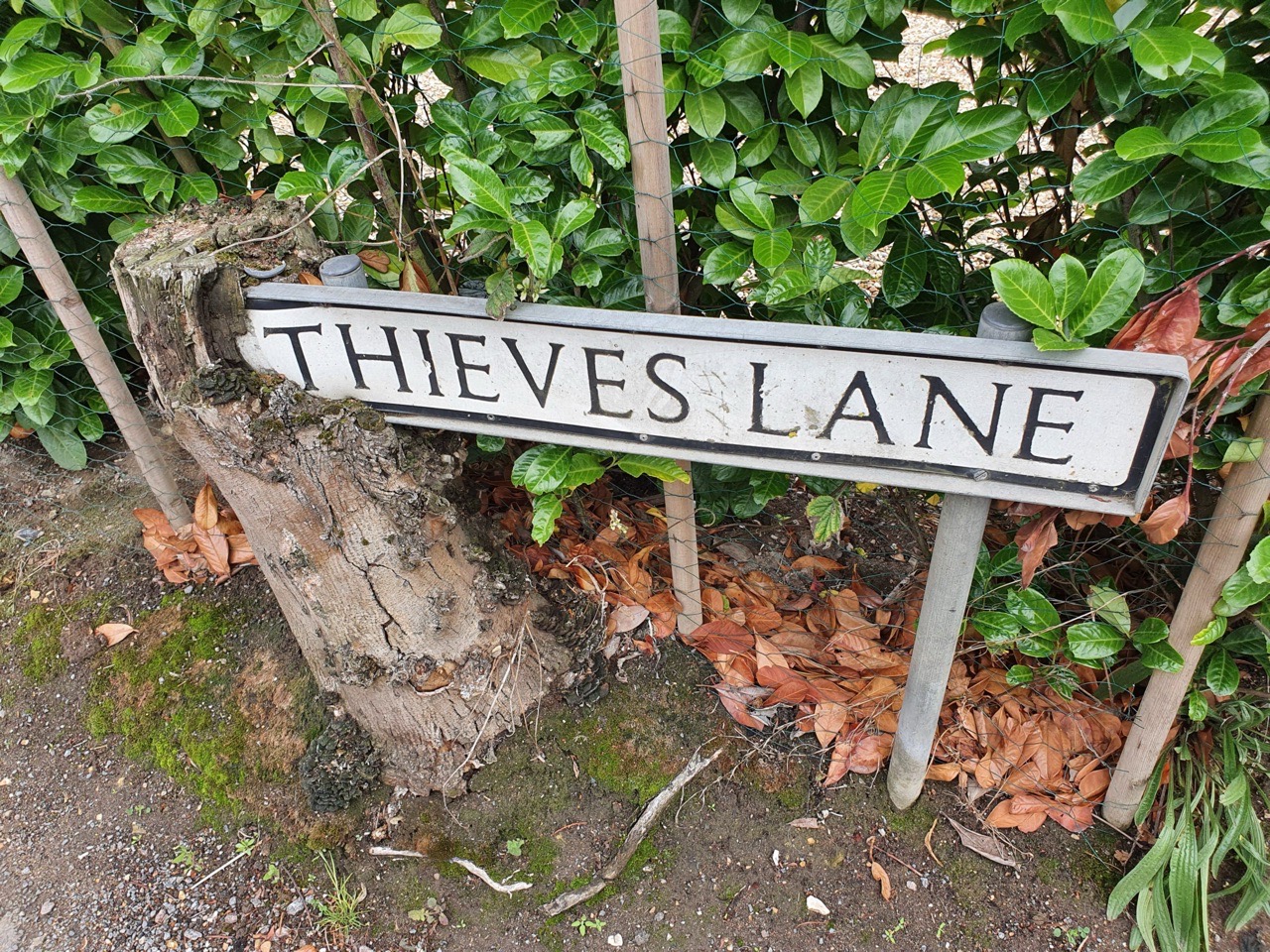
    I like street names such as this, they sound like they have some interesting heritage. The book “the Newmarket, Bury, Thetford and Cromer Road” from 1904, which is intriguing in its own right, just makes reference to this being where thieves may once have preyed on locals. But, it’s clear the author probably doesn’t know. And, I can’t find anything else about this beyond it probably being an area where some crimes had been committed long ago, giving it a bad reputation.

    The tree seems to have partly consumed the sign.

    And the dangerous lane…. It’s not the most prestigious of road names to live on, but it’s memorable at least.

  • Attleborough – St. Mary’s Church

    Attleborough – St. Mary’s Church

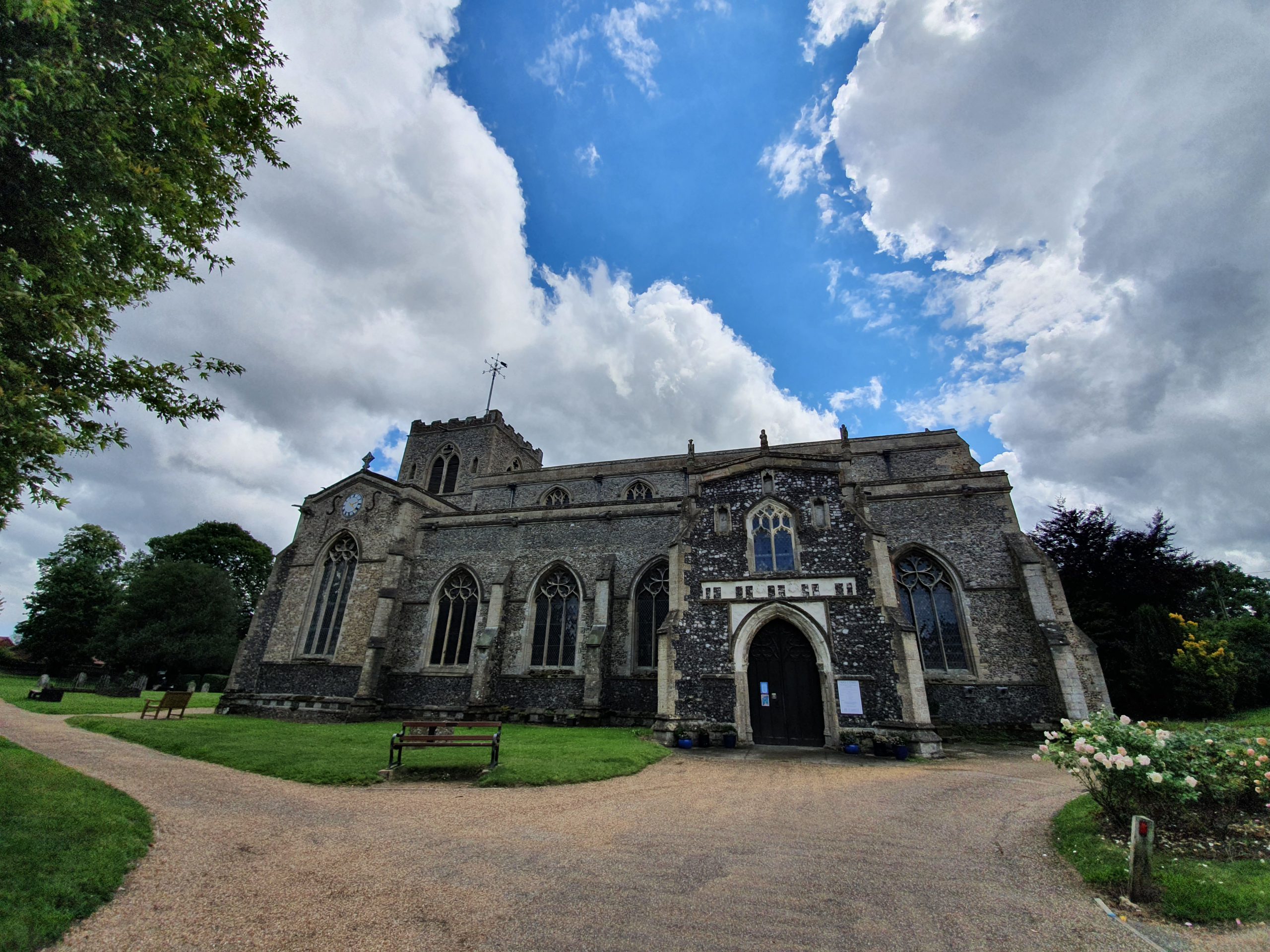
    One advantage of looking at medieval churches in remote villages is that the buildings make some sort of sense to someone such as myself, who has a limited understanding of the architecture and evolution of the structures. St. Mary’s in Attleborough makes, at first sight, very little sense with all of its all additions and removals over the centuries. There has been a church here since Saxon times, likely the ninth century, although the current structure is mostly from the eleventh century onwards.

    Unfortunately, this plan isn’t the clearest in terms of the quality. But it’s indicative at least, the north porch is visible on the left and Mortimer’s Chapel in the top-right.

    This is the north porch and work started on this in the late fourteenth century and it was completed early on during the fifteenth century. Unfortunately, all of the statues which once stood in the niches are no longer present.

    The west end of the church.

    The area between the north porch and the west end of the nave.

    Back to the north side of the building, this is the outside of the north aisle, which was a later addition.

    The church’s complexity is evident here, it looks more like a closed down priory converted into a new building. But, this is where the chancel once stood, which was taken down in 1541. The tower, which dates from the twelfth century at the base and the thirteenth century at the top, then became the east end rather than the central tower that it once was. It also left a rather muddled appearance, although it all adds character. The tower did once have a spire that was built in around 1300, but that fell down in around 1700. Which isn’t entirely ideal.

    An illustration of the church from the mid-nineteenth century.

    An old doorway in the base of the east end of the church.

    This is the south side of the church, where a new extension was added in 1994 to house a community centre.

    Given the current health situation, the interior of the church wasn’t open, but I understand it’s worth seeing with numerous old treasures, including wall paintings and the rood screen. So, I’ll meander back at some point.

  • Dictionary of the Vulgar Tongue – Day 115

    Dictionary of the Vulgar Tongue – Day 115

    The Dictionary of the Vulgar Tongue was first published at the end of the eighteenth century, and given that the current health crisis is giving too much time to read books, I thought I’d pick a daily word from it until I got bored….

    Elbow Grease

    Some of the phrases in this dictionary remain in common usage today, but I would have otherwise assumed that they perhaps had a more recent origin. This phrase is defined in the dictionary in the same way as it would be today, “labour, elbow grease will make an oak table shine”. Indeed, the phrase is much older even than the late eighteenth century when this dictionary was published, it was being used as early as the sixteenth century and likely before then. There is a direct French equivalent, “huile de coude” which means the same.


  • Attleborough – Pillar

    Attleborough – Pillar

    I accept that the title of this post (excuse the unintentional pun) being “pillar” isn’t exactly overly descriptive, but that’s what the listed monuments register calls it. If it’s good enough for them, then it’s certainly good enough for me.

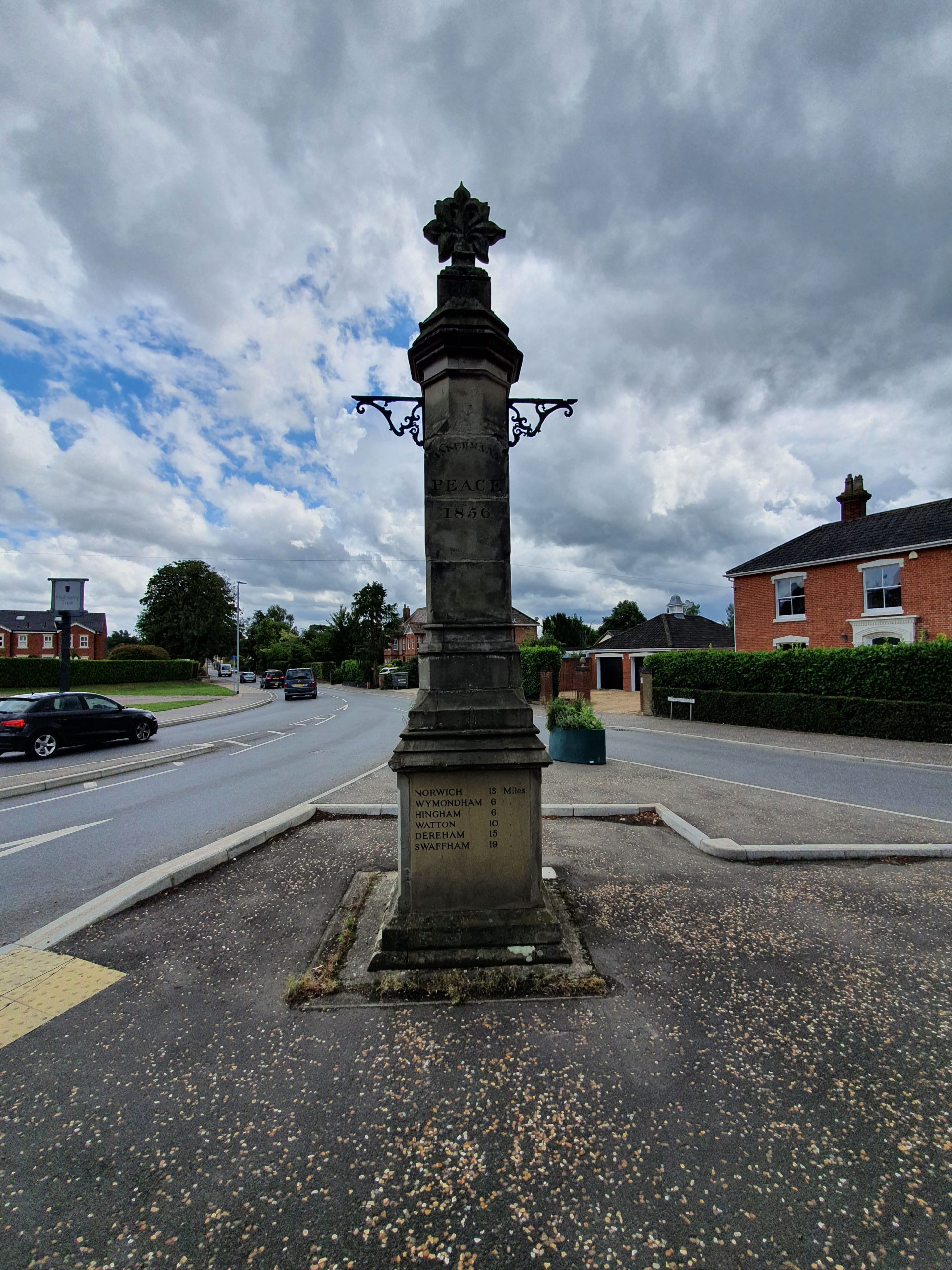
    This pillar was installed here in 1856 and it noted on the sides of its top section some of the battles which were fought during the Crimean War. That means that this is one of the few surviving monuments in the country which commemorates this conflict against the Russians, which led to over 20,000 British deaths.

    At the base, and visible in the below photos, the column was used as a milestone with distances to various locations around the country. This is in a good state of repair, but I suspect much of that is because a car driver slammed into it in 1983, meaning that some restoration was essential. When it was repaired, it was realised that the monument didn’t have a solid core, but instead the slabs had been placed around a hollow middle section.