Great news, they were safely on the bus which rushed them into Trieste. Note that instead of living in the moment and looking out of the window at the beautiful view, they’re glued to their phones. The older generation……
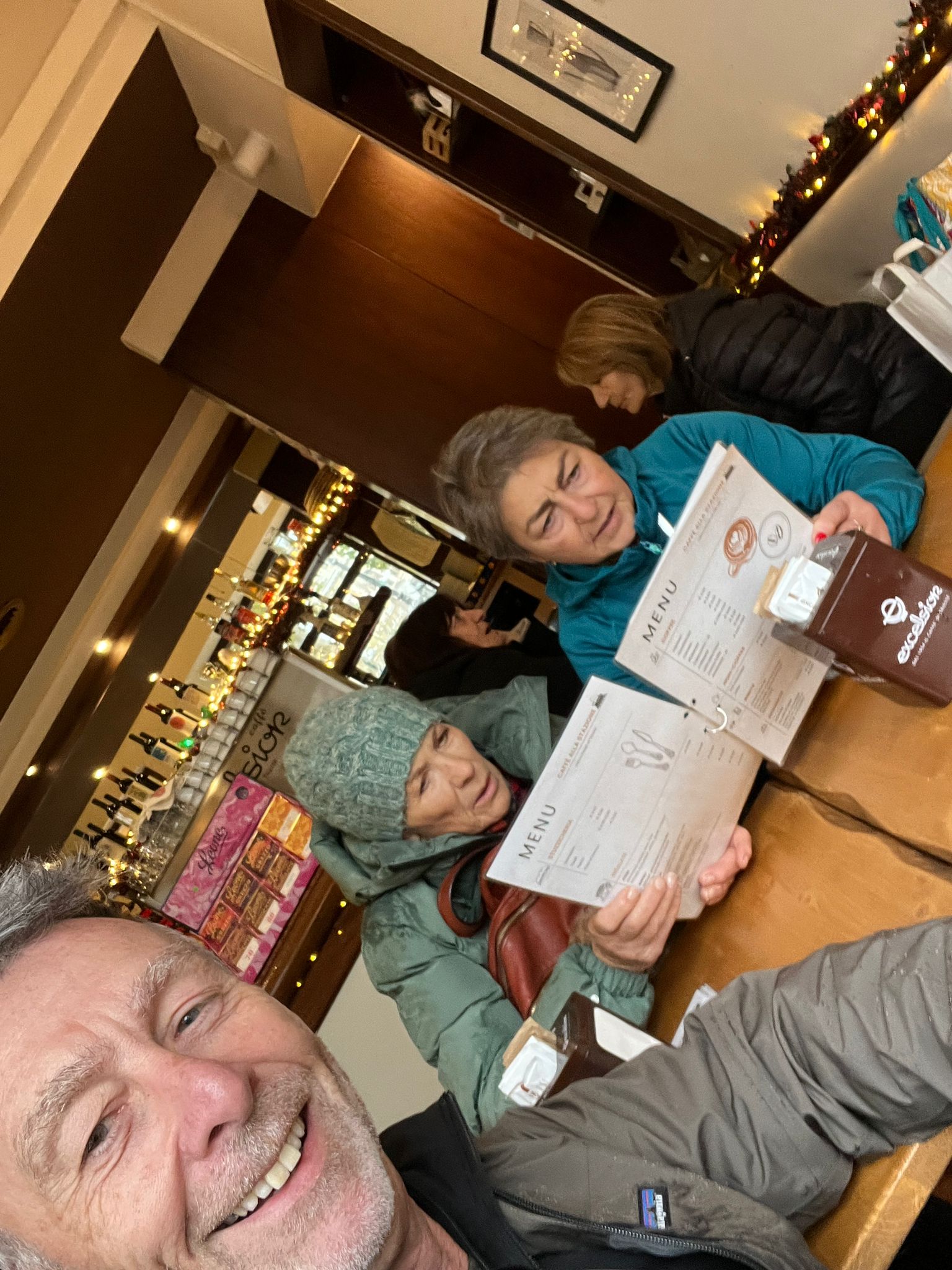
Look at the excitement where there’s food involved. Steve and I are much more interested in the environment we’re in, but the thought of a croissant and Susanna and Bev are totally distracted. Mind you, it’s got them off their phones temporarily.
Very festive….
Their coach from Trieste to Ljubljana is in two hours, so they have potential to explore the city a little in that time….. We’re all going back there on Monday, so hopefully they’re taking the time to recce a nice restaurant for my birthday.
There is a huge amount of posting necessary to explain how I’ve got from Cardiff for birthday weekend one to Ljubljana for birthday weekend two. It involved a trip to Luton, then a flight to Rome, a train to Orte, a train to Rimini, a train to Bologna, a train to Venice, a train to Trieste and a coach to Ljubljana. But, more on that another time (but hopefully this week) as I have a lot to post about.
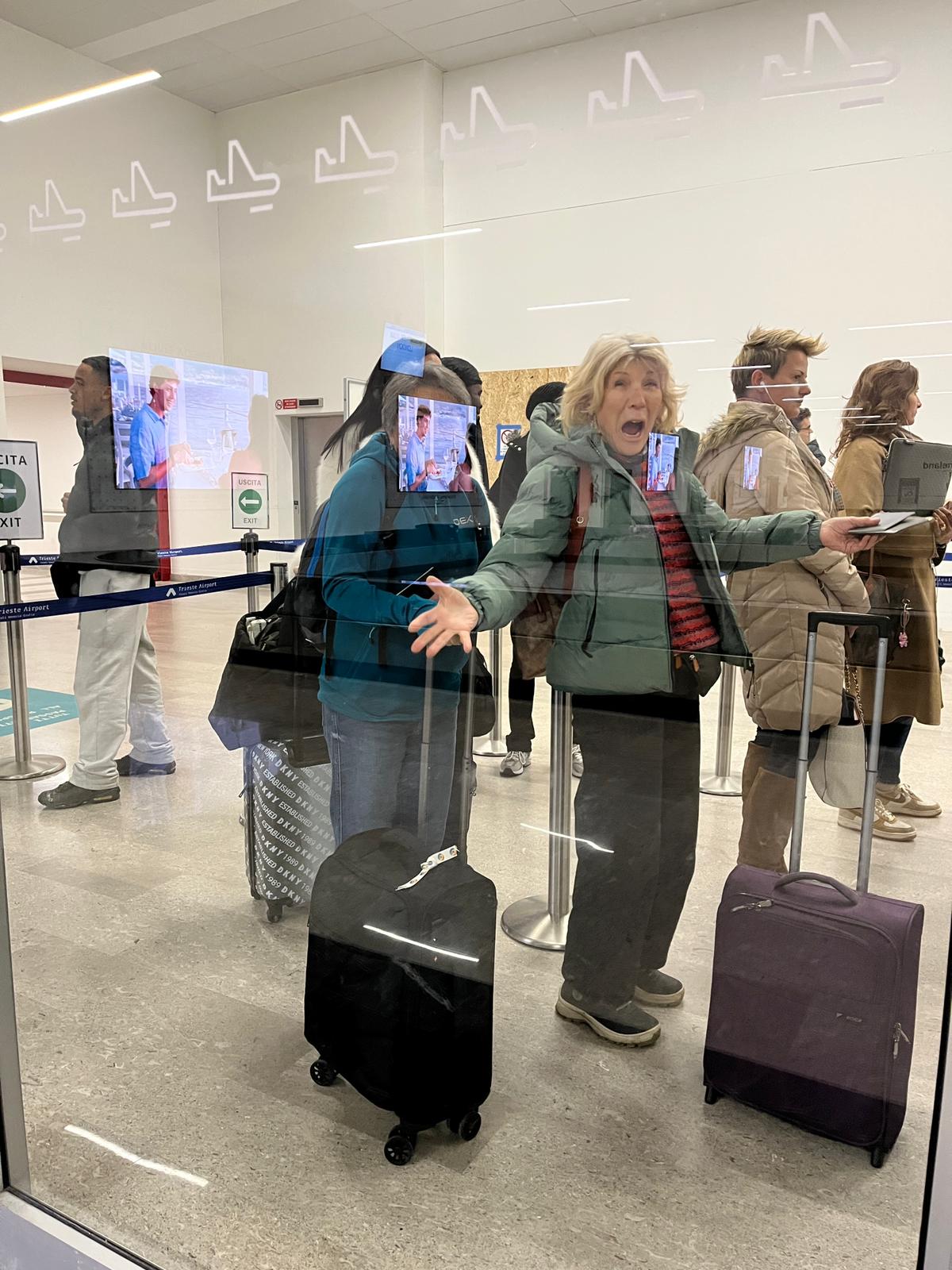
Because, I need to switch to more immediate posting from this weekend as Bev (her face neatly blurred from Steve’s photo), Susanna and Steve are flying into Trieste this morning. They then get the same coach service that I got yesterday evening to get to Ljubljana for around 15:30 today. They’ve had a slight delay at Trieste Airport due to the new EU entry system, but they’re through and I think they’re currently on a bus to Trieste.
I, on the other hand, have had breakfast at the hotel and am waiting patiently for the others to arrive into the city. It’s a little cold at the moment, but it’s not quite cold enough to snow, so all is well. Susanna likes hot weather so she’ll likely be slightly put out about the temperature here, but she’s not demanding like Bev so won’t complain for long.
I’m now having lunch at this nice little cafe I’ve found in the centre of Ljubljana called McDonald’s. Bev won’t eat at McDonald’s due to her chicken McNuggets addiction, so I have to visit this now before she arrives.
I’m expecting history, beer, gossip and adventure from this weekend….. What could possibly go wrong?
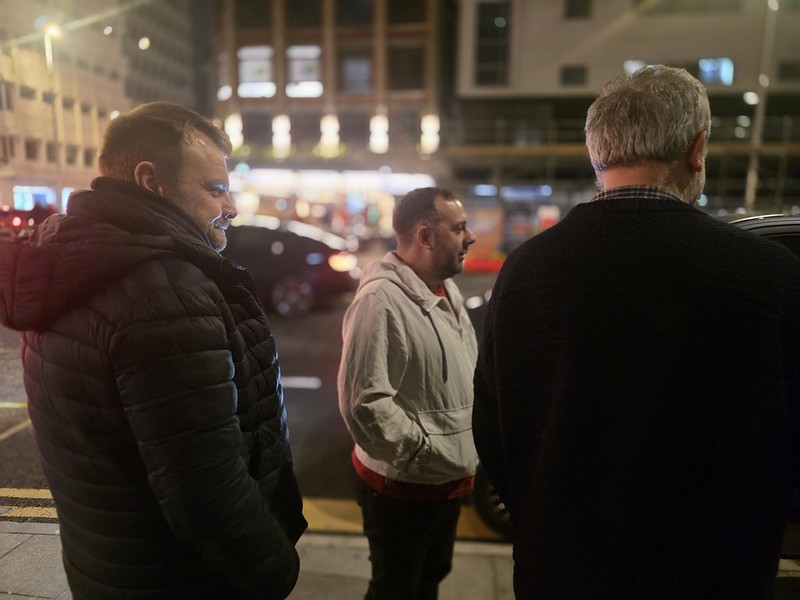
It was the end of the evening and we decided to get an Uber home. Richard used his Uber account to book the taxi, although he’s not very competent at these younger person’s apps and so he got a bit muddled up where to stand, so we ended up standing in a pedestrianised street.
The biggest crisis though is that Richard has a very poor Uber rating. Liam and I have 5 star ratings from drivers, whereas Ross doesn’t use such technology. I am a naturally courteous passenger, giving consideration to the needs of the driver, which is why I obtain very high ratings. Richard has a much lower rating, but it’s not for me to comment why.
After we found a driver to accept Richard’s low score on the app, we were on the way back to the hotel. The driver was fortunate that he was setting some passengers down in the exact place he was picking us up, although I suspect it’s more likely he suggested that they got out at that spot for his convenience. Either way, everyone looked happy.
I commented to the driver about Richard’s predicament and as Richard promised to tip him, I’m fairly confident that he secured a 5 star rating on this journey. I was glad to be of assistance, but I don’t need any praise for that.
To cover myself legally, can I note that Richard is contacting Uber’s customer service support to contest his rating. He denies any allegations that he is anything other than the perfect customer and he notes that he always tips generously.
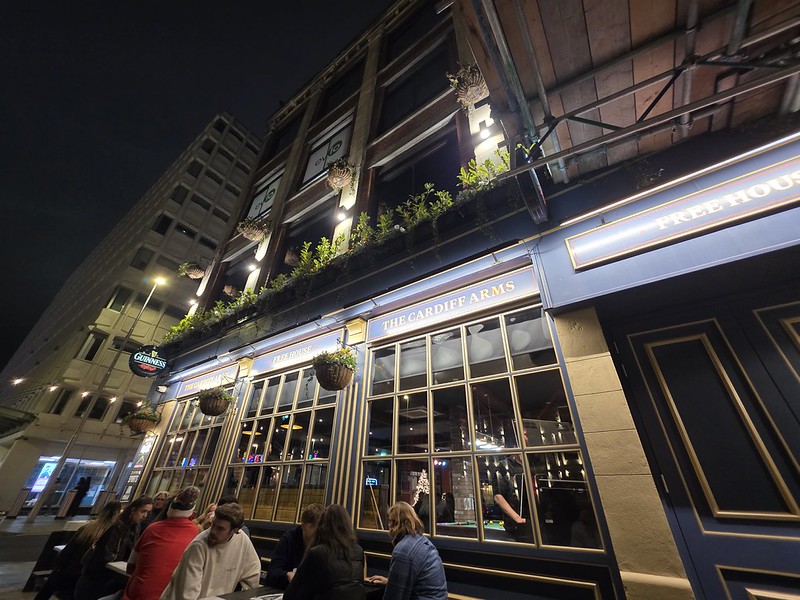
Our final stop of the evening was the Cardiff Arms, a venue clearly designed more for younger people given the volume of the music playing. There was a friendly welcome from the doorman though and I was eyeing up the outside seating area as being more peaceful, which is where we ultimately sat.
Although the venue has been designed to look like a late Victorian pub, it is only a couple of years old and has taken the place of a Chinese restaurant which was here before. This whole area has been really smartened up over the last couple of years, I hadn’t realised until looking at relatively recent views on Google Streetview.
The beer selection wasn’t entirely decadent, but there were a couple of interesting keg options there. There are sometimes real ales available here, but it’s usually primarily keg.
I went for the Cwtch from Tiny Rebel, a very decent red ale. The temperature outside was moderate (so my friend Susanna would have considered it as freezing) and it was all rather pleasant.
I have to give the venue opposite credit for their Christmas decorations. It would be wrong of me to gossip here about Ubergate, so I’ll note that in a separate post.
The online reviews of this venue are broadly positive for drinks, but it seems that they might be struggling a little with the food. It’s going to be a challenge for them given the number of food options in Cardiff, but maybe it’ll all settle down.
Anyway, it was a bit loud for me now that I’ve reached the age of 30, but the team members were all friendly, it was clean and provided us with a suitable space to think back about the highlights of the weekend so far.
Following my posts about Aberfan, my friend David Morgan (the one who walks a lot, mostly up hills and generally quite fast) suggested this series of podcasts from BBC Sounds. I’m currently travelling Italy at the moment, so whilst on a flight to Rome and on trains internally, I’ve listened to the entire series today of nine episodes.
As a short comment, the way that these families were treated was genuinely shocking. I had realised already that they weren’t respected in the way that they could and should have been, but the treatment was often downright disrespectful. To lose your child and then have to fight to get the tips removed to prevent a re-occurrence, only to discover that it was paid for from the memorial fund is sub-optimal to say the least. Reading old newspapers, it seems that the trustees of the fund begrudgingly accepted the request from the Government to contribute as it was seen to benefit the village, but they shouldn’t have been asked and it was right that the money was later repaid to them.
One of the survivors says that now she’s an adult she simply can’t work out how the families involved coped. Not only did they lose their child, or children, but they faced disinterest and push-back from the authorities in the years that followed. Survivor guilt was also a common theme, how the young children didn’t feel somehow lucky to survive, they were mentally traumatised by what happened and there wasn’t the assistance provided to help them even though some money was made available from the fund.
The worst thing is that no-one was ever held accountable for what happened, there was no-one who lost their job, was demoted or took responsibility for the mistakes that were made. That was what I considered to be the key thing that the locals wanted, they felt that their children had been murdered by the National Coal Board and so they never received the closure that might have helped them deal with the tragedy.
Anyway, they’re definitely worth listening to and the podcasts are well produced.
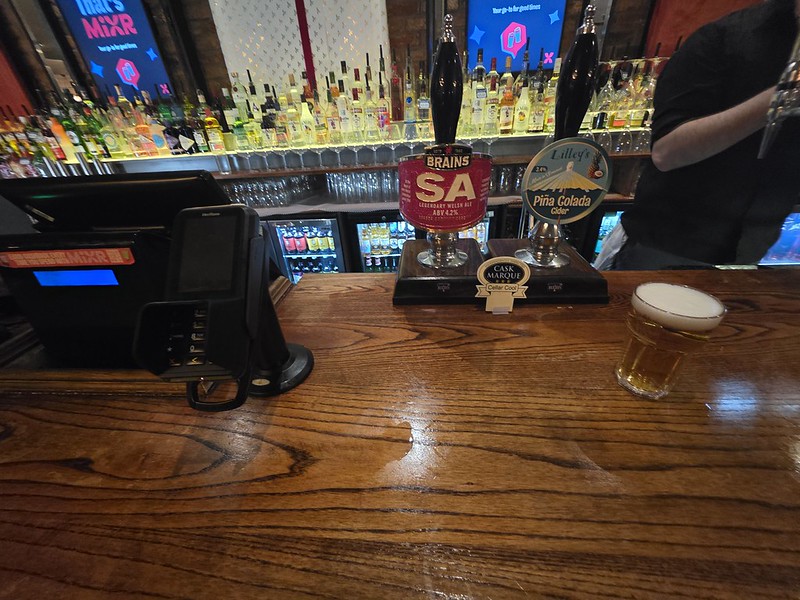
Apologies about the poor quality of this image, but the next stop on our little tour of the city was Henry’s Cafe Bar. We had run out of Good Beer Guide pubs, or at least ones that were open, so this seemed like an interesting option that was central.
Richard would like it pointed out that he doesn’t own any Christmas jumpers, he just has some that look like them and so he isn’t entering this competition. I hope that this is now clear.
The only real ale available was Brains Special Ale, but unfortunately it ran out whilst pouring, so I had half a pint of Asahi instead as I’m flexible like that.
The barman kindly let me keep the Brains real ale that had poured and it fortunately didn’t taste like the end of the barrel. The Asahi on the right didn’t set my world alight, but there are worse beers out there. Richard had red wine and he seemed content with it, although as all the drinks had to be served in plastic for licensing reasons relating to the rugby, that did take away from the decadence a little. Incidentally, Liam was busy putting his beer on Untappd in this photo, whereas I know Ross wasn’t doing that….
The venue is large inside and it’s a cafe bar in the day, turning into more of a cocktail venue in the evening. The venue is also currently available on Stonegate’s website, although the annual rent is well over £100k and it’s tied on beers and the like, but they’re not a key driver here. There’s food served during the day which is from quite a large menu, with a focus on healthier options.
Overall, it felt a comfortable and safe environment, something with a little class. I’m not sure that I’m really their target customer, but I liked the friendly welcome and also the little touch of giving me the beer they had tried to pour for free, I always appreciate such gestures.
The next Good Beer Guide venue that we headed towards was the Pen and Wig, located in a former Victorian house. I realised, with a little disappointment, when entering that the venue was operated by Stonegate as part of their Heritage Pubs brand. In fairness, it’s very well reviewed online and they’re clearly doing something right.
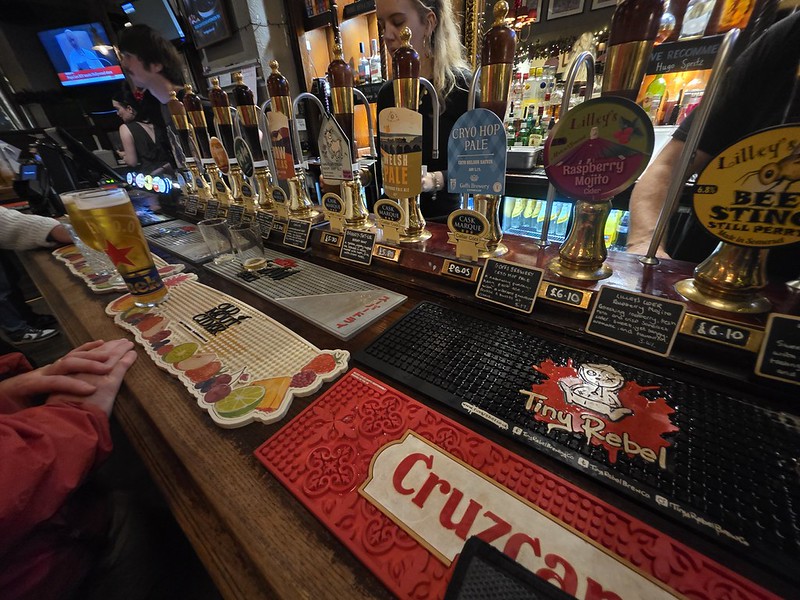
There was quite a broad range of real ales, although nothing exactly set the heart racing and the prices were towards the higher end of the scale. The service was though friendly, engaging and efficient.
I went for half a pint of the Horny Goat Ale from the Trefforest Brewery and it was clean, hoppy, well-kept although perhaps a touch generic.
For anyone interested, here’s their matchday food menu. They normally have a slightly wider menu available, although this looked reasonably interesting.
Richard commented that he was the oldest customer in the pub, but I find that’s very often true. He was right though that this seemed to be a popular venue for students, so the average age was quite low. Richard had knocked off all the flower arrangement on the table, we initially thought as part of some political statement, but it was just clumsiness. We didn’t say anything though.
Being a Stonegate pub, I realised that Richard and Liam could sign up to their loyalty app to get a free drink. Liam went for a Guinness, which I kindly shared with him after his nifty work in getting half into a half pint glass, whilst Richard opted for a gin and tonic. Well, it would have been tonic, but they had run out and so they gave him one rather flooded with lemonade.
The building only became used as a pub in the 1990s, so it’s one of the more recent licensed premises in Cardiff. I wasn’t surprised and delighted with Stonegate operating it as their prices are high, but at least they had a decent real ale and cider offering. The venue was relatively clean and it was spacious, helped by the large beer garden at the rear of the property. I did feel that I received value for money given that I received half a Guinness for free, so that felt like a win as well.
I’ve been training Liam for years in restaurant selection so he now has a list of requirements when picking a place to book rather than just booking the first thing that he sees. He surprise booked (the surprise was for me, not the restaurant as they knew we were coming) this Indian restaurant in Cardiff and, as a spoiler, he did very well indeed.
I wondered why the venue was proudly displaying their 3/5 food hygiene rating on the door, as in England this would be something that the restaurant just didn’t put up. However, I’ve remembered that in Wales it’s compulsory for it to be displayed, which seems a rather decent idea to me.
The poppadoms were slightly odd, the top ones were light and fresh whilst the lower down ones were a little more stale. The evident merging of two bowls felt sub-optimal.
The chutneys and mint sauce were though entirely lovely.
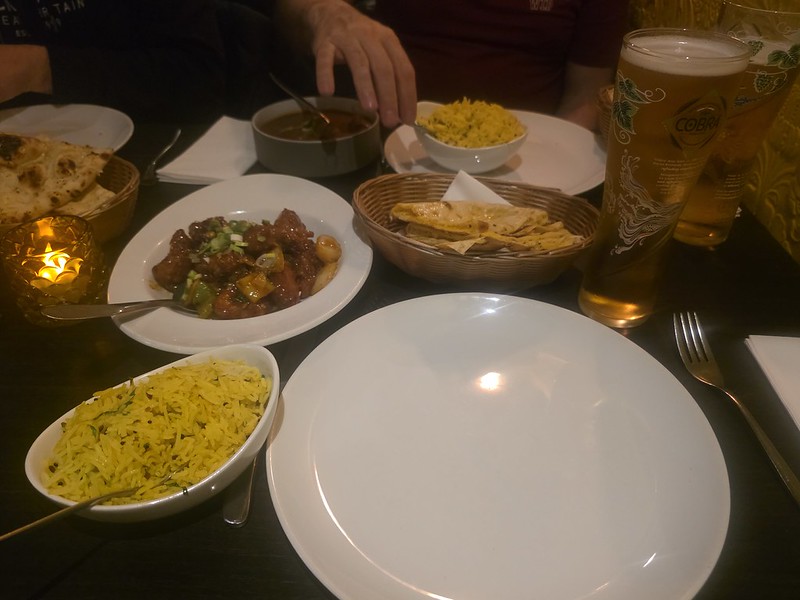
I went for a pint of Cobra which I felt was appropriate for the occasion, although I rather felt that Richard went for the technically correct mango lassi option.
The food quality was high, with the dishes being well presented and everything was at the appropriate hot temperature. The main was the Lukla Chicken, a dry curry with crispy fried chicken in a chilli sauce with onions and green chillies. I ordered this alongside a lemon rice and a peshwari naan. The chicken was tender, it actually had some depth of spice to it, the portion size was generous and the sauce was rich. The lemon rice also actually tasted of lemon, sometimes it’s all just a bit too subtle.
And the rest of the group also agreed that the quality of the food met our expectations. The service was always attentive and it was well staffed, so we didn’t have to ever wait very long. I think that we made the correct decision to skip having a starter, as I struggled to finish what I had.
The online reviews are very high and a manager came over at the end to see if we were local. Although he would have likely engaged for much longer if we were local and therefore likely to come back, we still left feeling welcome. The prices were reasonable, the dining environment was clean and the service was organised. This was a very good choice from Liam, so I’ve decided that he can definitely be trusted in the future.
Next stop on our little expedition was a flying visit to Pontypridd and Wikipedia tells me that this station once had the longest platform in the world. That’s something I’ll have to investigate at some point, I like a bit of railway excitement.
We were visiting The Tumble Inn, a JD Wetherspoon operated pub which is also listed in the Good Beer Guide. The chain explains the pub’s history on their website:
“In Victorian times, this area was known as ‘The Tumble’, from the horse-drawn carts which often overturned as they journeyed to and from the pits. The Tumble, with its innumerable inns, was the heart of the town. The Half Moon, which stood opposite this site until 1989, was said to be the most frequented bar in Wales. The New Inn is also well remembered. A farmhouse in the 1730s, the New Inn became a post house and then a famous hotel, until it was demolished in 1982.”
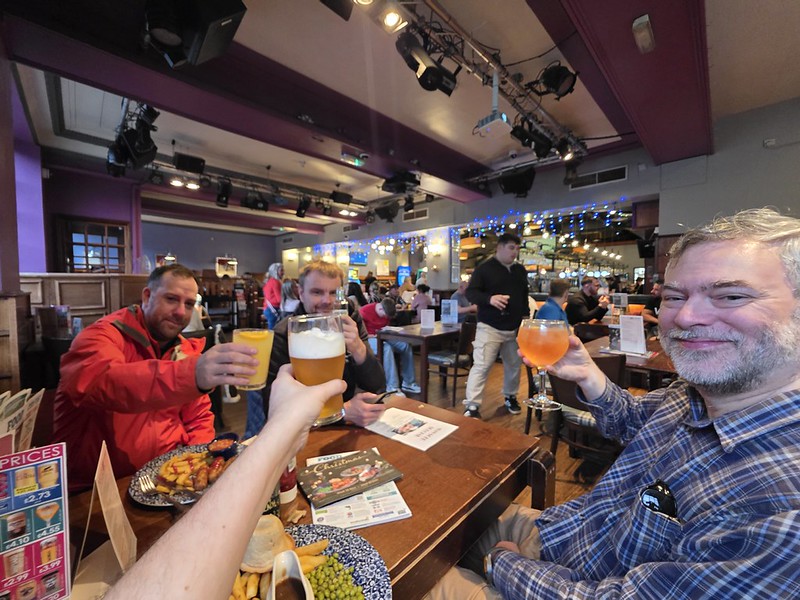
We were celebrating our bravery at abseiling, me with a beer, Richard with gin, Ross with a coffee and Liam with an orange & lemonade…. They know how to party. Incidentally, I had gone to take a photo of the carpet, as I’m like that, when my drink arrived and they wouldn’t leave it on the table until I came back and they could check that I was old enough. They seemed to decide I was old enough with alarming speed, but there we go.
The pub interior and the venue is on the chain’s lowest price band.
My new obligatory carpet photo.
As I’m a creature of habit, I had another steak pudding with a rather lovely craft beer of Son of a Beach from Tenby Brewing Company. The food and drink cost just £7 and the beer was hoppy, fruity and a little tropical. The venue had around seven real ales available as well as craft beer selections, all at their usual low prices.
The food tasted as expected, it’s not fine dining but it’s entirely agreeable. Richard went for a festive pizza as he’s very excited about Christmas with Liam going for a hearty meal of sausages and chips.
As usual, I feel the need to check the online reviews and the venue is about average in JD Wetherspoon terms.
“The last reason for visiting here has gone. San Miguel has been taken off and replaced with a very inferior Poretti. There is now no decent premium lager.”
Each to their own, but both are technically premium lagers and neither set the craft beer scene alight shall we say.
“Me & my friend come into Weatherspoons we ordered our food. I went outside & I did talk about making a joint. But I didn’t it was just words. Then the manger came over & asked n me to leave which I understand even though I ain’t done nothing. She knows me from before & is judging me & my friend on my past. I have worked hard to be clean off drugs. I am clean 18 months now.”
One of the more personal reviews that I’ve seen….. But not many JD Wetherspoon pub managers are going to let customers stay in their venue that have made it clear they will be rolling a joint.
“Called in for a fish Friday lunch and was told the menu had been changed so no longer providing the “healthy fish” option.”
This is a very old review, but I forgot that they offered this option until early 2017. I’m sure that they had good reasons to get rid of this, but I always thought it was a sensible idea. Not that I ever ordered it, which is likely the good reason that they stopped doing as no-one wanted it.
Anyway, I digress. The pub was busy and we were perhaps fortunate to find a seat, the team members were friendly and the food and drink met my expectations. The value was excellent and I’m glad that the Good Beer Guide directed us here.
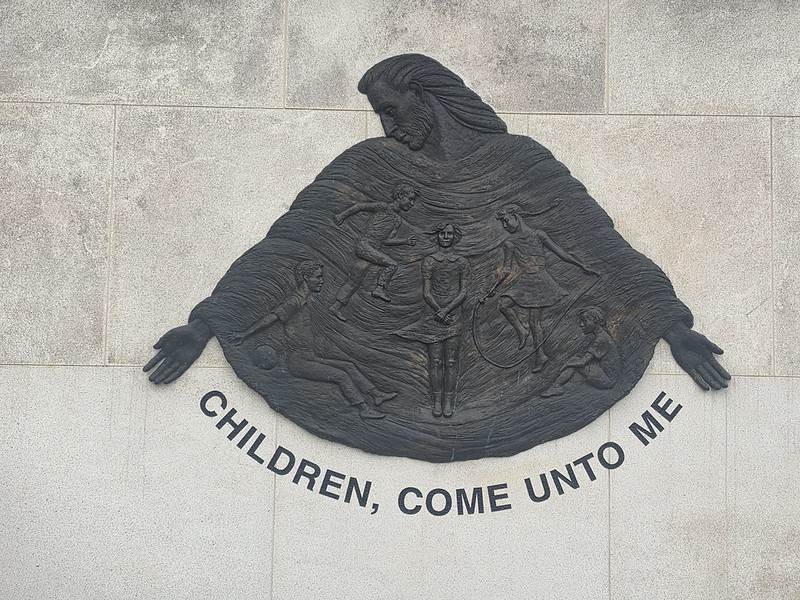
This recently restored area of the cemetery is beautiful, it’s visible from the village down in the valley and it creates a commonality between the graves whilst still giving the grieving family and friends the ability to personalise the graves.
The graves of Clive Mumford and Philip Mumford who were aged 11 and 9 respectively. Their parents Edward and Winnie are also buried here reunited once again.
The graves of brother and sister Bobby Minney and Barbara Minney who were aged 10 and 9 respectively. Under normal circumstances, these children would have still been alive today.
It’s all peaceful and dignified.
A list of all of the victims.
Sister and brother Marilyn Minett and Carl Minett, aged 10 and 7 respectively.
The graves with the photos on made it feel more emotional.
Eight year old Joseph Wilkshire. But, there were tens more graves here that I didn’t take photos of, so many stories.
It was all very poignant and I can’t begin to imagine the pain to the families, especially as the inquiry that followed showed huge levels of incompetence and failure at the National Coal Board who operated the coal mine. There’s a little more information about the inquiry at https://glamarchives.gov.uk/blood/Aberfan/. Perhaps it might have been a little easier to at least understand a natural disaster, but this was all man-made incompetence.
Today the views over the valley and the village are beautiful, it’s calm, peaceful and it feels like a different world from the tragedy. But the very visible memorial and the impact of the tragedy will never go away, the missing generation are unlikely to ever be forgotten.