Tag: Oleśnica

  • Oleśnica Rataje to Łódź Rail Journey

    Oleśnica Rataje to Łódź Rail Journey

    After one night in Oleśnica, it was time to move closer towards Warsaw for the beer festival and I was heading to Łódź, also for one night. This is a different station, on the opposite side of the city, from the one that I arrived into.

    The railway station was built in 1875 and there’s not much here, just a few benches and no public buildings as the former railway station has long been since converted into residential properties.

    The departures for the day.

    The track splits in two just past the station.

    The train arriving, fortunately on time as there were no display boards at the station to show if it was running late.

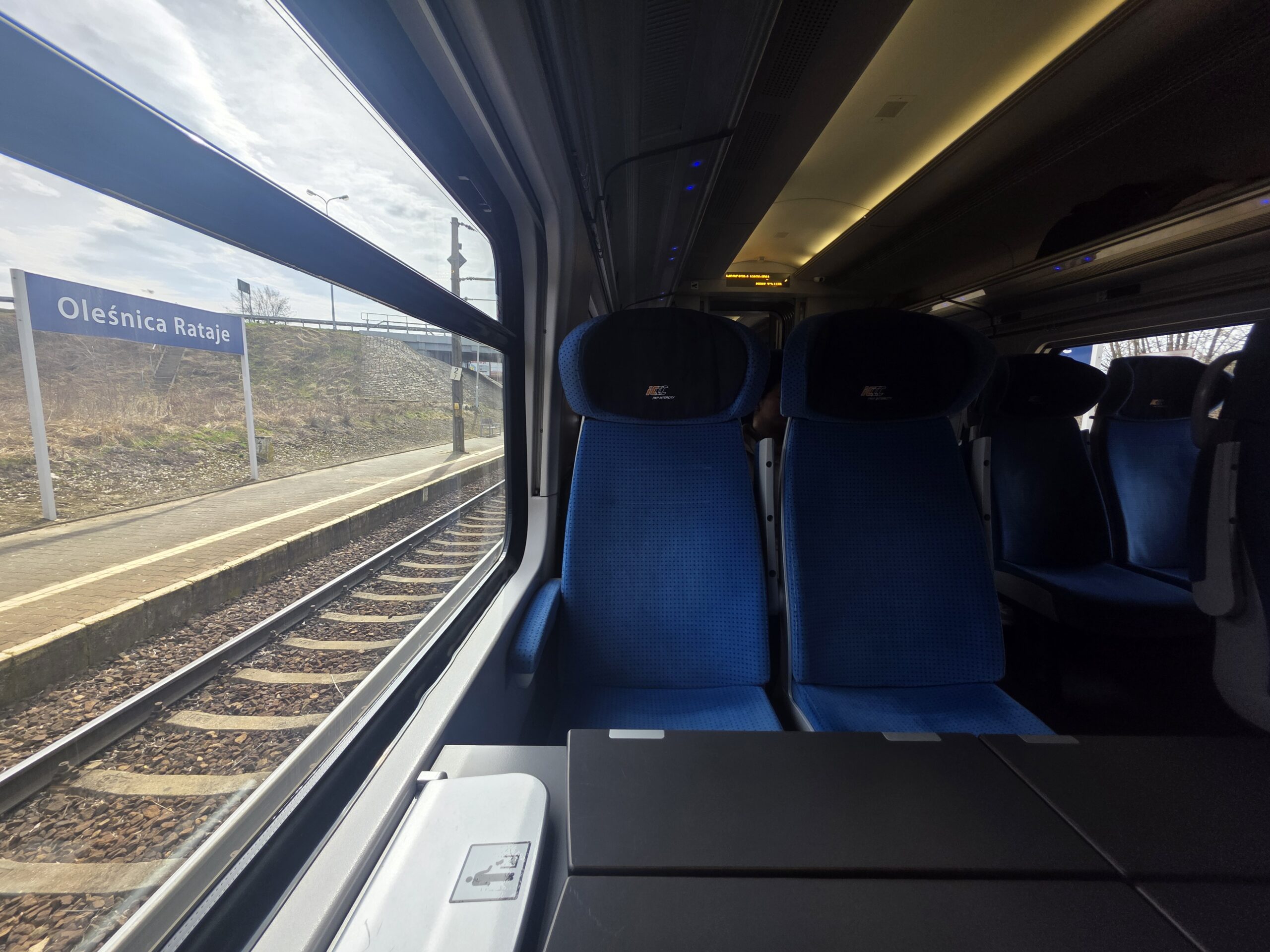
    This was an Intercity train so I had to reserve seats. The train looked pretty empty when I booked and although it got busier, no-one was seated here so I had the table to myself. Incidentally, I was delighted that once again no-one on the train put their feet on the seats or listened to music loudly on their phone. Indeed, the entire journey was peaceful with plenty of power points to keep everything charged up.

    The train was going to Warsaw and ended up in Białystok. The journey took around three hours and everything ran to the schedule. I like that the screens note how fast the train is going, I find that an interesting little bit of knowledge to have.

    And safely into Łódź Chojny railway station, located around two miles to the south of the city. This station first opened in 1903, but it was closed to passengers between 2002 and 2011, used only for freight traffic. Increasing usage of the network saw it reopen and it serves numerous Intercity trains.

    I first came to Łódź nearly ten years ago, when I stayed for a week, but I haven’t been back since 2018. So, it was good to be back at last….
  • Oleśnica – Wrocław Gate

    Oleśnica – Wrocław Gate

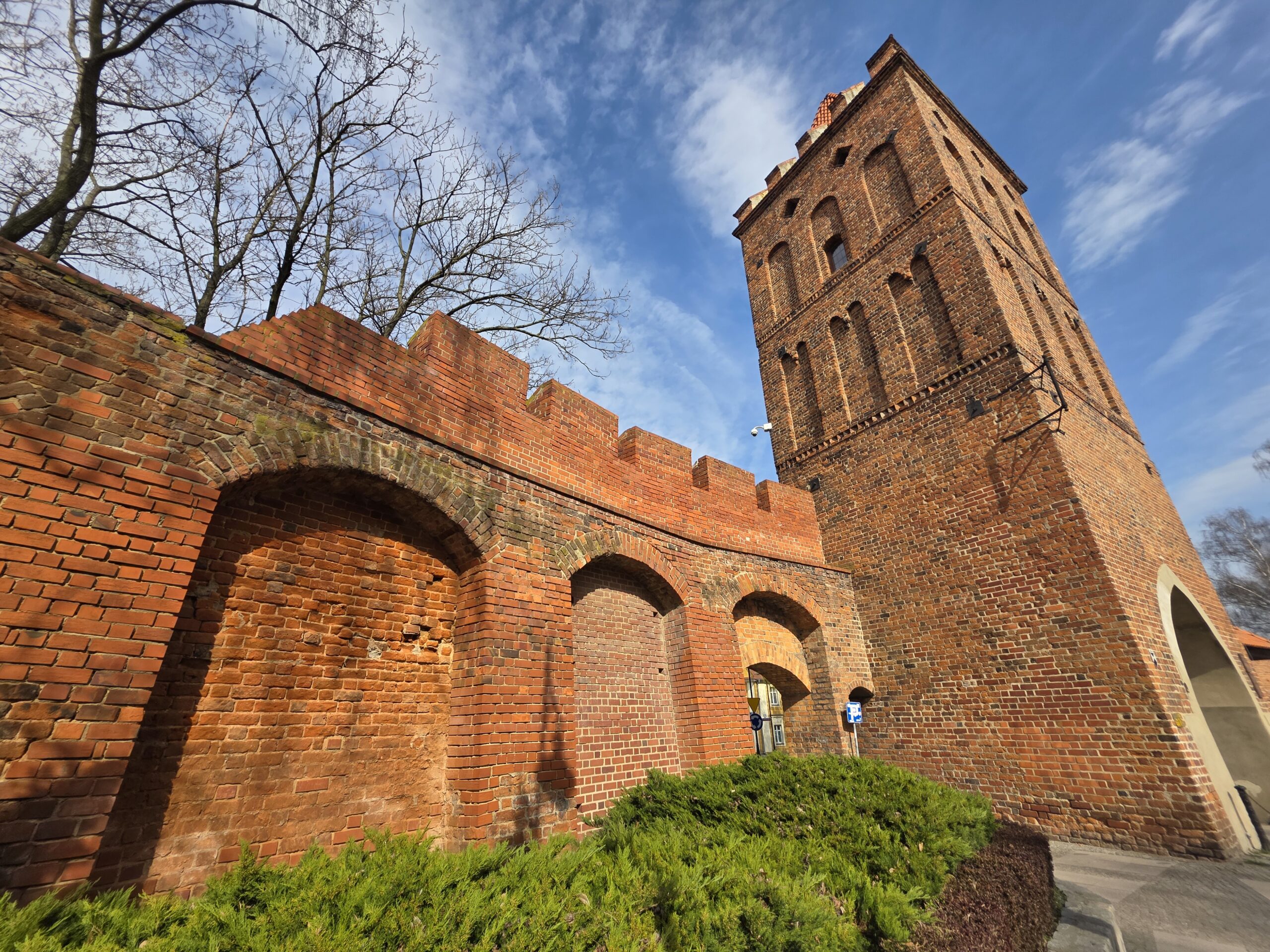
    This is the Wrocław Gate, or Brama Wrocławska, in Oleśnica, the only surviving medieval city gate in the old defensive walls. It was built in the first half of the fourteenth century as part of the town fortifications and is the only one left from the original four gates that once controlled entry into the town. The name comes from the road leading towards Wrocław and it was also once known as the Trzebnica Gate.

    The more modern stairway arrangement which has been created to give access back to the rooms above the gate.

    The tall brick tower originally had guard rooms above the passage and the gate formed part of a wider fortified circuit of walls, towers and later outer works. By the eighteenth century the walls had lost much of their military purpose, and by 1868, three of Oleśnica’s four gates were demolished because they were getting in the way of transport and development. The city was also aided by the future Frederick III (the one who was briefly Emperor and married Queen Victoria’s eldest daughter), who during a visit in 1866 decided that this gate should be saved. A very sensible move.

    This Latin inscription relates to when the gate was renovated in 1614 and reads:

    “Unless God protects this City with His fatherly goodness, all the care and labour of the watchmen are in vain and lost.”

    This more modern sign notes that German funding was used to restore the gate, something quite appropriate given that this was formerly a Prussian gate.

    There were properties on either side of the tower, but they were left burnt out following the end of the Second World War. The gateway itself has done very well to survive at all.

    A photo from outside of the city walls, with the portcullis visible that would have protected the denizens inside.

  • Oleśnica – So Many Learner Drivers

    Oleśnica – So Many Learner Drivers

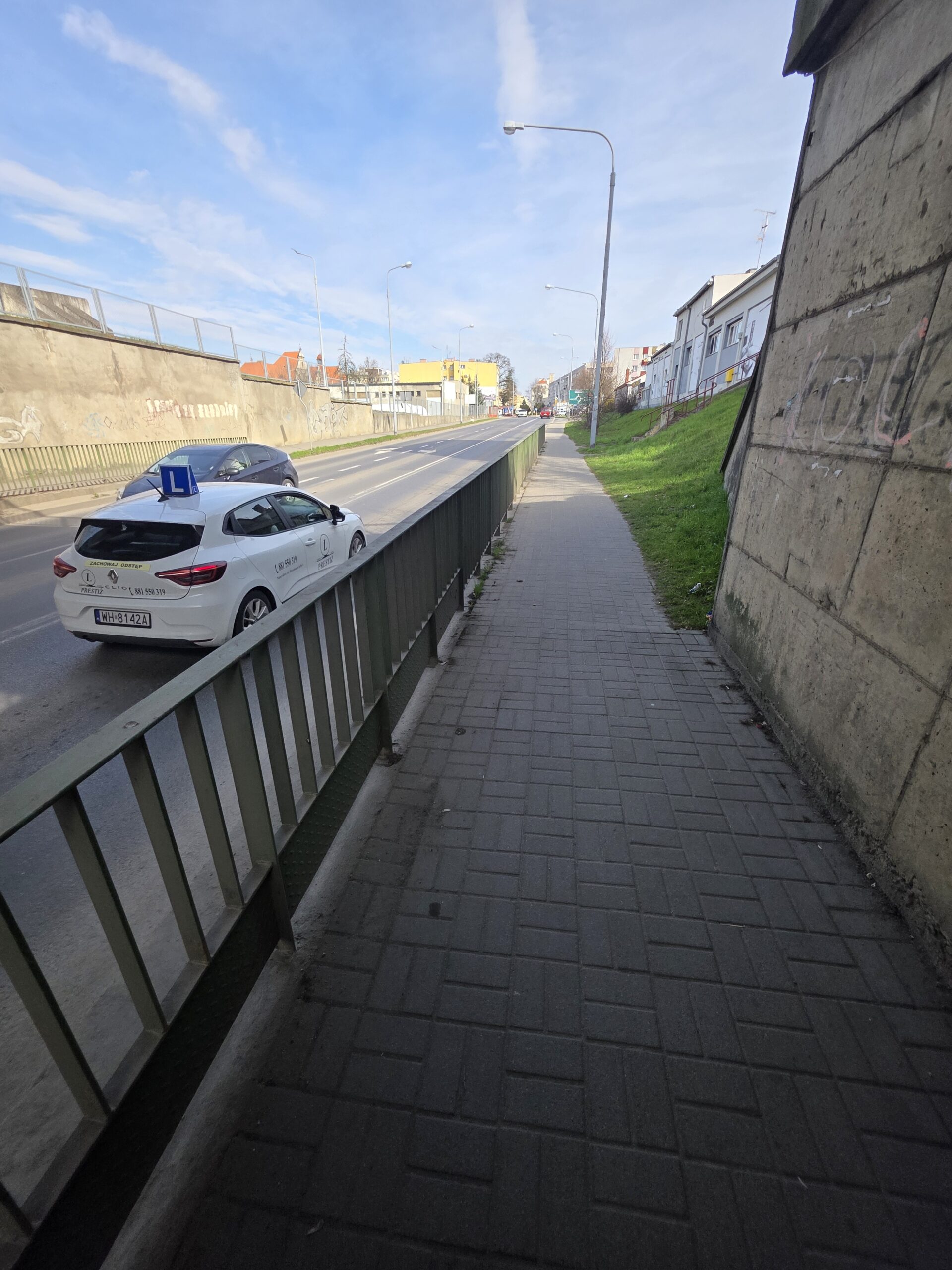
    There are many things that puzzle me in life. This is either because I have a creative mind and a love to find out more about the world, or, more likely, I have too much time to think about irrelevant things that happen. Anyway, I spent a day walking about Oleśnica slightly perplexed just how many learner drivers cars there were. Not a few, but hundreds of them.

    There is a regional testing centre in the town and a local newspaper reported last year that:

    “Data provided by DORD shows that in January 2025 alone, 3,316 people took the theoretical exam in Oleśnica, while 4,569 took the practical exam. This demonstrates the large scale of the Oleśnica branch’s operations and its importance to the region.”

    I think that explains matters somewhat, there are around 150 people a day taking their practical exam in the town. Each of these tests takes 40 minutes, so that’s some local industry going on there….
    And I’m glad that I’m puzzled no longer.

  • Oleśnica – Oleśnica Railwaymen’s Park

    Oleśnica – Oleśnica Railwaymen’s Park

    I like a park with a bit of railway stuff in and this is a wheelset from a Polish locomotive dating to 1953. I accept that this isn’t exactly the National Railway Museum, but I did a bit of railway heritage. Incidentally, I’m not an expert on 1950s trains, there was a sign by it which gave the date of manufacture.

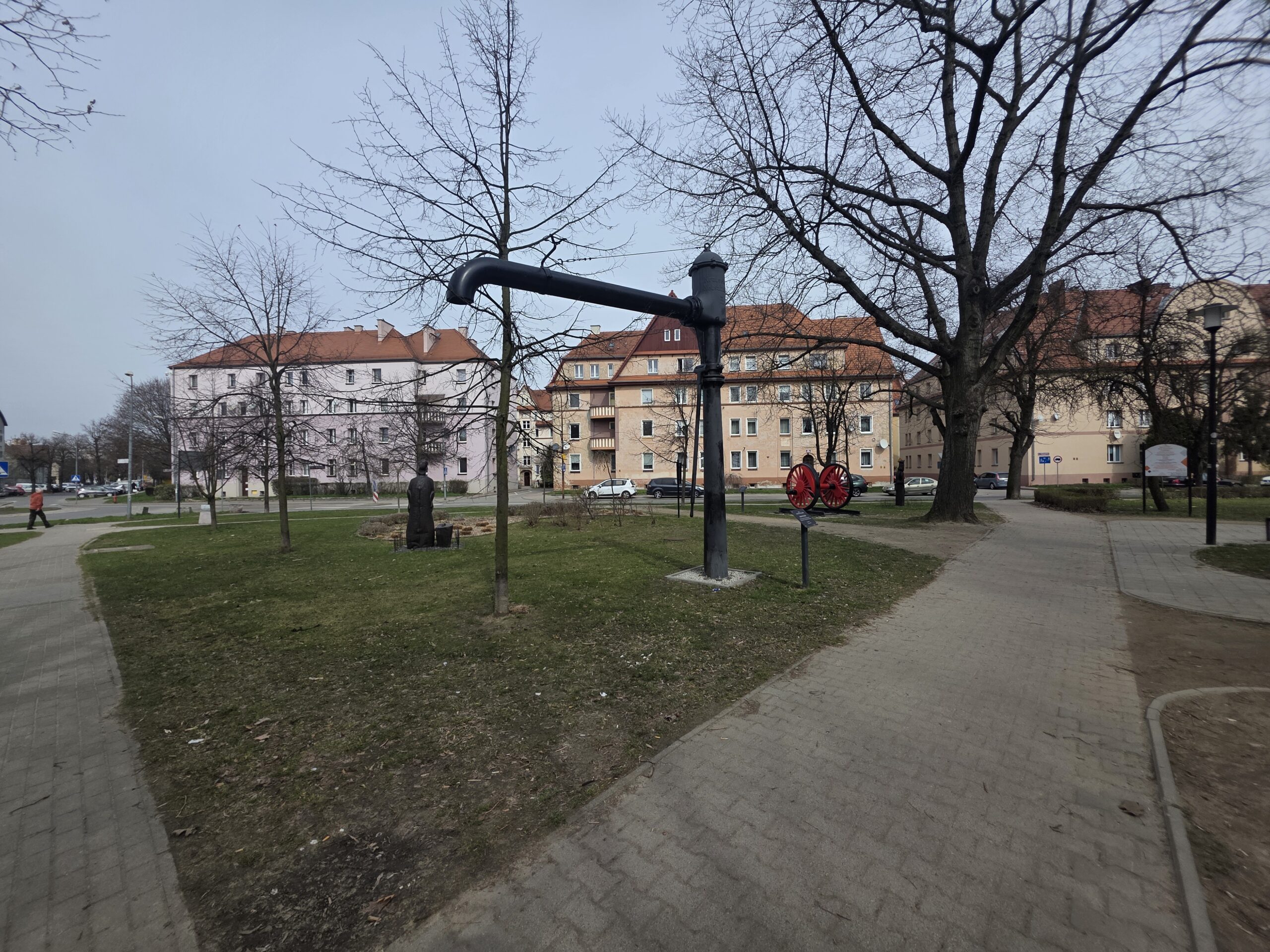
    Slightly less subtle is this water crane that was made for railway usage in 1942 to ensure that steam engines had enough water. For anyone interested, which I accept is precisely zero, it weighs 1,800kg.

    I have no idea what this represents, but I assume it’s something to do with the railways. Is it a passenger with their bag waving goodbye? I have no idea….

  • Oleśnica – Basilica of Saint John the Apostle

    Oleśnica – Basilica of Saint John the Apostle

    The Basilica of Saint John the Apostle in Oleśnica is one of those rather lovely historic buildings which shows just how varied a life it has. There’s no rendering over the whole lot, like they keep doing to some churches in Norfolk, which hides everything, the various building styles are all evident here.

    The core of it goes back to the second half of the thirteenth century, with documentary references to the church at Oleśnica appearing as early as 1230, and over time it was enlarged, altered and rebuilt by successive ducal dynasties.

    They had a great idea to modernise the church in the early part of the twentieth century and work started enthusiastically in 1903. Then in 1905, the church fell down which I suspect they found sub-optimal. There was a debate about who was responsible, but they blamed the medieval builders for their dodgy pillars. A decision was made to rebuild as best they could rather than entirely start again.

    Fortunately, the church survived the Second World War undamaged and it’s now looking pretty much as it did 100 years ago. What has though changed is that this was a Catholic church until 1538, then it became Protestant and that lasted until 1945, when once again the Catholic church took over the building.

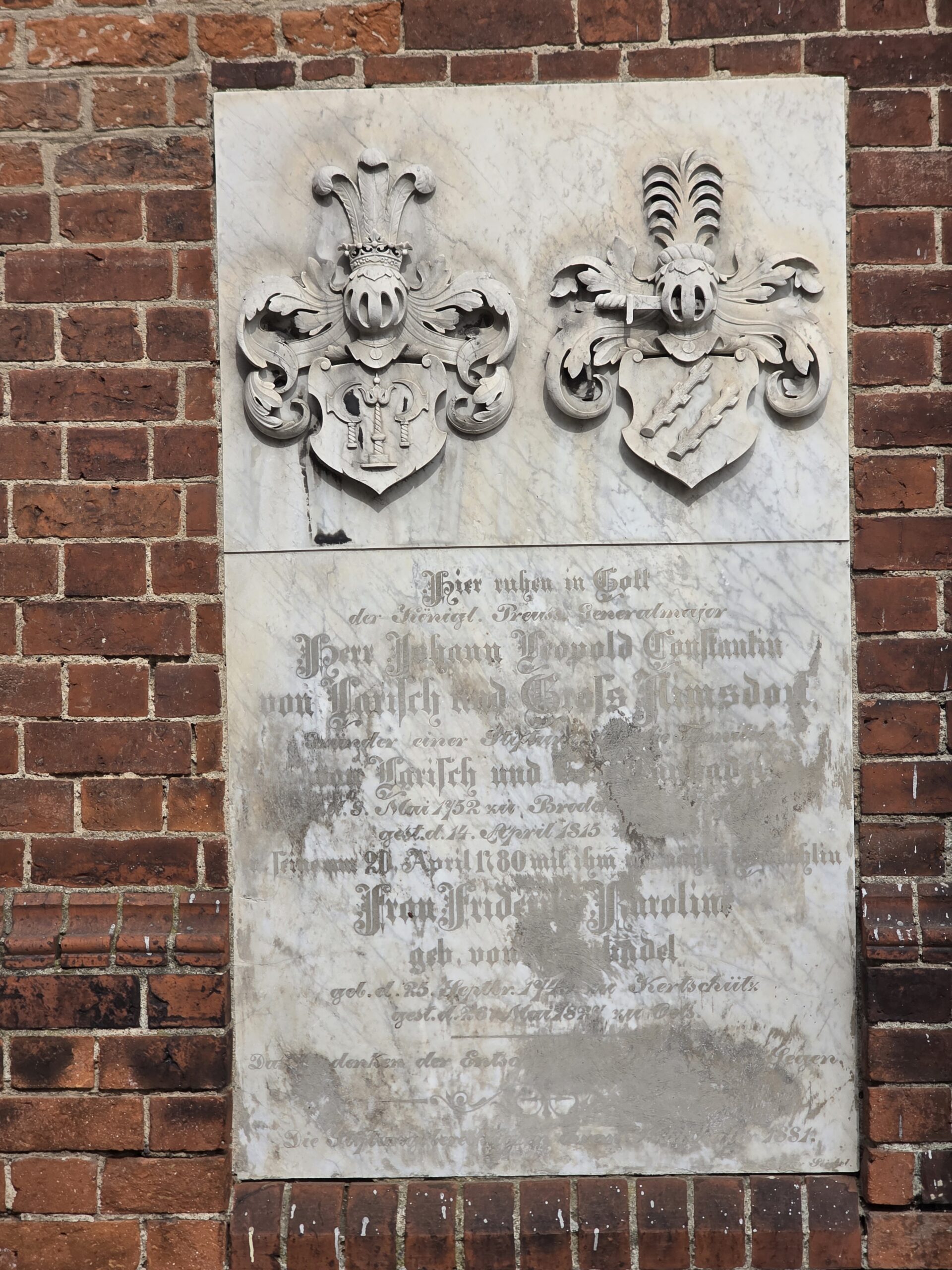
    Here’s evidence of the church’s Silesian past, this grave stone from 1780 on the wall of the church is in German.

    Now weathered, it seems that this stone was in this vague sort of location before the church fell down. Incidentally, on that note, there are some impressive photos of the damaged caused at https://www.olesnica.nienaltowski.net/zagadka_plyty_nagrobne.htm.

    Unfortunately, the inside of the church wasn’t open, hence the lack of interior photos…

  • Oleśnica – Vis a Vis Hotel

    Oleśnica – Vis a Vis Hotel

    I was only staying in Oleśnica and the Vis a Vis hotel seemed to be a suitable option. By suitable, I mean cheap, reasonably well reviewed and within three miles walking distance of the centre.

    The receptionist asked why there were so many British people in the town that week, although I had absolutely no idea, but I hoped it was some stag group ready to cause disturbance.

    The room was functional, clean and sufficiently modern looking. I like that this hotel advertises itself as quite loud on Fridays and Saturdays, I’m not sure what goes on, but as my stay was on a Tuesday night I didn’t get to find out.

    There was a shared balcony, or shared roof if you prefer, for all the rooms on the floor, but I decided that I wouldn’t spend the evening out here.

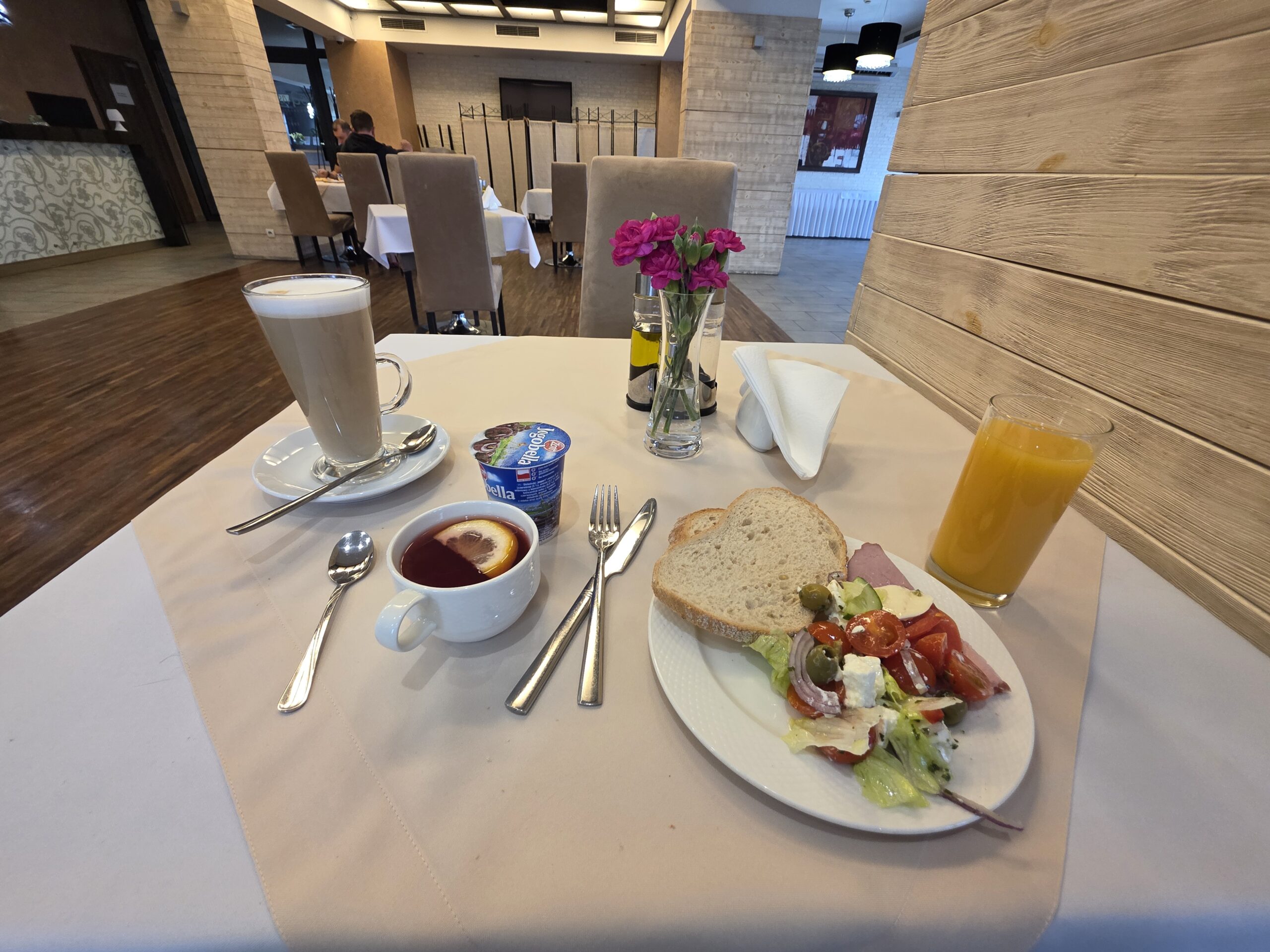
    Breakfast was included in the room rate and it all looked neatly laid out and presented. There were plenty of choice and I liked the efforts they had made to make it all look appetising.

    And there’s the little morning selection. The hot drink they make, which is handy, and they did offer to make me scrambled eggs, but I had already eyed up the Greek salad that they had. I should have Greek salad for breakfast far more often, the feta was creamy, the tomatoes tasted fresh, the sauce had some flavour to it, all very agreeable.

    The Greek salad was so lovely that I had some more, along with some apple pie. And a very nice apple pie it was too.

    The hotel is located relatively near to the centre, the team members were friendly, it was all clean, there were no noise issues (but I was there on a Tuesday) and I thought that it all represented pretty decent for money.

  • Oleśnica – Street Art (Mikołaj Rej)

    Oleśnica – Street Art (Mikołaj Rej)

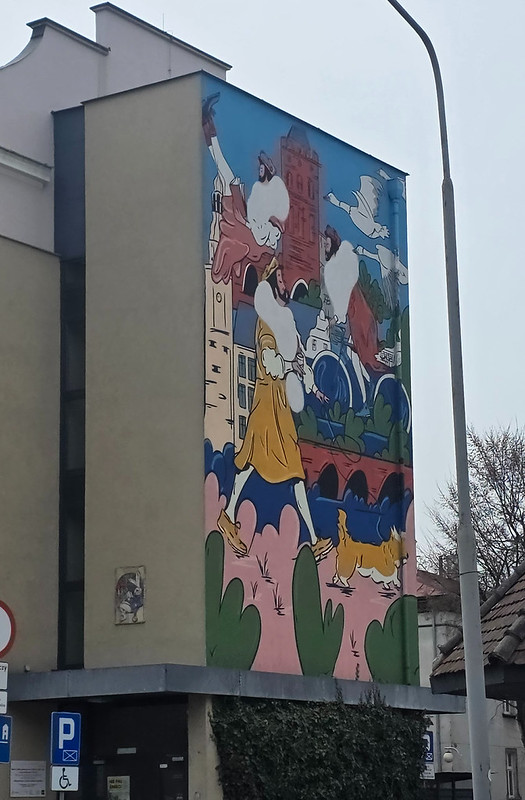
    This whimsical little arrangement is on the Mikołaj Rej library and the mural was created to mark the 75th anniversary of the library. It depicts Mikołaj Rej in three different forms, namely reading a book, riding a bicycle and walking a dog. He appears against a backdrop of the city’s distinctive towers to add some local charm.

    As an aside, that whole section of wall is new, it’s possible to see where it all joins onto the original building. Above is Google Street View of the same location in 2011 and I’m not entirely sure why I’ve felt the need to look back at this, but yet here we are. The mural has certainly perked the area up a little.

  • Oleśnica – Müllermilch Roasted Almonds

    Oleśnica – Müllermilch Roasted Almonds

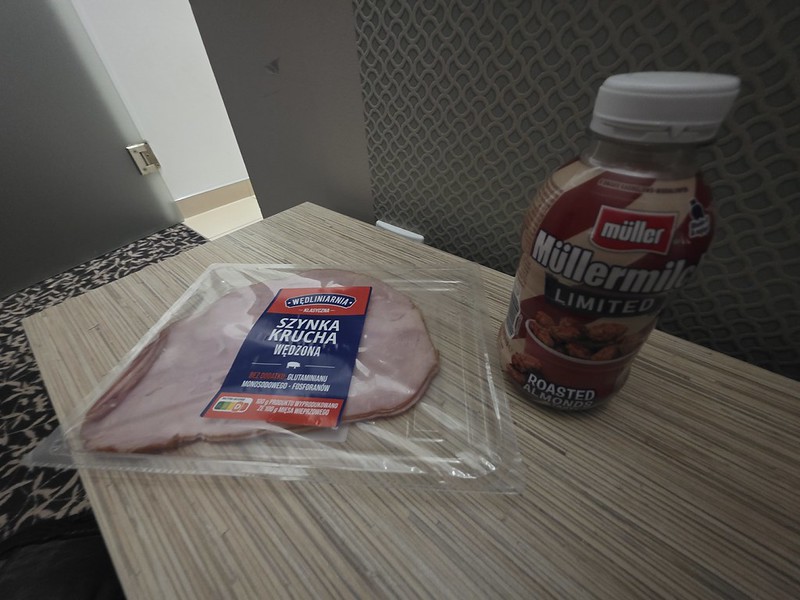
    Rather than have a decadent meal out, I went for a few little things from Aldi. Although that was really just an excuse to see what flavours of Müllermilch they have, since I appear to have accidentally got a series of posts on this blog about them.

    This one has a creamy milk base with the warmth of toasted nuts and sweet caramel. It paired well with the ham and I’m aware that I should probably get out more…..

  • Oleśnica – Łasuchowy kącik So Sweet!

    Oleśnica – Łasuchowy kącik So Sweet!

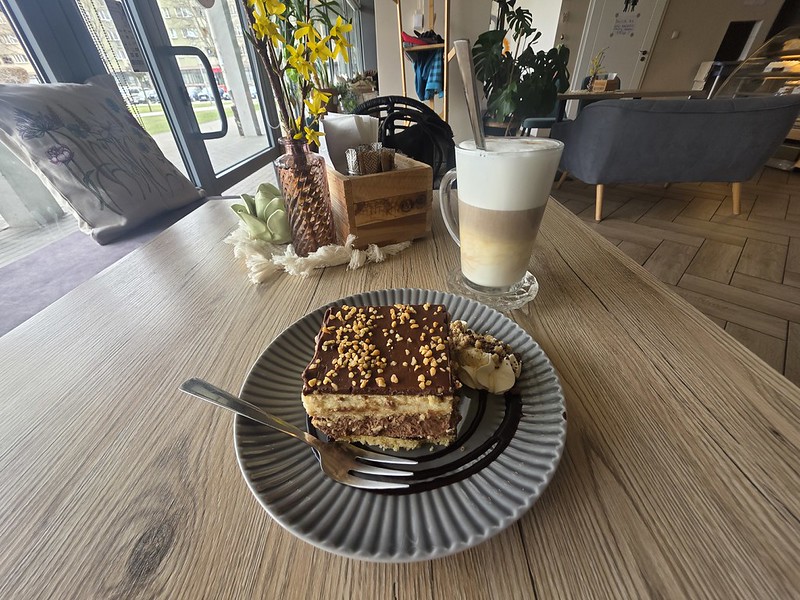
    I thought that I should get myself a cup of coffee and this was the best rated cafe that I could find in Oleśnica.

    It was clean and comfortable inside, with a refined and relaxed atmosphere. I’d note that it was busier than this for most of the time that I was in there.

    I don’t have a particularly sweet tooth, but I thought I’d have a little something whilst I was there. The team member was friendly and engaging, with my attempts to order entirely in Polish actually working out this time. I’d suggest she did well to understand what I was saying, but it all worked out.

    The cake was as rich and decadent as it looks, as well as being nicely presented with the cream and nuts. Very filling, very sweet and it complemented the latte nicely. I’m not entirely how healthy this is, but there we go, I had done a lot of walking.

    The prices were towards the higher end of the scale for Poland, the coffee and cake was £7, but the quality was high and the surroundings were comfortable and inviting. And I was able to people watch for half an hour, well, and look at my phone as well obviously.

  • Oleśnica – The Fractured Wings of Oleśnica

    Oleśnica – The Fractured Wings of Oleśnica

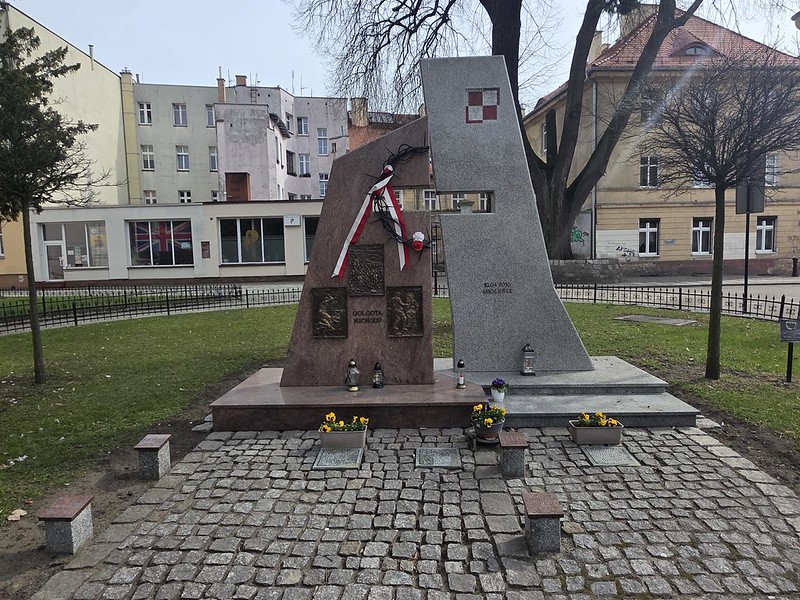
    Standing near the Basilica of St. John the Apostle is this two part memorial.

    The left side, adorned with bronze reliefs and a crown of thorns, is the Golgotha of the East (Pomnik Golgota Wschodu), unveiled in 2003 by the local artist Wiesław Piechówka. It is dedicated to the victims of the Katyn massacre and those deported to the Soviet interior during the Second World War. Small stone plinths at its base act as silent anchors, each bearing the name of a site, namely Siberia, Katyń and Charków, where thousands of Polish officers and civilians met their end at the hands of the terror regime of the Soviet Union.

    In 2015, the memorial was expanded to include a second granite wing on the right, dedicated to the Smolensk air disaster of 10 April 2010 which killed 96, including the country’s President. The design, by the same local artist, uses the negative space between the two halves to form a symbolic cross, visually linking the original 1940 tragedy with the crash of the presidential plane seventy years later.

    It’s one of the cleverest put together monuments that I’ve seen, with no shortage of meanings that might not be evident at first glance.