Tag: London

  • London – City of London – The Pelt Trader

    London – City of London – The Pelt Trader

    This bar is listed in the Good Beer Guide and I’m not sure how I’ve missed it in the past, given that it sells craft beer and pizzas. It’s located under a railway arch at Cannon Street railway street and it opened here in 2013. I was fortunate with my timing, as I hadn’t realised just how small this venue is. I asked if there was space for me and the helpful team member said that they were giving up with a table booking for six people that hadn’t bothered to turn up or let them know. That table had been left empty for half an hour, a really unhelpful thing for such a small venue. Anyway, the team member asked if I was happy with that table, which I most certainly was.

    There’s a canoe hanging from the ceiling which all adds some atmosphere to the proceedings I suppose. Ordering could be done via a web-site, but it was just as easy to order from the staff member. There were beers from a number of decent breweries, with a balance of different beer types which met my approval.

    The beer list is chalked up on the back bar, but it was somewhat easier to read it using the bar’s on-line menu system. This is one advantage that has come out of the blasted pandemic, pubs have been forced to be more innovative in their ordering systems. The food could also be ordered on-line, including 12 and 18 inch pizzas, not unreasonably charged at around £12 and £18 each. My knowledge of maths is sufficiently good enough to know that this makes the larger pizza considerably better value for money. Anyway, I digress.

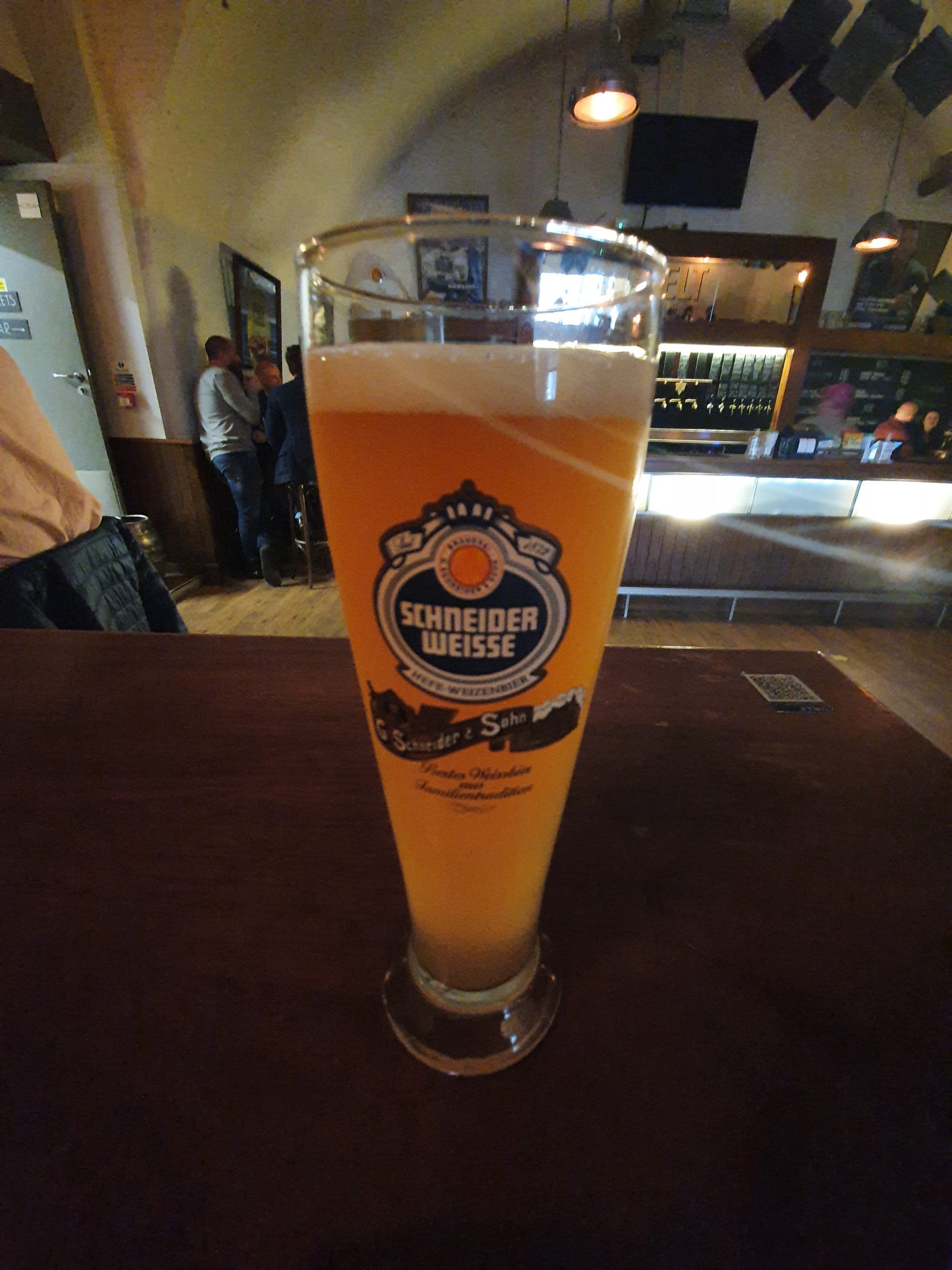
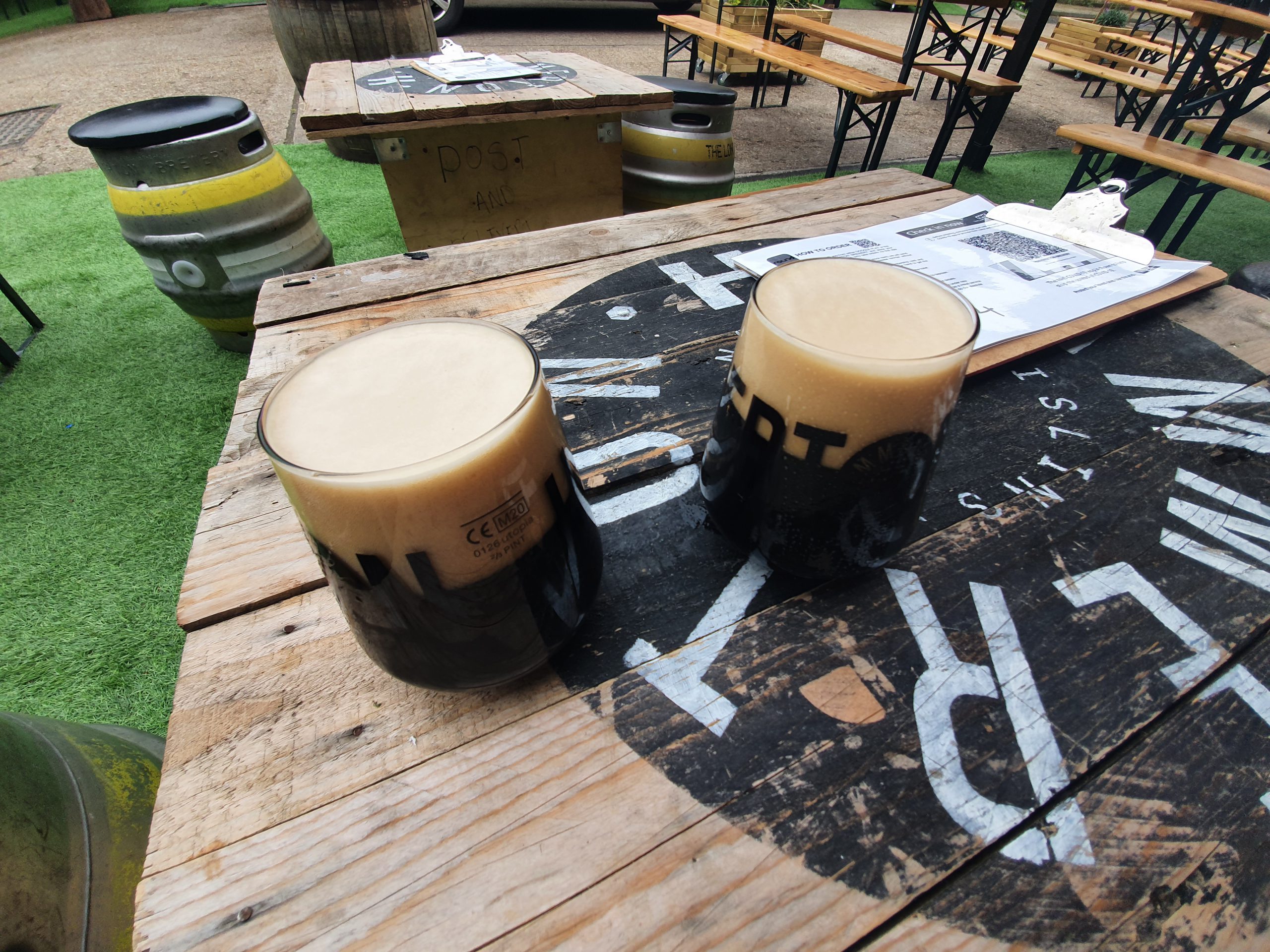
    The branding on the glass isn’t relevant to the drink that I ordered, with this one being Orange Crush from Brick Brewery and I also went for the Tropical Deluxe from Howling Hops. Both very agreeable beers, well kept and those are both excellent breweries.

    I was a little unsure what to expect from this bar and I was entirely pleased with its offering, which remains on-trend although was perhaps ahead of its time when it opened. Friendly service, comfortable environment and a quirky feeling all bode well, especially with that mix of decent craft beer and pizza. Nice.

  • London – Tower Hamlets (Borough of) – Kings Stores Pub

    London – Tower Hamlets (Borough of) – Kings Stores Pub

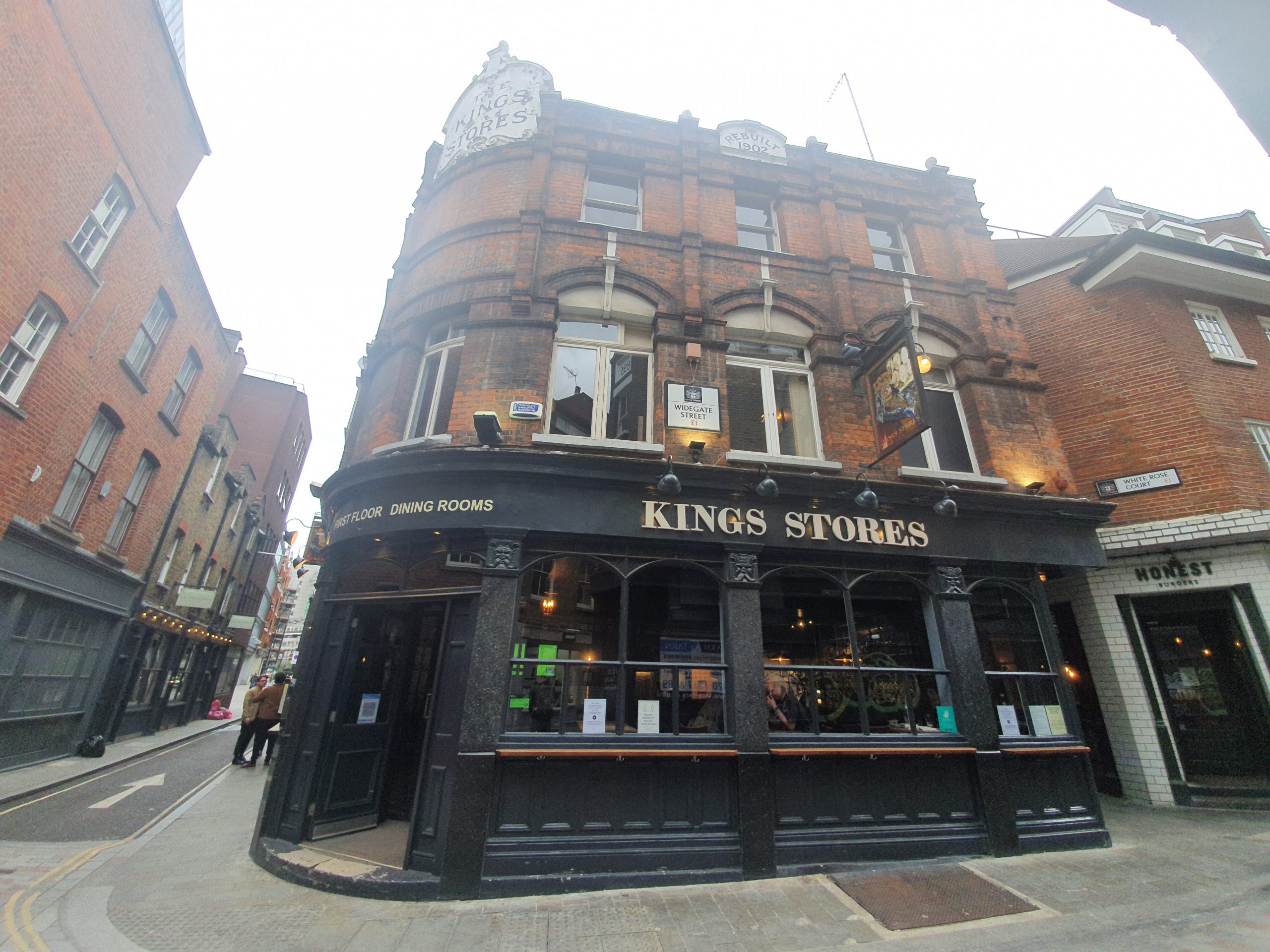
    I’m working my way carefully around the Good Beer Guide pubs of London, with the Kings Stores being operated by the Metropolitan Pub Company, which is part of Greene King. They note that “every single one of our 71 pubs in and around London is unique and each of them is individually run by its manager”, which adds some confidence to arrangements, as Greene King aren’t always the finest purveyors of beers in their pubs.

    The welcome was prompt and friendly, with the pub feeling all clean and organised. The beer choice was just about satisfactory, although to be fair, better than most Greene King pubs. There was Greene King IPA, Amagansett from Bedlam Brewery and Swift from Truman’s Brewery, so a not particularly balanced selection and nothing of any real note for a pub listed in the Good Beer Guide. I limited myself to a half pint of Swift, which was well kept and moderately interesting, but I wouldn’t have much wanted much more of it.

    The pub seems to be well reviewed for food and it looks a reliable option for that, and the pubs has a multitude of wines available. The observant might notice in the above photo that sausage rolls and Scotch Eggs are being sold for £5, with other food prices all being towards the higher end of the range. The pub shows sports as well as trying to appeal to a dining clientele, which seems an interesting mix, and the whole arrangement felt a bit formulaic to me.

    Anyway, the pub was welcoming and that’s important, with the service being efficient and warm. It’s nearby to London Liverpool Street railway station and I can think of worse places to wait for a train than this pub.

  • London – Westminster (Borough of) – Oxford Street – Hard Rock Cafe

    London – Westminster (Borough of) – Oxford Street – Hard Rock Cafe

    We won’t go back into my annoyance with The Fork (what I consider to be the TripAdvisor’s badly run restaurant booking service, but others may have different views, including probably TripAdvisor), but they had the Hard Rock Cafe in Oxford Street on a 50% off food offer. They were also promising 1,000 Yums (worth £20) for a booking made under an offer to get people back eating in restaurants, although I shall see in due course whether this gets paid out. That meant I made an exception and made a booking via The Fork, which will likely give me something else to complain about next week.

    Anyway, the restaurant wasn’t packed. This is a large and expensive set-up on Oxford Street, right next to Marble Arch underground station, which also consists of a Hard Rock hotel. The whole complex opened in 2019, perhaps not the best timing with what was to happen next. The management are left with a huge restaurant that was designed to make money by having a large turnover, but they’re trying to fill it as best as they can.

    I entered and there were no staff immediately visible, so I meandered to near the bar area so that I could stand there and look awkward. Fortunately, someone looking a bit important noticed me and found a member of staff to welcome me, which was all done efficiently. They didn’t seem overly interested that I had a reservation, which is understandable since they have about 100 tables available. I needed them to be interested though for the purposes of The Fork deal, and they seemed all content when I mentioned it.

    When I say that it wasn’t packed, there were about two customers. They offered to seat me at the bar, but I was quite content with one of the tables and the staff member didn’t seem overly annoyed at my decision. I can’t be doing all that social at lunchtime, I’m not in America at the moment. Although dreaming of it….. Anyway, I digress.

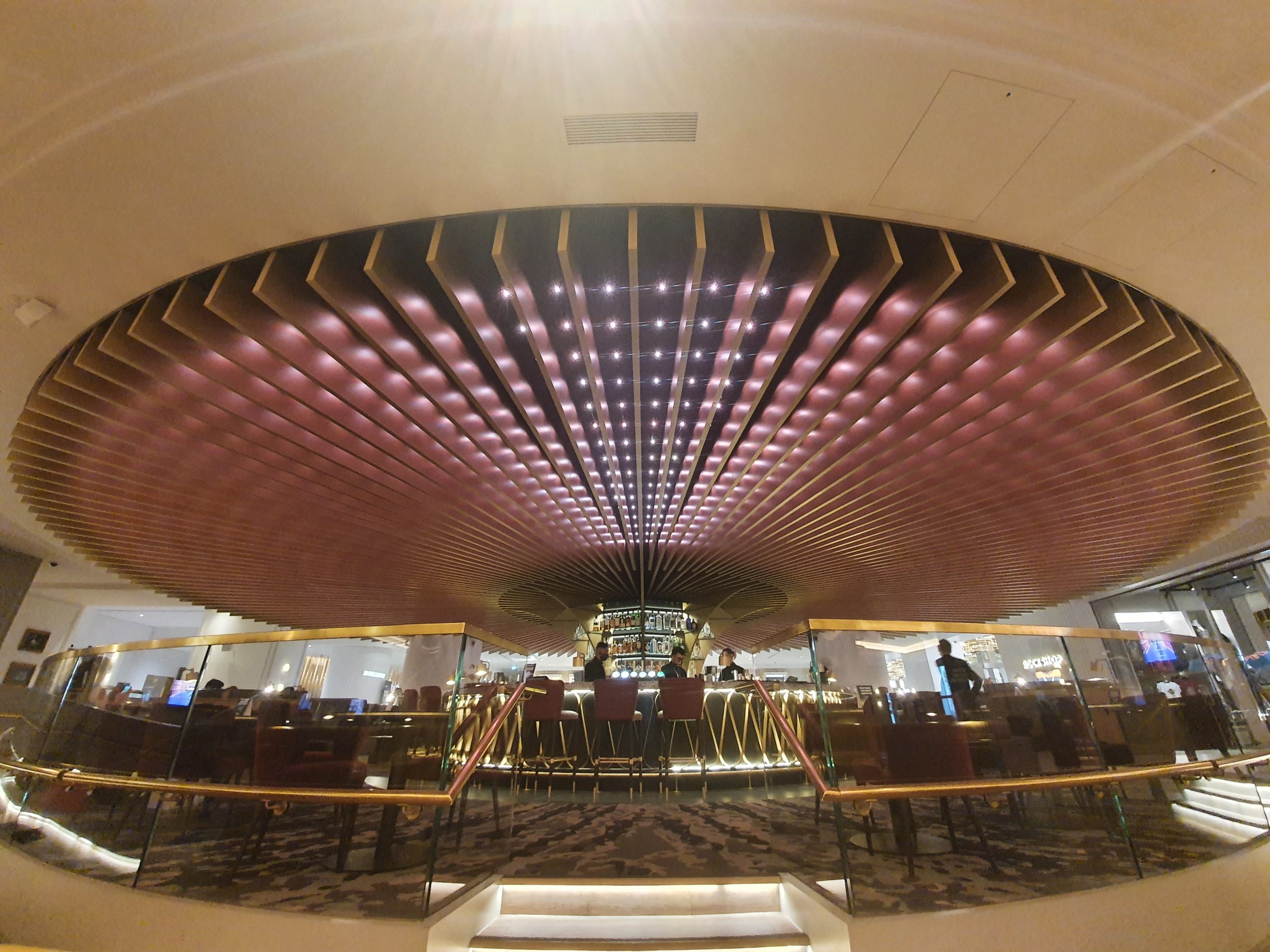
    This is the view I had from my table, which I thought was entirely satisfactory and is nicer than most dining options that I frequent. The service was as would be expected from Hard Rock, which was engaging, personable, enthusiastic and all of those things. It was all very timely, but there were as many staff members as guests, so this probably wasn’t entirely difficult to achieve.

    I decided to go for the chicken fajitas, which were about £8.50 after the discount and I considered that to be very reasonable, especially given the decadent and empty surroundings. The food was decent, the chicken was moist and tender with some depth of flavour to it. The sour cream seemed to have been served using an ice cream scoop and I was pleased that the cheese had been kept away from any hot items (I like my cheese cold as I’m awkward). Restaurants never seem to provide enough wrap things (the meal comes with four) for the amount of food and I notice one person in a review said they asked for one more wrap and got charged £4.99. And the amount of guacamole was generous, which pleased me.

    I like “the damage” bill holder, although I wonder how that goes down for those who are moderately shocked by the size of their bill. My bill came to £15.28 by the time that the unlimited sodas and service charge was added on. I do try and visit Hard Rock Cafes when in a city, so this wasn’t an unreasonable price given the quality of the experience.

    My knowledge of music memorabilia is very limited, but I do like having a little look at what each Hard Rock in the chain has acquired for their walls.

    All told, I thought that this was a professionally run restaurant and I can imagine it’ll be very popular with tourists when some form of normality returns to London. Fortunately, the quietness of London at the moment means that I got what I considered a cheap meal and I’ll be very pleased if The Fork actually pay the £20 out like they’re supposed to, as I’ll probably come back here to spend it. If that all works out, this was a rather keenly priced meal.

  • London – City of London – First London Coffee House

    London – City of London – First London Coffee House

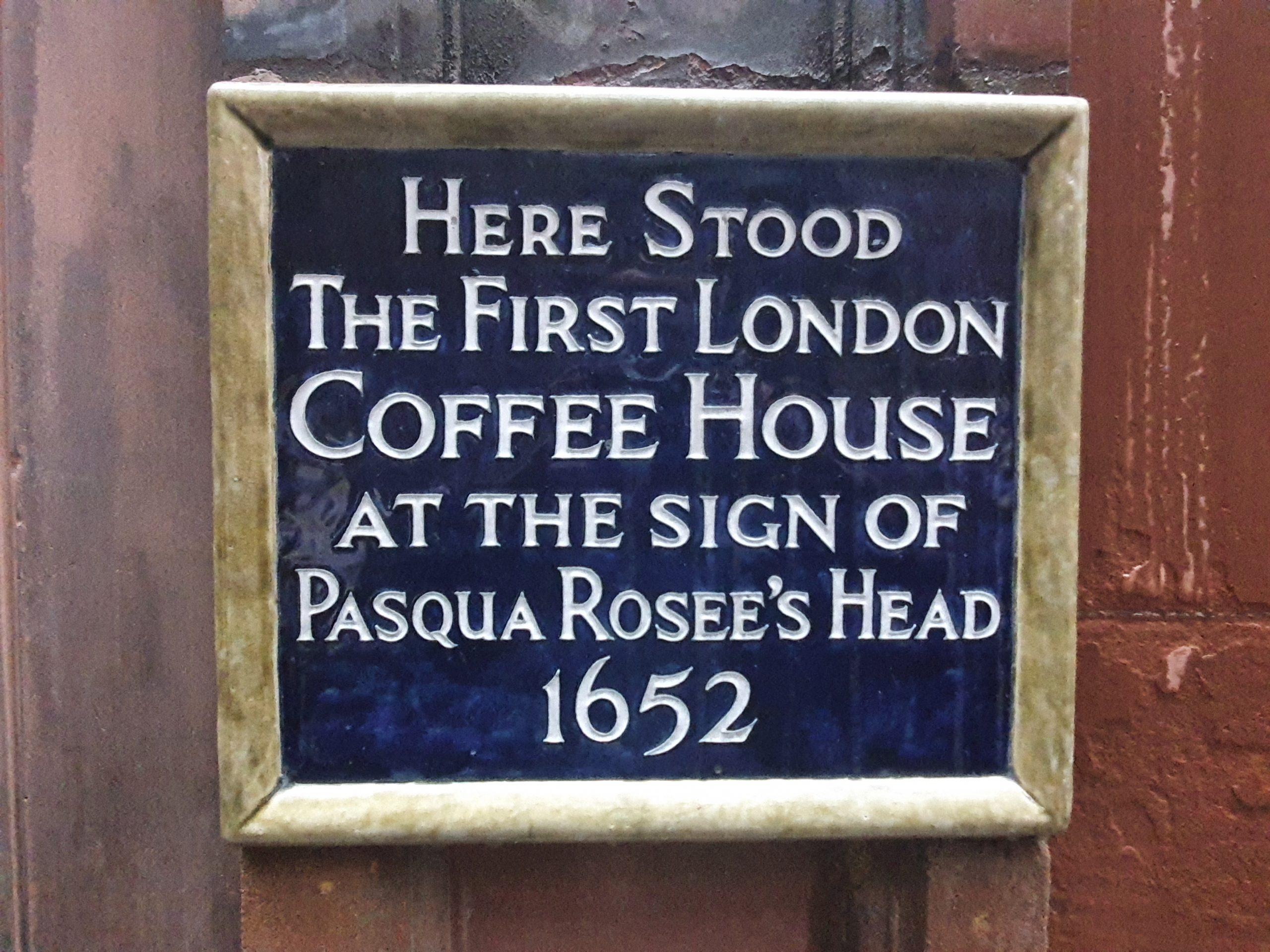
    From where it all began for coffee shops in London, what is now the Jamaica Wine House on St  Michael’s Alley in the Cornhill area. This first coffee house was opened in 1652 by Pasqua Rosée who had connections with the Turkish and Greek communities. He built himself a little shop, although I can imagine that it wasn’t exactly Pret (it was probably more akin to something that I’d create with a few bits of wood and a civil engineer friend to do some sawing and construction), and this new drink of coffee seemed to catch on. He put a sign up out the front with his own image on it, similar to what Tim Martin did with his now closed pub on Whitehall. He had some important customers (Rosée I mean, not Tim Martin), not least Samuel Pepys who wrote about his visit in 1660.

    It had quite a nice little location by St. Michael’s Cornhill Church, but this whole area was badly affected (by badly affected, I mean it burned down) by the 1666 Great Fire of London. The church is still in situ, although it was heavily rebuilt following the Great Fire, with the shop also being rebuilt on pretty much the same site it had been standing on. Rosée wasn’t a freeman of the city and I can imagine the problems that this caused him, so apparently there was some partnership arrangement created to get around this problem to ensure that he could trade. No-one is entirely sure what the premises were called, but it’s thought that for a while they were known as the Turk’s Head. Rosée did well from his enterprise, but he decided to go an innovate in Paris instead, opening up that city’s first coffee shop in 1672.

    The building on the site today is the Jamaica Wine House, a Victorian building which was completed in 1869. The pub might have switched from coffee to beer and then more to wine (next step craft beer…..), but there’s still a nineteenth century cooker in place from where the coffee beans were roasted.

    I still like how exotic this coffee shop must have been when it opened, probably as exciting as an innovative craft beer bar being announced. It was a place to be seen and also to discuss financial arrangements, which is how the large insurance, banks and financial institutions evolved. They were good places for traders to meet to discuss their purchase and sales, usually also quite energetic (loud) environments. Usually there was no alcohol served in these coffee shops in the early days and women were excluded from attending such decadent places.

    I can only imagine the sort of gossip that was discussed at this coffee shop from 1652, but I think that I’d like to have listened to it. King Charles I had been executed just three years before the coffee shop opened, so political talk would have been inevitable, and I’m sure care was taken to avoid upsetting the wrong people. Coffee shops and pubs later often welcomed one political group over another, which would be an interesting set-up for Pret, they could have shops for Starmer supporters and maybe the odd one or two for supporters of Grant Shapps or something. Anyway, I digress.

  • London – City of London – Gilt of Cain (Slave Trade Monument)

    London – City of London – Gilt of Cain (Slave Trade Monument)

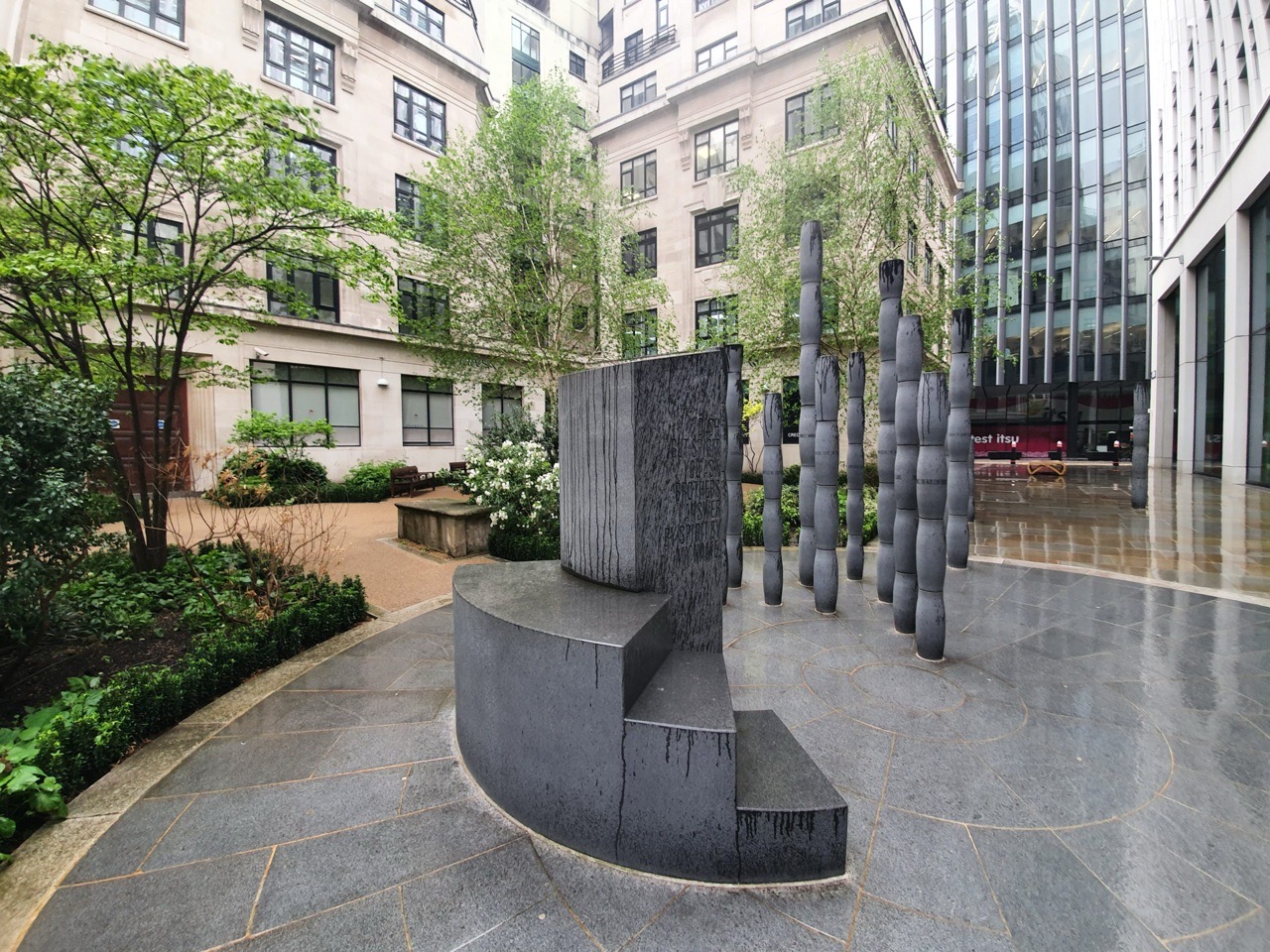
    This was on the wonderful walk around London led by Des yesterday evening, focusing on the issue of slavery and the links that London has to that (and there’s no shortage of such links). It’s a monument that was unveiled by Desmond Tutu on 4 September 2008 and I’m not sure that I’d have ever noticed it if it wasn’t for Des pointing it out. Not that it’s entirely hidden away, it’s next to 74 Fenchurch Street in what was once the churchyard of St Gabriel Fenchurch which was destroyed during the Great Fire of London and wasn’t rebuilt.

    I like this monument, as the messaging behind it is clear without requiring a 62-page guidebook to explain its meaning and purpose. I initially thought that the pulpit was one where anti-slavery campaigners would preach their message and although this is the case, another meaning is apparently also that it is symbolic of how slave auctions might take place. The columns represent sugar cane and show people listening to the message at the pulpit, or, alternatively waiting to be sold to their new owner.

    The sculpture is located near to where John Newton of St. Mary Woolnoth parish was the vicar between 1780 and 1807 and he was buried here, although he was later moved. This is important as Newton was a slave trader who changed his views and decided to campaign to end the trade and he’s perhaps best known today for writing the words to the hymn Amazing Grace.

    Anyway, this sculpture is thoughtfully located, has a depth of meaning and is creatively intriguing. This is perhaps an ideal which similar projects should try and match in the future. The spelling of the word ‘Gilt’ in the name is also deliberate, it’s a play on the financial term and a nod towards how important that was to London at the time of the slave-trade, and still is today.

    There’s a poem written by Lemn Sissay (who later became the official poet of the London Olympics in 2012) and some of the text of that is incorporated onto the monument.

  • London – Little Hail Storm

    London – Little Hail Storm


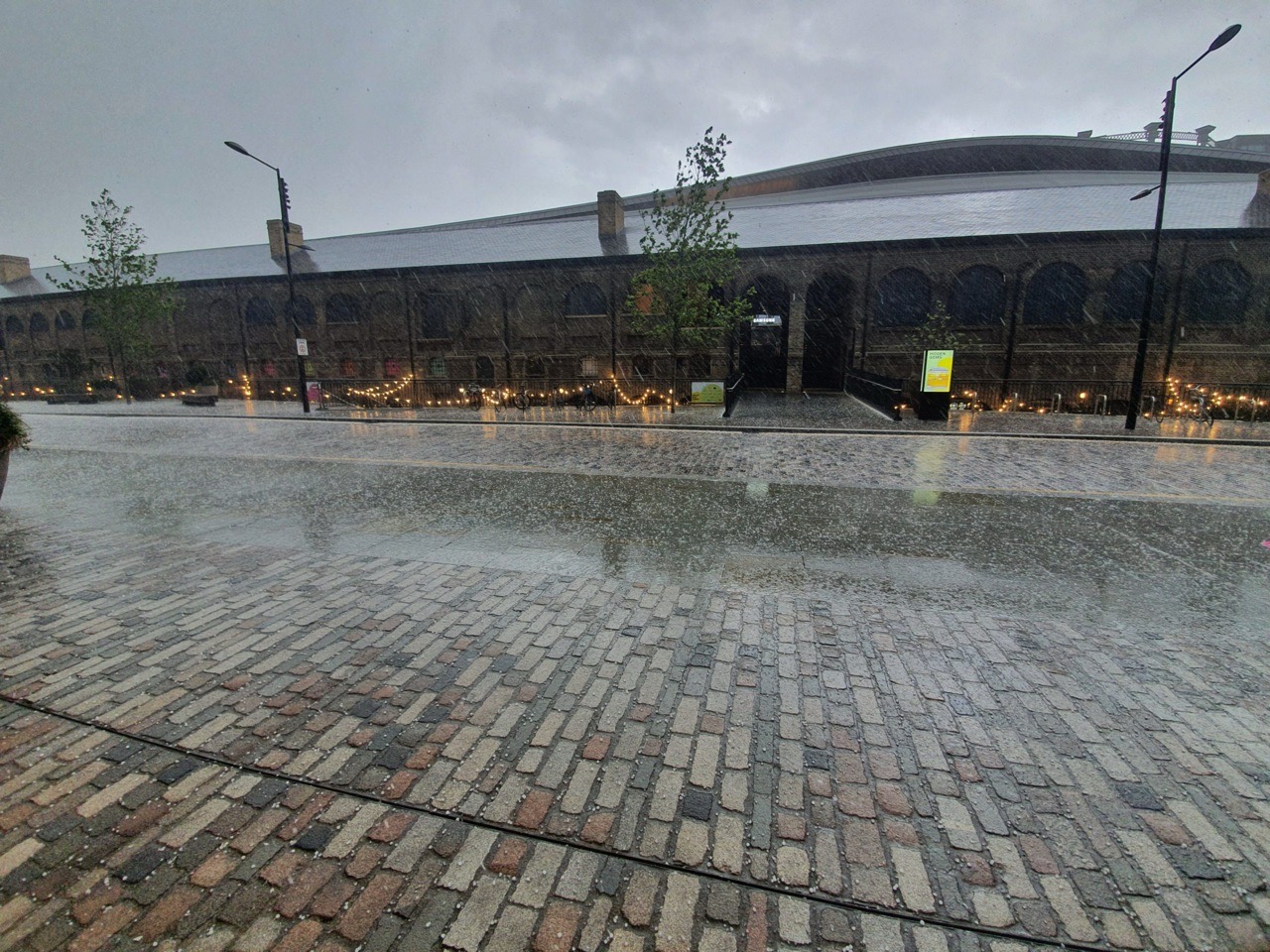
    I was five minutes later for my visit to Little Creatures, because this happened in mid-May when I thought the weather might be quite moderate. I didn’t think that it was ideal as the hail was like people chucking gravel at my head (well, I’ve never had anyone chuck gravel at me, but I’ve used my imagination), so I had to hide in the entrance to a shopping centre….. The whole weather arrangement caused joy amongst the children in the area though.

  • London – Camden (Borough of) – Little Creatures London

    London – Camden (Borough of) – Little Creatures London

    I had only vaguely heard of Little Creatures, but they’re a United States operation which has now expanded to locations mostly in Asia and Australasia, but also now in London. They’ve got themselves quite an on-trend location in the new area to the north of King’s Cross St Pancras, which is all rather in keeping with their modern image.

    All modern and shiny inside, although it wasn’t overly busy when I arrived in the early evening. The staff here are suitably engaging as I would expect for a chain such as this, friendly and welcoming. They serve food as well such as burgers and flatbreads, and they even have cauliflower bites for those who fancy nibbling on, well, a cauliflower.

    Little Creatures are very much about their IPA, so I didn’t go for their beer and instead went for two options from Fourpure brewery, which were the Citrus Session IPA and the Last Train stout. Not necessarily the cheapest, but the on-line ordering system was easy enough to use. There is poor phone signal in the premises, which the staff warn customers about when they arrive, so it’s fairly essential to connect to the free wi-fi. The beer isn’t perhaps the most exotic either, they stock a fair chunk of Magic Rock Brewing products and although I like those, they’re easy to find in supermarkets.

    Anyway, this was all a nice environment, welcoming, clean and organised. For the ideal visit, perhaps some rather more decadent or unique beers might be a useful innovation. All on-trend and comfortable though, not a bad choice for a group visit.

  • London – Tower Hamlets (Borough of) – Travelodge Docklands

    London – Tower Hamlets (Borough of) – Travelodge Docklands

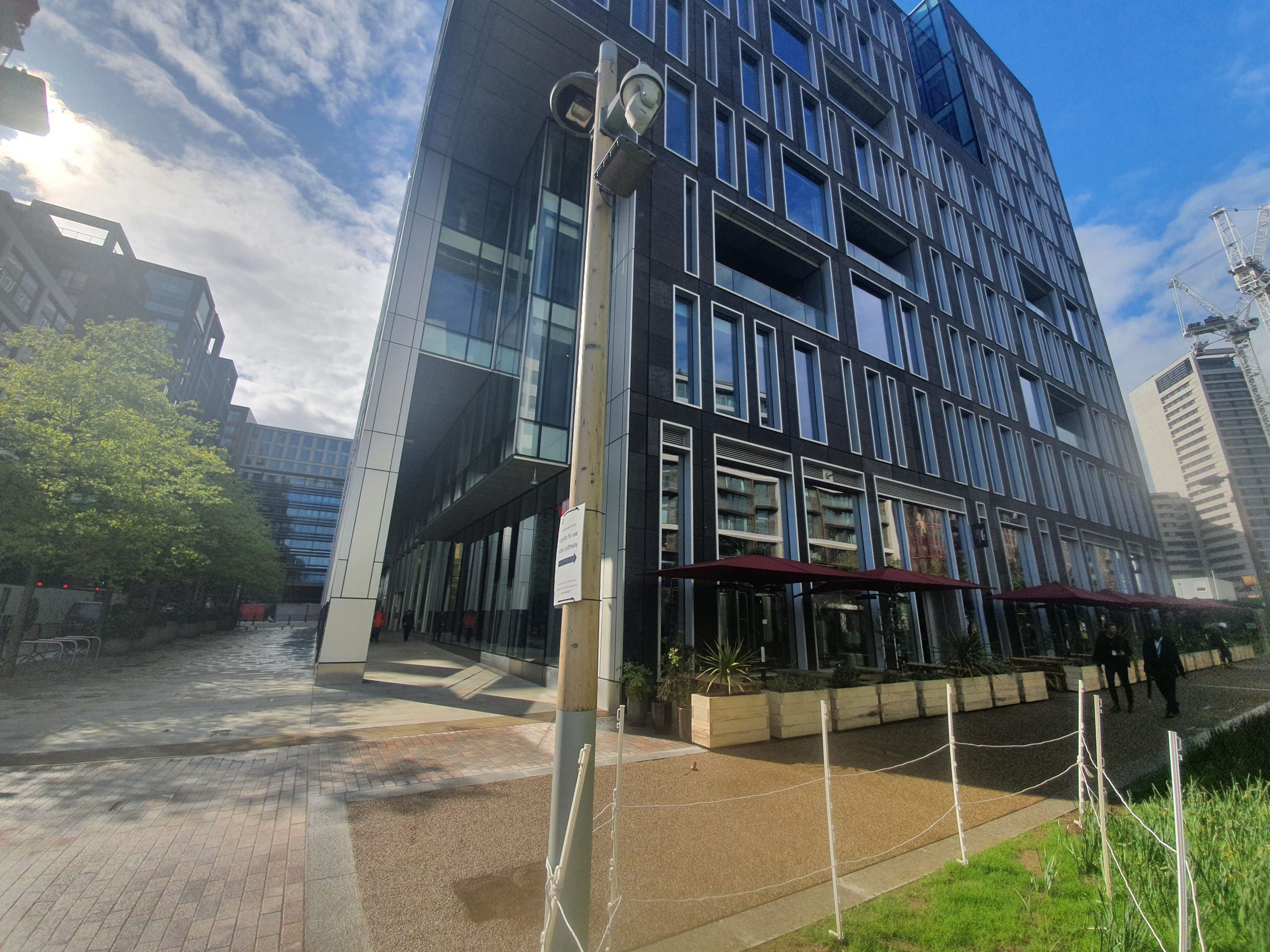
    Judging from the price of hotels in the city, there is still not a huge enthusiasm to travel to London at the moment, not least with the obvious lack of international tourists and business travellers. This was the keenly priced Travelodge Docklands, which is a shortish walk from Canary Wharf that came to a total price of £24.99. Staffing here was minimal, but friendly, which suffices me when paying £24.99.

    I’m not sure that Travelodge rooms vary much, and they haven’t departed from the standard here. All clean and well presented, and most importantly perhaps (to me) they have windows that actually open so that the room isn’t hermetically sealed. There were no noise issues either internally or externally, I suspect partly as there weren’t that many people actually in the hotel. But either way, that made for a peaceful night. Although I’d add that it’s quite a hike to get back to reception if you’ve placed in a room right in the far corner of the hotel. But if I can walk 100 miles (have I mentioned that before?) then I can get back to reception I suppose.

    The view from the room, with Canary Wharf over on the left-hand side. For those who like taking their cars everywhere, there’s a large car park on site although I suspect they might charge a hefty sum for that. I wasn’t burdened by such issues though, the DLR stop is a three minute walk away.

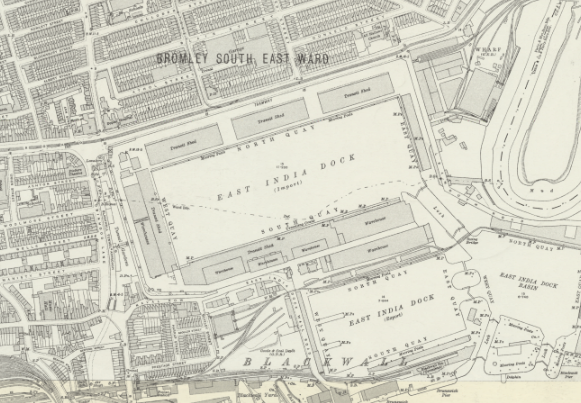
    The most exciting element for me was the history behind this whole site, as until 100 years ago, this was East India Docks. The Travelodge sits towards the top of East India Import Dock, but all of this is now gone, with the exception of the East India Dock Basin which is still there. The streets in the area around the Travelodge are named after products which were once imported into these docks, such as Coriander Avenue, Rosemary Drive, Saffron Avenue, Nutmeg Lane, Sorrel Lane and Clove Crescent.

    My room was somewhere about where that boat is in the centre at the front, so it’s fair to say that quite a lot has changed here since this illustration was made around 200 years ago.

    Anyway, for £24.99 I thought it was all excellent value for money. I suspect it’s usually a lot more than that and so perhaps less exciting value for what is quite a basic hotel. I didn’t need their wi-fi, but that’s a chargeable service (there’s 30 minutes free) and the whole arrangement is all more functional rather than luxurious.

    I had a little look on TripAdvisor and the hotel isn’t badly reviewed, although there are of course some angry customers. The hotel’s lack of mattress protectors is incredibly brave of them, since they’ll end up chucking mattresses away at quite a pace (or picking up negative reviews about that). I liked the “upon arrival in the room there was no Kit Kat chocolate bar”, which reminds me of an episode of The Hotel with Mark Jenkins.

    And the customer who was “shocked” at:

    “The room cleaning service women was from Eastern Europe which is not an issue but the issue I had with her was she didn’t speak or understand a word of English”.

    Odds are they did understand quite a lot of words of English (but studiously ignored the guest), but I’m not sure why a guest really needs an in-depth conversation with the room cleaning staff anyway, who are probably distracted with cleaning rooms. There was another angry guest that check-in is “very late”, despite it being 3pm which is hardly unusual.

    And another guest who noted:

    “To top it off there were people running around in their underwear in reception.”

    I suppose readers have to picture the scene as they feel appropriate, as no more details were given. But my favourite of all was:

    “We requested a wake up call and taxi for the following morning but nobody woke us up”.

    The hotel reminded the customer that Travelodge don’t offer wake up calls, but I’d like to hear more about what the staff members had promised. A mischievous evening staff member perhaps…..


  • London – Islington (Borough of) – Hammerton Brewery

    London – Islington (Borough of) – Hammerton Brewery

    The Hammerton Brewery has been trading since 2014, although they brought back the name of an historic brewery that had closed in the late 1950s. I’ve had some rather decent beers from Hammerton in the past, so thought this made a handy taproom to visit. I booked on-line earlier in the week, although it didn’t like me trying to book a table for myself (it needed two people). I booked anyway with a note on the booking, but didn’t receive a reply and so I assumed they were content with what I’d done.

    Normally I write about how good customer service is at pubs and breweries, indeed, it’s perhaps just a little dull how I keep writing about the engagement and passion of the staff. The staff weren’t unfriendly here, but they weren’t really engaging with any customers in a way that I thought they might. Not this overly bothered me, being British I don’t need too much social interaction.

    In a bid not to be too awkward, I just booked a table for two (as I have already mentioned I had to) in an uncovered area. This was loyally provided, although I suspect it might have been better to just move me to a table that was undercover and larger since they had so few other customers. They didn’t complain though when I self-upgraded when it started to rain. I was slightly humoured when a table for two turned up and were then shown to a table that was drenched in water and that didn’t seem ideal.

    Anyway, I was perfectly content here and had no complaints, it just wasn’t quite what I expected in terms of customer engagement, especially given the incredible beers that they brew.

    It’s all a perfectly serviceable set-up and they had a pop-up kitchen offering calzone pizzas, which I thought was a rather lovely idea. The food offering changes to add some variety to proceedings. Ordering is done via an app and that all seemed to work well, with beers brought out within a couple of minutes of ordering.

    The inside is closed due to the current lockdown situation, but it’s an on-trend and fun sort of place. I say on-trend, it’s an industrial unit, but they’ve done it up nicely. I don’t really do interior decor commentary if I’m being honest. Bung a few beer barrels, a couple of pot plants, a dangling electricity cable and I’ll happily call it on-trend if there’s craft beer.

    Before anyone comments, these are actually slightly over-poured as I had ordered half pints, so there were no short measures. One thing I do feel best to dwell on here is that Hammerton make some bloody good beers. Actually some seriously good beers, and they way exceeded my expectations. I knew Hammerton for their cans of Crunch, which is a peanut butter milk stout stocked in many pubs, not least the Artichoke in Norwich.

    I had four half pints at the brewery, namely Wald, Le Roux Project, Pecilla and City of Cake. All of these are stouts, and it’s rare that I get such a plentiful choice of these in one venue (and they had another two stouts on top of those). City of Cake is a chocolate fudge cake milk stout, Pecilla is a vanilla & pecan pastry stout, Le Roux Project is a chocolate salted caramel pastry stout and Wald is an Black Forest Gateau imperial stout.

    Despite all four beers being delightful, it’s the Wald that I feel I shall dwell on here for the longest. Their tasting notes say:

    “Wald, this year’s Black Forest Gateau Stout brewed with a more complex malt bill, to create a strong, deep, rich, milk stout. Then conditioned on 140kg of fresh cherries, balancing roasted coffee and chocolate notes with aromas of vanilla, caramel and cherry”.

    Very decadent. And this is one of the best beers that I’ve had, certainly full-bodied and it felt like an imperial stout in terms of the alcohol content whilst also retaining some sweetness. The cherries were up-front in the flavour, but there was a rich chocolate and cherry aftertaste that was as strong as a cherry brandy liqueur. Smooth, not too powerful and with subtle notes to add to the whole proceedings.  And that of course all sounds pretentious, but this was a beautiful beer and apologies to my friends who I felt the need to tell immediately about the situation.

    It’s fair to say that I was pleased that I visited Hammerton and I shall likely opt for their beers whenever I see them again in the future.

  • London – City of London – St. Dunstan’s Court

    London – City of London – St. Dunstan’s Court

    Like the yards of Norwich, I rather expected the series of courts off Fleet Street to have some kind of long heritage.

    But, at first this didn’t seem to be the case. The red cursor on the above map from 1920 shows where the court goes through the building today. Indeed, on late nineteenth century maps, it shows that this was the site of a pub rather than a court. The court takes its name from the nearby medieval church of St Dunstan in the West (this makes sense as there’s another one in the East, albeit mostly destroyed during the Second World War, which isn’t too far from the Tower of London).

    However, the 1886 Insurance Plan of London shows that the court was there and this tallies up with 160 Fleet Street being the Hole in the Wall pub. The court doesn’t really go anywhere, it just reaches what was a playground in 1886 and then joins onto Bolt Court, which is as it is today (although the playground has gone). Also visible in this map is an electrotype facility, a useful and quite modern publishing device at the time. There’s a photo on Wikipedia of a set-up in 1902 that was used at the New York Herald, and I imagine that it was equally cramped.

    Each of the courts off Fleet Street on the north side of the road has tablets which show the heritage of the newspaper industry, which is what this area was once known for. This one shows the 1980s computerised printing technology that was introduced, that brought about the demise of the traditional printed processes. The usage of the Space Invaders as an example of something from the 1980s is perhaps a little obscure, but it stands out on the pavement.

    There was a court case heard at the Mansion House in September 1896 when a Mr Charles Pensotti was accused of stealing letters from a post box on St. Dunstan’s Court. He had been interfering with letters placed there by Dean & Son, a publisher of some note, who wondered why cheques and postal orders had been going missing. When arrested, Pensotti was found to have a number of blank cheque books and six picklock keys, but he said to the police that it was a big mistake.