
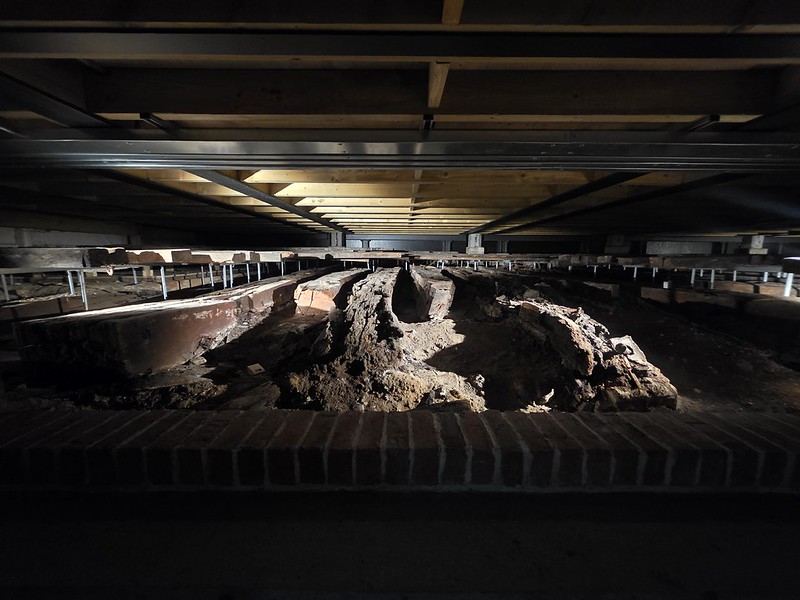
In 1995, workers at the Chatham Historic Dockyard lifted the floorboards of the Wheelwright’s Shop for what should have been routine maintenance. Instead, they found themselves standing above what would turn out to be one of the most significant naval archaeological discoveries since the Mary Rose. Beneath seven layers of flooring lay some 245 giant timbers that had lain undiscovered for over a century and they had been placed there deliberately in an attempt to preserve them for posterity. Effectively, someone decided that the best way to deal with a 90-gun warship was to bury a large part of it under a shed.
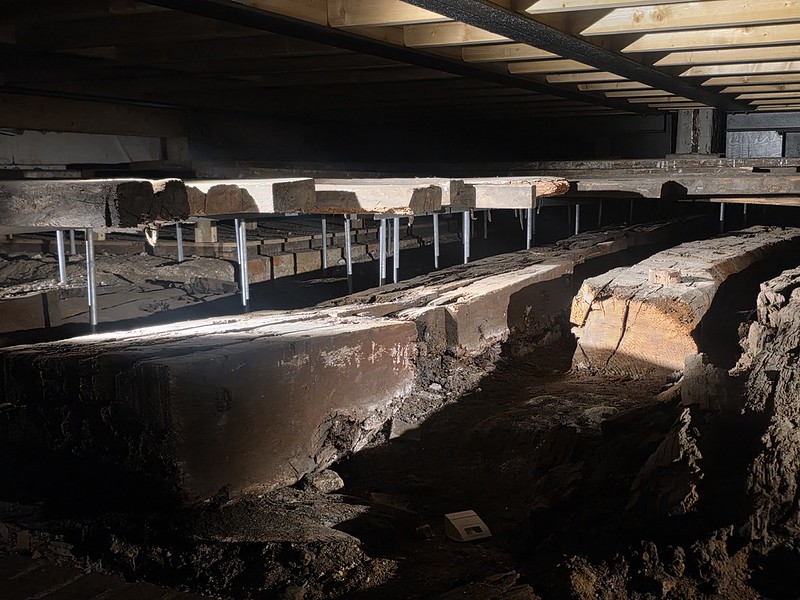
After working out what boat someone had hidden, the vessel was eventually identified as HMS Namur, a second-rate ship of the line launched at Chatham in 1756. She was captained for a while by Charles Austen, the brother of Jane Austen, and crewed by Olaudah Equiano, an important figure in the abolishment of the slave trade. The Namur served with the Royal Navy for 47 years and participated in nine fleet actions, including the Battle of Lagos in 1759, which saw the destruction of the French Mediterranean fleet and left invasion plans in tatters. She also saw the capture of Havana in 1762, the Battle of Cape St Vincent in 1797 and the Battle of Cape Ortegal in 1805. This was all a symbol of British naval superiority, it’s not an entire surprise that someone wanted to save it.
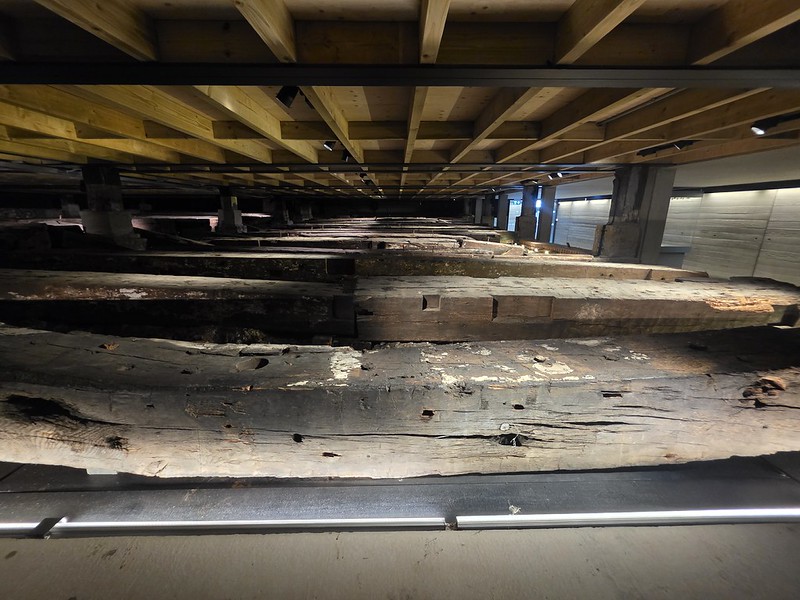
The mystery of why the timbers ended up beneath the floorboards of the Wheelwright’s Shop remains unsolved, though there are suspicions. It is possible that the preservation and hiding of as much fabric as possible from the Namur was officially sanctioned by the Captain Superintendent of Chatham Dockyard, James Alexander Gordon, who had served on the ship during the Battle of Cape St Vincent in 1797. Recycling was commonplace at the dockyards and broken up bits of wood were often scattered around the site, but they weren’t usually carefully arranged in one place and hidden. Some people suggested that the wood was used as supports for the building above, but most of them aren’t actually supporting anything and everything is rather carefully laid out.
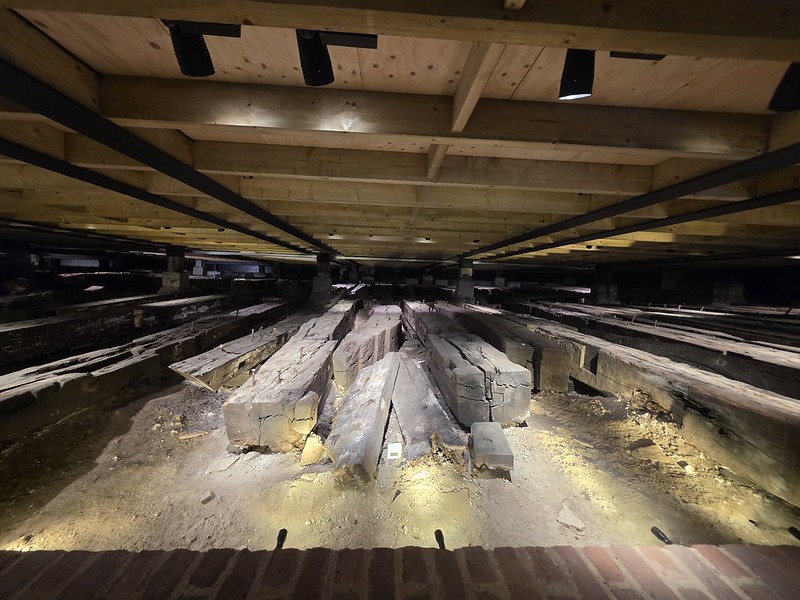
The Namur was broken up in 1833 and it is 10% of the frame that has been found underneath the floor. Most of the Namur was recycled or destroyed at the time, but it is rather lovely that all of this has survived. It has presented the museum a problem in what to do with all of this heap of wood, so they’ve made the sensible decision to just leave it there. This was all one of my favourite things at the museum, a heap of wood someone has hidden for reasons unknown and I like odd storage decisions.