Category: Bath

  • Newport to Bath Spa Rail Journey

    Newport to Bath Spa Rail Journey

    I accept that these blog posts are entirely out of order. I particularly mention in the chronology sense with that statement I’d better hasten to add. I’m going to post what I can today and then move on to my current trip and I am unanimous in that… This is the sort of firm editorial control my two loyal blog readers have come to expect, assuming they are still trying to work out why I was apparently in three places at once.

    Anyway, this is Newport railway station which I think is quite an ugly building, but each to their own as I’m sure that some thought that it was a bold modern transport experiment.

    The station opened as Newport High Street in June 1850 and is on the mainline between Bristol and Cardiff.

    This was my first train, the GWR service from Newport to Bristol Parkway.

    I was pre-annoyed as it required me to have a seat reservation and, as I’ve mentioned before, I don’t like them. Invariably someone will be sitting in the seat or there’s some other inconvenience, so I’d rather sit where I want. Anyway, I boarded the train, which was going to London, and just sat where it said there was no reservation. It transpired that the train’s reservation system was down so it didn’t matter anyway and this no doubt annoyed the people who did want to have a reserved seat, which is one of the pleasingly democratic qualities of British rail travel, namely that eventually everyone gets disappointed.

    Crossing the River Usk at Newport.

    Safely at Bristol Parkway. I went off to look at an old church at this point, I’ll come back to that another time. Although this is how the blog chronology collapses, one church and one railway platform at a time.

    Back at Bristol Parkway, this station opened in 1972, although it was heavily modernised in 2001.

    Many people come to look at this plaque noting the unveiling of the new platform by Chris Grayling, then the Transport Secretary and now in the Lords, in April 2018.

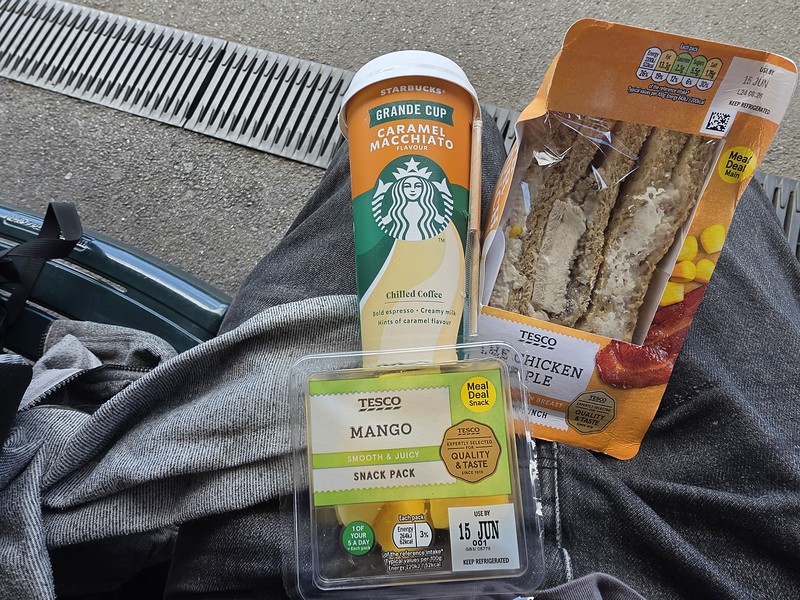
    I found a Tesco when church hunting so that was lunch sorted. Note all that fruit. I mention this because it gives the whole arrangement a faintly healthy glow, even if the broader dietary context of my travels may not withstand close academic scrutiny.

    The GWR train to Bath Spa turned up six minutes later and I wondered whether Delay Repay would kick in, but they got the train back on track so to speak.

    This train wasn’t overly busy and GWR hadn’t burdened themselves by cleaning it.

    Playing music loudly from his phone and feet wiped on the seats numerous times. The train guard didn’t say anything, although I hardly blame the staff as they don’t want the risk of being attacked. I limited myself to silent disapproval, at which I am becoming increasingly professional.

    And safely into Bath Spa railway station, although it was rather harder to leave it later in the day.
  • Bath – Bath Brew House and Bees

    Bath – Bath Brew House and Bees

    I’m not claiming that this is riveting viewing, but it’s a reminder of the dangers of going outside in a pub beer garden. In this case, the Bath Brew House.

  • Bath – Bath Brew House

    Bath – Bath Brew House

    I’ve been to Bath Brew House before, but it was before I was Untappd and it was before this blog, so it’s like it didn’t happen…. Anyway, it’s listed in the Good Beer Guide and so I thought I’d visit it again to restore order to my historic record.

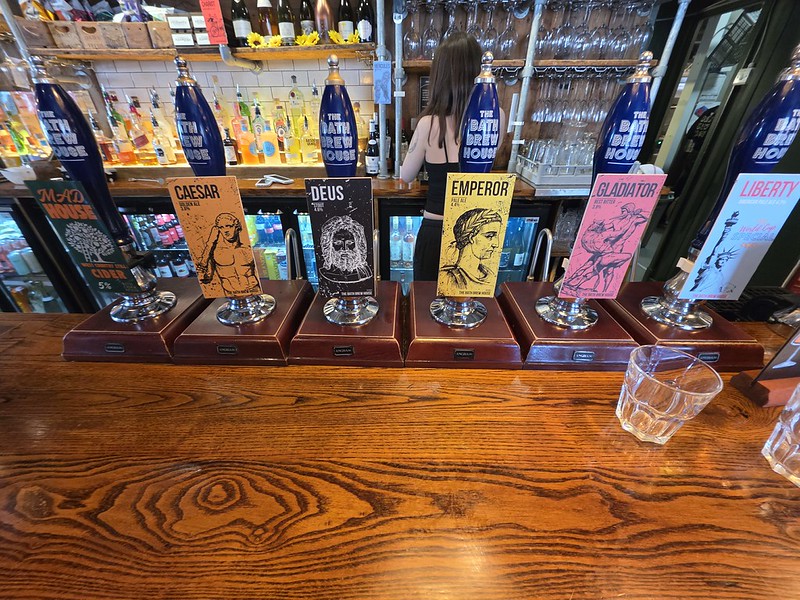
    Some of the real ale selection. There have been beers brewed on the premises since 2013 when they started with the Emperor and the Gladiator, with a rather more extensive range available now.

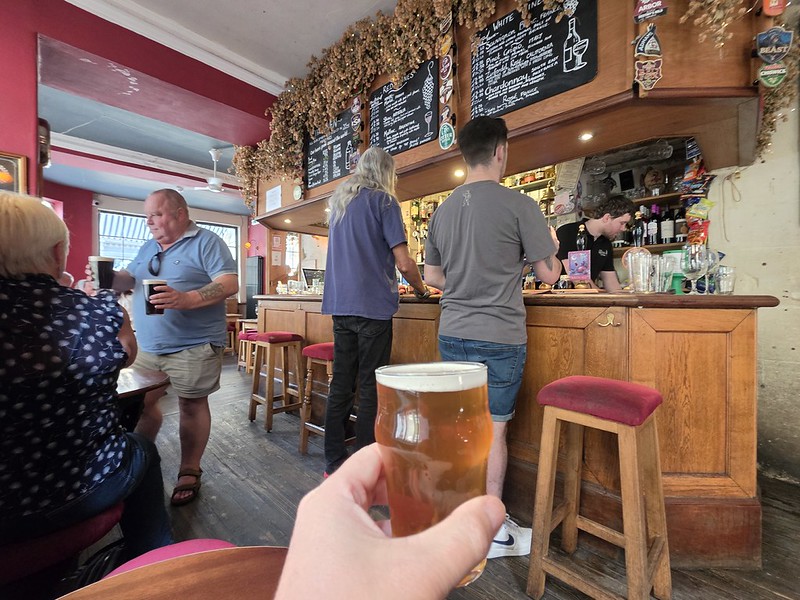
    The bar area which all felt suitably on-trend and CAMRA note that a modernisation has just taken place. They add:

    “Formerly the Metropolitan, and before that the Midland Hotel, the whole building underwent a major refurbishment in the summer of 2013 and re-opened as a brew-pub in September of that year.”

    The rear of the venue and there’s also a large external garden area for those who like sitting outside with lots of insects.

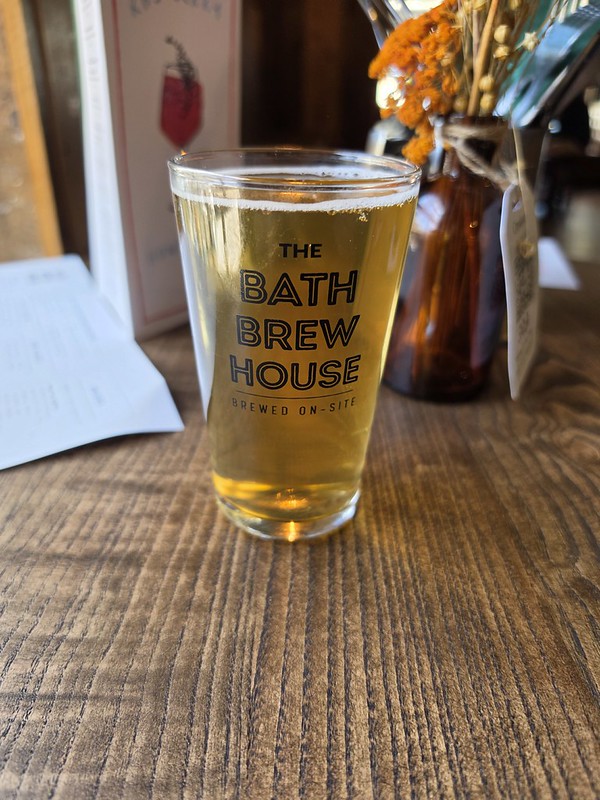
    My first half was the Caesar Golden Ale which was clean, light, slightly thin but had a pleasant enough flavour.

    And my second beer was the Deus which was creamy, chocolatey and slightly sweet.

    There was something of a bee incident outside, but I’ll post a separate video about that, which should increase the excitement no end. I appreciate that this may not sound like premium drama, but we all work with the material available to us. Some travel writers have mountain rescues and political upheaval. I had some bees.

    All told, I rather liked this pub, it felt a little over-staffed (which is an observation rather than a complaint), but the service was efficient and the ale selection was suitably interesting. The online reviews are reasonable and I hadn’t realised at the time that the pub is operated by Youngs, I had thought that it was a free trade pub. Anyway, the drink prices were reasonable, there were numerous power outlets and the surroundings were comfortable.

  • Bath – The Sickle Micropub

    Bath – The Sickle Micropub

    I like quirky and interesting venues, so this micro-pub seemed appealing as venues that have accepted their own size limitations and have a desire to become intimate have a certain charm. Not that I want to be overly social though, there are limits.

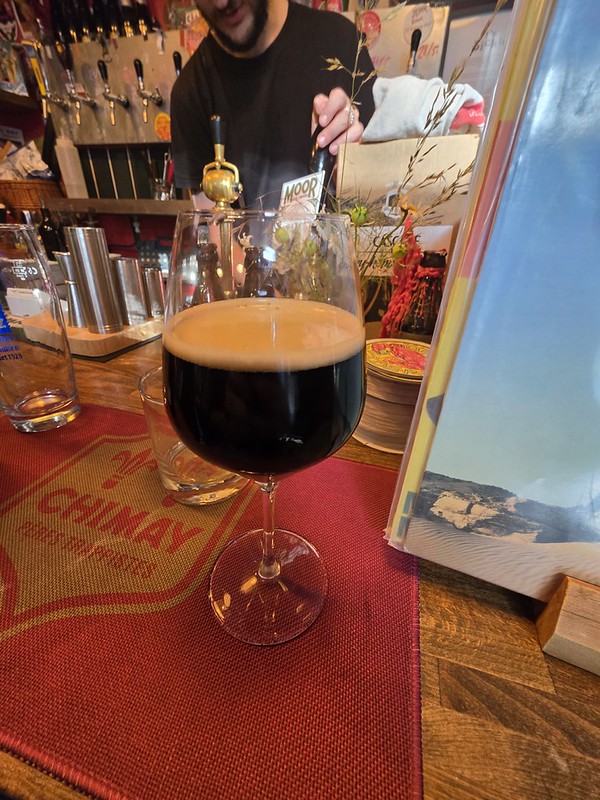
    The beer menu was above the bar and there were some tempting little numbers there, especially some of those Jester King options. The service was friendly and engaging, although it was particularly busy when I was there. I might have engaged more with the owner who served me, but he overcharged me and so I felt that the bond was broken. Trust is a delicate thing, especially when it has been placed under pressure by the cost of a small imperial stout.

    I opted for this one, the decadent Doom Forge (2026) x Figure 8 from Jester King, which was very smooth, rich, dark chocolate taste and some coffee to add to the mix.

    I initially had to sit at the bar as there were no seats available, although there isn’t exactly much space at the bar either. There was a music theme to the venue as well, but I ignored that as I couldn’t see anything from the Wurzels which felt like a bold omission.

    Some customers rearranged themselves around the venue and so a table became available at the rear. The entire limits of the pub are in the above photo and the toilet arrangement was quite, er, contained as well.

    It’s a comfortable environment though with a friendly service and decent choice of beers. This whole arrangement feels very Bath, an air of quality, decadence and rarity. Although having noted that, I then went to McDonald’s for a snack, but I try not to be overly predictable. The venue is very well reviewed with just one negative review, which is from someone barred for antisemitism, so hard to fault the owner there for just wanting some standards and no hatred. I’d come here again and I’ll forgive them the 50p overcharge.

  • Bath – Parade Gardens

    Bath – Parade Gardens

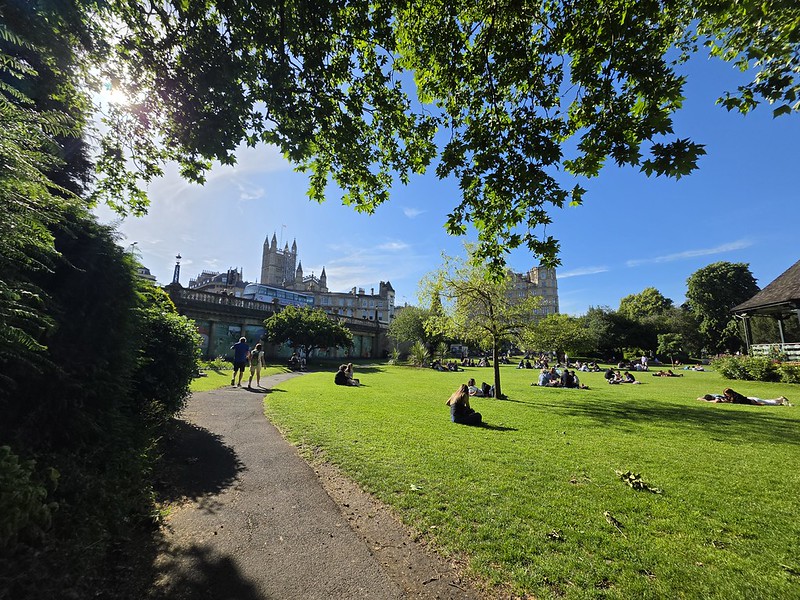
    These are the Parade Gardens in Bath and I thought that they looked surprisingly busy given that there’s an admission charge to enter them. Or, at least, I thought there was a charge and then I noticed that the ticket booth was closed. It’s in a decadent location, the gardens sit beside the River Avon and look across towards Pulteney Bridge. And, as they were free, I decided to investigate.

    The history goes back to the early eighteenth century, when the area was laid out in 1709 as St. James’s Park, linked with the Assembly Rooms built for fashionable spa visitors. This was the Bath of Beau Nash, promenading, social display and people taking themselves very seriously in wigs, the Richard type middle class of their time only probably with more powder and fewer computers. A gravel walk known as Harrison’s Walk was laid out along the edge of the site and the gardens formed part of the wider pleasure-ground world around the Abbey, Terrace Walk and Orange Grove. In 1824, when the Bath Royal Literary and Scientific Institution was built on the site of the former Assembly Rooms, the gardens became known as Institution Gardens, because nothing improves a garden quite like giving it a name that sounds as though it may require a committee. Unfortunately, the Bath Royal Literary and Scientific Institution was demolished and is now under a road system, but I’m sure that it was nice when it lasted.

    The gardens changed again in the nineteenth and early twentieth centuries as Bath remodelled the surrounding streets, demolished buildings and adjusted the relationship between the gardens, Grand Parade and the river. Historic England notes that they came into council ownership in the 1930s and were laid out as a municipal park in 1933 to 1934, which gives them their more formal public garden character.

    It is a rather lovely place, although they’ve decided to start charging for the toilets but that feels like a fair deal for allowing free entrance to the gardens. I was able to find a bench to sit down on to enjoy the lovely views, albeit they were primarily of my phone, but it’s nice to be in nature when looking at my phone as doom scrolling is better surrounded by trees. I did wonder for a while why no-one was sitting on the benches here, but I realised that they were in shade and the cold which probably suited me more than most as I’ve developed to be fonder of the refrigerated section of horticulture. But it was all a very lovely little pause in the heart of Bath and that view of Bath Abbey in the above photo was agreeable.

  • Bath – The Raven (Good Beer Guide)

    Bath – The Raven (Good Beer Guide)

    When I was in Bath, I thought it would be sensible to tick off a few more Good Beer Guide pubs in my ever failing quest to visit them all. I didn’t pick a great time to do as it was hot, it was a Saturday, Bath were at home playing their rugby thing and so the city was busy. But research requires bravery at times, and I am nothing if not heroic when faced with the possibility of sitting indoors with half a pint.

    Anyway, before I get further distracted, this is the Raven on Queen Street which has four bars across six different rooms and although the upper floor is more for dining, drinkers are welcome throughout.

    The Raven’s history stretches back from uncertain Roman and pre-Roman origins to a site that was part of Barton Farm’s farmland in the 17th century, before appearing on a 1735 map as a narrow garden, apparently lower than the surrounding streets and now forming part of the building’s underlying structure, in a pleasingly Georgian “just build upwards and hope nobody asks too many questions” arrangement. By 1800 the site was occupied by tradesmen including John Jarvis, a calenderer, and Thomas Trendell, a grocer, before the Carnall family butchers were associated with the address in the early 19th century.

    The move into licensed trade came in 1864, when Thomas Toleman took over the Bazaar Wine Vaults from Charles Wright, who was described as a wine merchant to the Royal Family. The premises later became Fuller’s Wine Vaults, then Hatchett’s Wine Lodge, with Second World War pilots from a nearby airfield said to have used the pub and left messages on the upstairs ceiling, sadly painted over in the 1960s. It later became a city centre pub favoured by Goths and bikers, opened as The Raven in 2004 and expanded in 2022 by taking over the adjoining building.

    There were ten real ales available including their house beers of Ravens Gold and Ravens Ale, brewed by Blindman’s Brewery. There were also beers from Stonehenge Brewery, Exeter Brewery, Frome Brewery, Otter Brewery, Sandstone Brewery, Goffs, Bowland and Wharf Brewery, so that’s a fair number.

    I went for the Lyra’s IPA from Sandstone Brewery and it was citrusy, well rounded and had a decent flavour. I hadn’t had a beer from Sandstone before, but they’re based in Wrexham and have been brewing since 2008.

    The food menu has pies and sausages at its heart, which is never a bad start. There is also quite a broad selection beyond that, and the pricing wasn’t unreasonable for the location. The team members were friendly, the service was efficient and it wasn’t quite as busy inside as I had expected. Certainly, in my humble view anyway, a well deserved entry in the Good Beer Guide with its beer, history, character and atmosphere.

  • Bath – Closure of Bath Spa Railway Station

    Bath – Closure of Bath Spa Railway Station

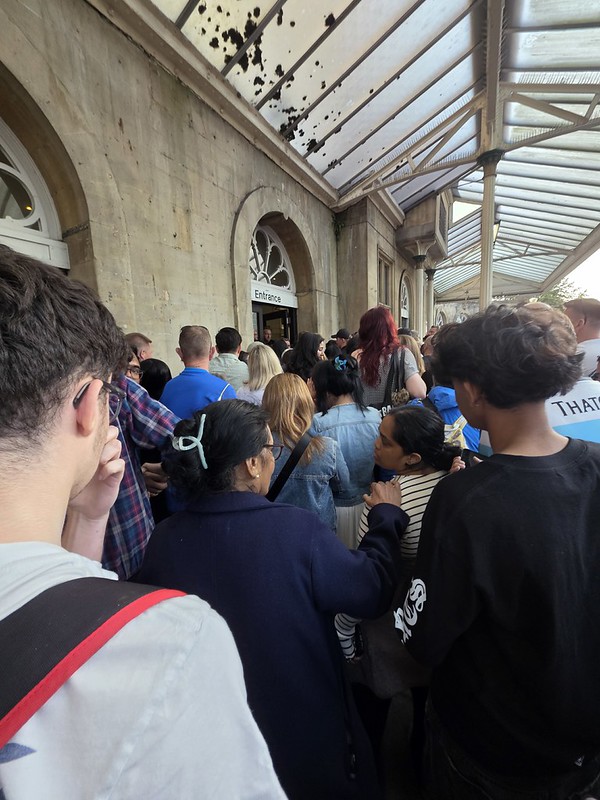
    It’s not entirely optimal to approach a railway station and see that it’s a bit shut and there are people milling about outside.

    It either meant that someone famous was there or the bloody railway network had broken again.

    It soon became apparent that this was another Network Rail debacle.

    But, having noted that, I like a bit of drama in my life. I am not seeking genuine peril, civil disorder or an unscheduled night on a station concourse. Just a little deviation from the norm, that sort of thing.

    The difficulty was that I did actually want to get to Swindon, which is perhaps not a sentence people write very often. Indeed, most people spend their lives trying to avoid needing to get to Swindon, and yet here I was, standing outside a closed railway station, regarding it as a cherished destination.

    At least I could see the entrance now, it’s a bit like seeing a lifeboat on a slightly sinking ship.

    The police told people not to push, although by trying to hear what they were saying they pushed forward. Fortunately, I am sufficiently well built that it is quite hard to push me very far. I have many flaws, but being easily displaced in a railway related crowd is apparently not one of them.

    There was more vibrancy to the arrangement at this stage. By vibrant I mean a combination of confusion, annoyance and the need for signage.

    So near and so far from entering….

    I was let through soon after this and was rather pleased as I did need to get to Swindon at some point as it was getting late and there was no alternative way of getting there as taxis were over £125 and there weren’t any buses. Praise to the British Transport Police and the station staff who were doing their best to manage the crowds and entry onto the platforms with some rather difficult circumstances.

  • Bath – Blitz Scarred Labour Exchange Building

    Bath – Blitz Scarred Labour Exchange Building

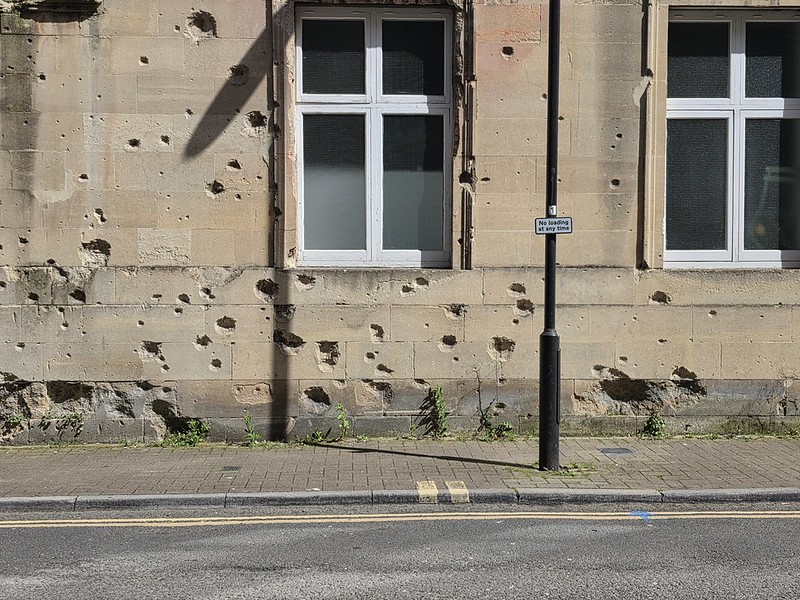
    In the early 1940s, the Germans were making slower progress than they would have liked in the Second World War and British air raids on Germany were increasing. The Germans had the idea of damaging historic British cities primarily to try and impact on the morale of the nation and they initially targeted Exeter, Bath, Canterbury, Norwich and York. Bath was hit between the 25 and 27 April 1942 with substantial damage being done to buildings, as well as the injuries that were caused to people.

    This building is the former Labour Exchange, which had only been completed in 1938, and it was badly damaged during the air raids. They patched the building up as they wanted it to continue in use, but after the war it was just left without the first floor and nothing much happened until around fifteen years ago. It was then decided to bring the building back into use, but they wanted to do something as a memorial to the Baedeker Raids. I think that it’s a nice looking transformation of the building which has retained some of the historically important elements whilst also bringing the structure back into use.

    And so, in memory of the 417 people in Bath who lost their lives during the Baedeker Raids on the city, this part of the wall was retained with the original war damage.

    The memorial plaque which was a little hard to read, although I like its style and how they’ve recreated damage to the plaque as well. The text reads:

    “IN MEMORY OF THE 417 PERSONS KILLED IN THE WORLD WAR II BAEDEKER RAIDS OF 1942

    In 1938 Bath City Council demolished 43 houses and cottages to build this building. A much-needed Labour Exchange building, a place for people to find employment. During the preceding decade many people simply had no work and the depression of the 1930s was shown by how many 1932 onwards. When World War II broke out in 1939 the building was extremely busy looking after the unemployed.

    On 26 April 1942 in the early hours of the morning a 500kg bomb hit the area. The bomb directly hit the ground where the garden is now placed. The Labour Exchange was badly damaged by the impact and the Labour Exchange staff were very brave working as they must not stop providing badly needed services to the bombed-out homeless on the north side of James Street West, opposite the Kingsmead North junction.

    Wartime records show that the new Labour Exchange was badly damaged by this second blast. The buildings walls immediately crumbling from the first attack, workers through the rubble, there more than one attempt to rebuild it. Despite this and the efforts the fire in the roof spread and burned out the whole of the top floor.

    It was recorded that the scene of the building as it stood after the first night attacks continued on fire and the damage can still be seen on the restored replacement building.

    The main building was severely damaged, the following morning now there were, are badly damaged. The story of the depot shows was heavily asked to make a temporary roof and the need of the bombed-out families and community. The Labour Exchange continued to provide more jobs during the War period, including in areas of sharp demand making sure they were short they suffered misery.

    This became even more important when wartime demanded such industry, many local companies and big businesses opening up, employment for functions that assisted the war efforts and the Labour Exchange had to help them find suitable jobs.

    For a long period after the war the Labour Exchange was housed in the library space. In 2002 it was designated as a Grade II listed building. Having lived one of the last surviving examples of the “made do and mend” necessities of wartime when workers, tools and materials were both in very short supply.”

  • Bath – Demolition of 1930s Fire Station

    I had been reading about the controversy of Bath’s fire station being demolished, so I felt the need to go and have a little look as I was in God’s own city and I like to find controversial things I can have an opinion on that no-one else will be interested in.

    I think it’s fair to say that it’s probably too late to reverse the decision now. The Twentieth Century Society opposed demolition and argued for its heritage value, while the fire service argued that the building no longer met modern operational needs as the doors weren’t big enough or something.

    Bath Fire Station is on Bathwick Street and Cleveland Bridge and was built between 1938 and 1939, with design work begun by Alfred John Taylor and completed by his daughter Gertrude Molly Justice Taylor, later Molly Gerrard. I think that’s interesting as female architects were hardly being overwhelmed with public commissions in the late 1930s. Avon Fire & Rescue Service closed the station in February 2026, moved crews temporarily to Roseberry Place/Lower Bristol Road and says the rebuilt station is expected to open in summer 2027.

    I do naturally veer towards the side of heritage, but Bath does have quite a lot of architectural history so that softens the blow a little, although it’s a shame to lose some interesting twentieth century architecture. And this is a working building, so the priority has to be about firefighters having a structure that’s actually useful for them. It was nice to see the building before it was entirely demolished though and I’m sure that there was some sort of consultation process to make people feel a bit better about the whole arrangement. On which point, I must do an update on the Sheringham bus shelter debacle at some point.

  • Bath – The Old Post Office (JD Wetherspoon)

    Bath – The Old Post Office (JD Wetherspoon)

    This is the new JD Wetherspoon in Bath that opened a few weeks ago in March 2026, the second one of the chain’s pubs in the city and this refurbishment cost them £2.2 million. This building was once Bath’s Post Office, but was for the last fifteen years or so used by Revolution until they closed.

    One thing that JD Wetherspoon does well, amongst many other things, is having an interest in the history of their buildings. This reads:

    “York Buildings is a grade II listed Georgian terrace, with a grand frontage along George Street. Completed in c1760, most of York Buildings, excluding No. 2, was the York House Hotel, latterly the Royal York Hotel. No 2 is at the end of the terrace. Previous uses include the Midland Bank, an auctioneer/estate agent’s premises and Bath’s main post office.

    York Buildings was designed in the Palladian style by John Wood the Younger, who also designed Bath’s world-famous Royal Crescent, one of the finest examples of Georgian architecture in Britain. The porches were added in the 19th century, with ground-floor alterations made to No.2 in the 1870s. Bath’s architectural transformation into a Georgian city was begun by his father, John Wood the Elder. An outstanding architect and town planner, he began laying out George Street in 1734.

    On the front of 2 York Buildings is carved ‘The Old Post Office’. During 1854–1927, these premises housed Bath’s main post office, with Oldham T Taylor its postmaster for nearly 30 years (1863–90). Thomas Moore Musgrave was also a long-serving postmaster here. On 2 May 1840, Thomas famously posted an item of mail from the Bath post office, then at 8 Broad Street, with the newly invented Penny Black postage stamp — this was the world’s first adhesive postage stamp’s earliest use.

    Ralph Allen was another famous postmaster. He arrived in Bath in 1710 and worked as a postal clerk. Two years later, aged only 19, he became the postmaster of Bath. In 1722, Ralph was elected mayor of Bath. During the intervening years, he made a fortune from reorganising the main postal routes across England.”

    The downstairs bar and it all looks colourful, bright and clean.

    The window seat was handy for people watching. There’s an upstairs bar as well and the whole arrangement is quite sizeable.

    My now obligatory carpet photo.

    There were six real ales on (with beers from Thornbridge, Oakham, Brains and Greene King), but as it was still morning I went for the £1.89 refillable coffees.

    As usual for this chain, I felt drawn to look at the online reviews and it’s one of the higher rated JD Wetherspoon locations on Google although it has only been open for a few weeks.

    “I was disappointed to see the lack of diversity in the interior design of this new bar in Bath. The images displayed throughout the venue only portray white men, which feels out of touch in 2026 and does not reflect the diverse history and communities that exist. Public spaces should be inclusive and representative of everyone. I hope this is something the management considers improving ASAP as it would make the environment feel more welcoming and inclusive.”

    Although the photos the reviewer took showed half the images in the venue were women and there is perhaps a limit of how many eighteenth and nineteenth century diverse images of famous Bath residents they can find without it looking a bit forced. I can’t imagine that this will be a priority for JD Wetherspoon.

    “Arrived to the new weatherspoons and looked good. Asked if we could have a table with our dog and was told yes out side. Sat down ordered food , told I have to order to a table inside and take it out side my self .
    After getting oue drinks and paying I am told that I must leave as my dog was not welcomed due to policy.
    I understand policy, how ever being told I can have a table outt side then order my food .to then be told I have to leave is not on. I did get a full refund , as my food arrived. Will never return”

    There’s already a review that JD Wetherspoon don’t accept dogs anywhere in their venues, that didn’t take long.

    And that’s about it, just some disappointment about cold breakfasts and tables that weren’t cleared down very quickly, otherwise customers seem to like it. It was certainly busy when I went on a Saturday morning in June, with the service all being fast and efficient. All very lovely and that’s another one of the chain’s venues that I’ve visited, so I then thought I’d better visit some Good Beer Guide pubs as well.