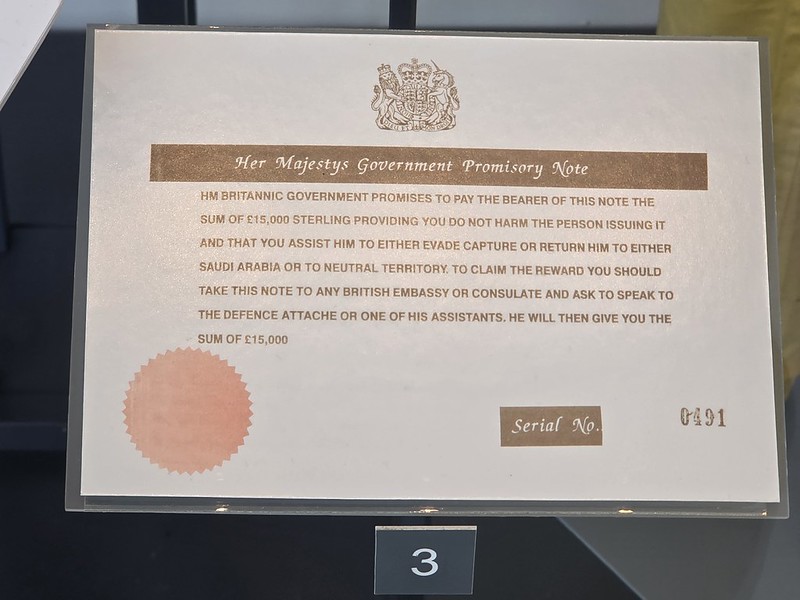
I’d never much thought about this (like many things) but this is a promissory note that service personnel fighting in the first Gulf War were issued with. If anyone was shot down or otherwise caught in enemy territory, then the Foreign Office would give £15,000 to anyone who returned them to safety. They each have a serial number so that they could be verified.
Also known as a Safe Conduct Pass, they had been used in the past but as more of a demand that the member of service personnel was properly treated. This ultimately was more of a demand that may or may not be met, but the offer of money was a much more tempting arrangement.
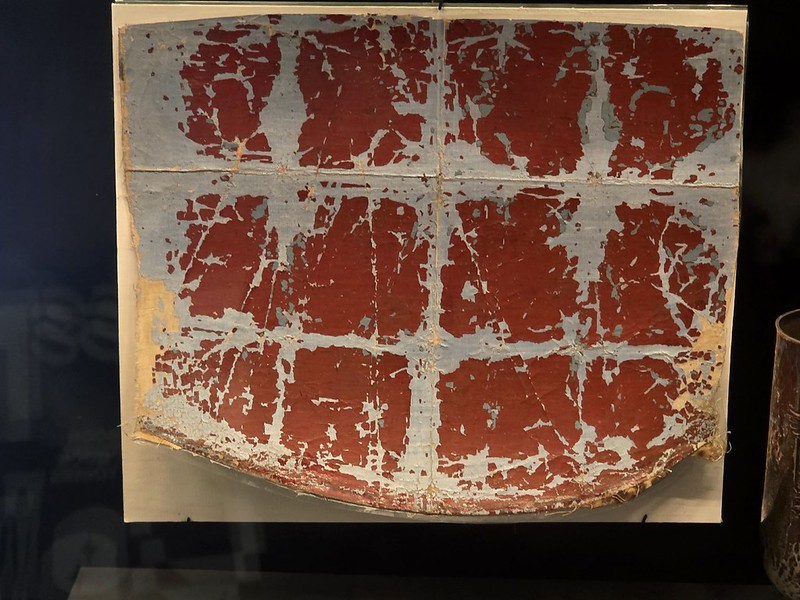
This fragment of fabric skin from Manfred von Richthofen’s (1892-1918) Fokker Dr.I does look rather modest, but it underpins something of a dramatic story. It was removed from the wreck of the triplane following the crash on 21 April 1918 by Corporal Harry Potter, part of the salvage team although souvenir hunters ended up with various bits of the aircraft.
The importance is Richthofen himself and the making of the Red Baron myth. He was not merely a successful German fighter ace, but one who understood, whether instinctively or otherwise, the value of visual identity. By having his aircraft painted red, he turned himself into something more than a pilot and more into a symbol of bravery and leadership. As the war progressed, the idea that one aircraft was painted red was seen as a little sub-optimal as it made Richthofen a target, so more planes were painted the same colour.
I like little survivals like this and because there were souvenir hunters, bits of the aircraft’s fabric skin are in museums around the world, not just here at the Air Force Museum, but at locations such as the Australian War Memorial museum. And, as another minor point that intrigued me, Richthofen was born in what is now Wrocław in a part of the city which is where I stay when visiting. I wonder what he would have thought about his birth place now being part of Poland.
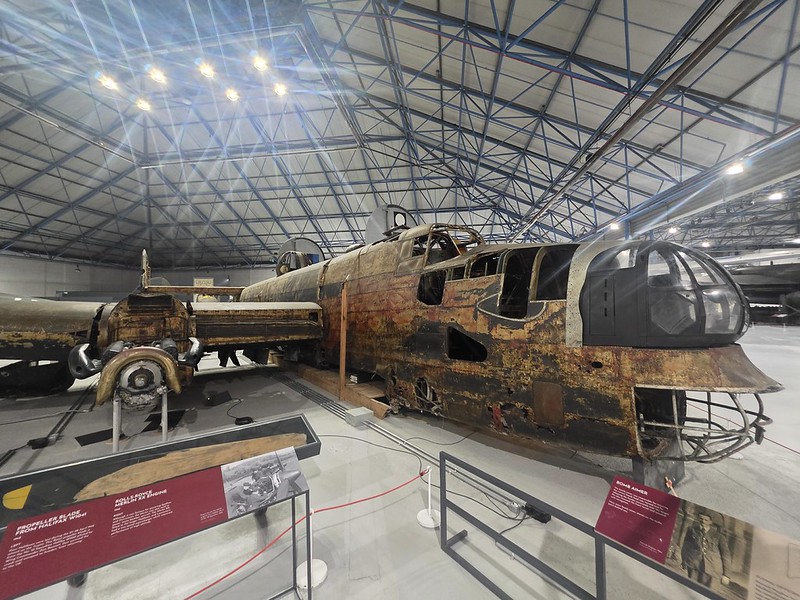
This is a Halifax Mk II Series 1, serial W1048, built in 1942 and flown by No. 102 Squadron and No. 35 Squadron. On 27 April 1942, during its first operational mission, it took part in an attack on the German battleship Tirpitz in a Norwegian fjord. Damaged by anti-aircraft fire, it came down on a frozen lake where it eventually sank, which does rather explain its current look.
Seen from the front, what survives feels less like a machine and more like evidence. Sensibly, no attempt has been made to flatter the thing back into glamour. The aircraft was recovered from the lake in 1973 and it eventually made its way to this museum. In what must have been a slightly odd reunion, members of the flight crew came here in 1983 to be reunited with the aircraft when it was installed here in this exhibition.
It must have been rather sub-optimal for the RAF to lose W1048 on her first mission, but at least there was a controlled landing and no-one was killed, although there were injuries. The crew members were:
Pilot Plt Off Don P MacIntyre (a 24 year old Canadian)
Observer Plt Off Ian Hewitt (Also operated as bomb aimer and Navigator, had been commissioned 23 Mar 42; posted to No.35 Squadron 31 Mar 42; later received the DFC and became a Squadron Leader navigator with the Pathfinder Force; a chartered accountant in later life, he died in June 2015, aged 94)
1st WOP/AG 908781 Sgt Dave Perry
2nd WOP/AG R56057 Sgt Pierre Blanchet (Mid upper gunner. A Canadian)
Tail Gunner 633143 Sgt Ron Wilson (A London cabby in later life)
Flight Engineer 524209 Sgt Vic Stevens
It was thanks to the Norwegian resistance that these crew were able to make their way to neutral Sweden and then safely back to the UK. I won’t recount the entire story, but it’s at http://www.archieraf.co.uk/archie/1048tls.html and it shows just how challenging it was for the airmen to get back home. It’s still hard to comprehend how difficult it must have been for them to try and get back to some sort of a normal life after the Second World War ended.
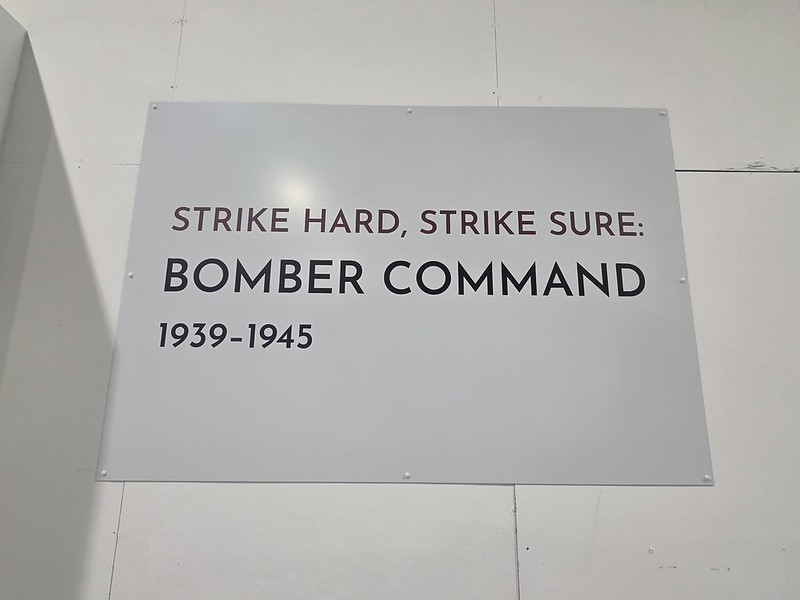
“Strike Sure, Strike Hard” is one of those wartime mottoes that sounds blunt, confident and entirely uninterested in moral hesitation. Indeed, this is something that the museum does confront, the sheer damage caused by the British bombers. The promise that violence, properly directed, could produce victory and scare the German population into surrender.
I think it’s fair to say that being a member of aircrew during the Second World War was not going to be a quiet back office job. Of those on a tour of 30 operations, over half were killed and a quarter became prisoners of war, with just 16% surviving unhurt.
Although it is now controversial, the bombings of German cities was seen as essential at the time in regaining the upper hand. Arthur Harris (1892-1984), later known as Bomber Harris, became the most famous advocate of that thinking, and Cologne was central to it. The city was the target of the first thousand bomber raid in May 1942, a deliberate and highly symbolic demonstration of overwhelming force. And this was particularly relevant to me as I had spent three days in Cologne a few days before visiting this museum.
The “Strike Sure, Strike Hard” was also the name of this whole exhibition about the Second World War. I thought it was all quite balanced, not focusing entirely on military might and destruction, but also on the more complex and nuanced matters of war in general. But the museum was very sure to mention the bravery of those involved and quite rightly so.
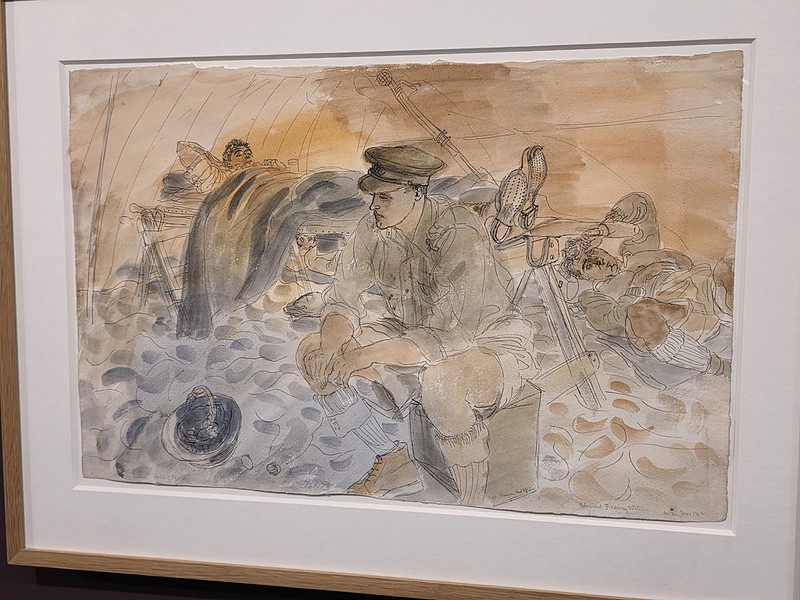
Anthony Gross (1905-1984) was not so much interested in the glamorous end of war, which is probably just as well, because glamour tends to be in rather short supply in a medical facility, known as the advanced dressing station. His 1942 watercolour ‘The Battle of Egypt – Advanced Dressing Station Interior’ shows men waiting, resting and enduring, with one figure seated in the middle of the picture while others lie around him in a scene of fatigue and exhaustion rather than triumph. These are the human consequences of war, just a waiting room of pain and I’m still not sure that I can really comprehend how frightening this whole process must have been.
In early life Gross lived in Dulwich and Camberwell, apprenticed at the LCC School of Photo Engraving and Lithography, then studied at the Slade and in Paris, which gave him a rather serious artistic grounding before the Second World War arranged more urgent subject matter for him. The information panel at the museum notes that he was one of four official war artists commissioned to record the Middle East theatre of war, in this case focusing on the people patching up the wounded in conditions that look deeply sub-optimal, while everyone tries not to think too hard about what comes next.
And, something which interested me more than it probably should have done, but it was Anthony Gross who created the artwork for the first edition of William Golding’s Lord of the Flies.
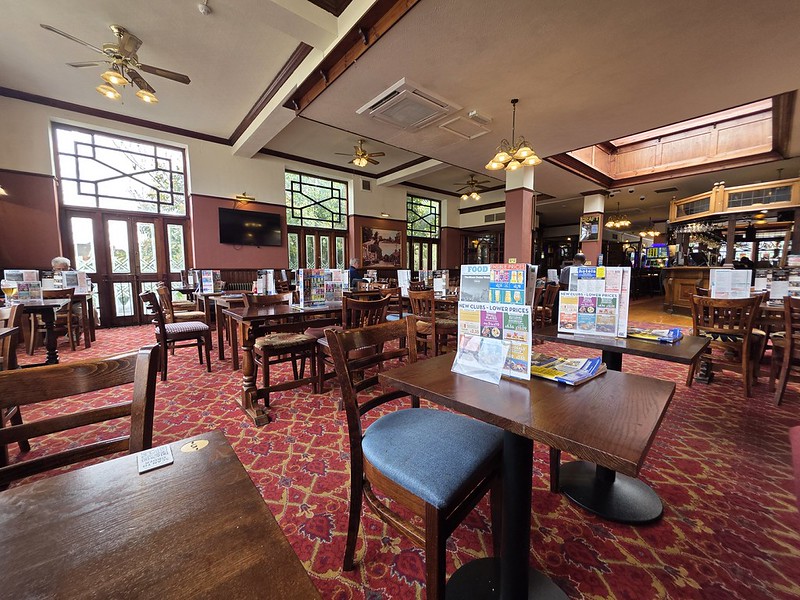
Apologies for the slightly sub-optimal image quality here, but this is the Moon Under Water in Colindale, which is also listed in the Good Beer Guide. Using the venue’s own history:
“Several Wetherspoon pubs have ‘moon’ in their name, linking them with the ideal pub described in detail by George Orwell. The highly regarded author named his fictional pub ‘Moon Under Water’. This one was purpose built as a branch of the Woolworths chain. It opened in early summer of 1939, serving a fast-growing suburb. Woolworths traded here at Varley Parade for 45 years, closing in 1984.”
This is the rear area of the pub, which feels more like the dining area. The service was friendly and timely, with the venue having a laid-back and comfortable feel to it.
This venue is on the cheapest price band which made this meal and drink under £6, which feels very reasonable to me. Although goodness knows what they did to the eggs. A perfectly decent arrangement with the non alcohol Guinness.
My now obligatory carpet photo.
This is the more lively front bar and as I was in the venue for quite a time and they had a special offer on the curry, I accidentally ordered one of those as well. Anyway, this was hot and tasted as expected, alongside my non alcoholic Erdinger.
I like looking at the reviews of JD Wetherspoon venues and I was once again tempted by that here. The venue is rated towards the higher end of the scale nationally and I must admit, I rather liked it here and didn’t rush to leave. But that’s evident as I had two meals.
“After driving 4 hours from Belgium with my 17-year-old son, we came here for a proper meal. I ordered a beer for myself and gave him a tiny sip with his meal — perfectly legal under UK law. The manager (pictured) didn’t even approach us himself — instead, he sent a waiter to tell us we had to leave. When I asked him directly why, he offered vague excuses and no real explanation. Our meals were shoved into cartons, and we were shown the door with no respect or courtesy.”
This reviewer has decided to post photos of the team member which seems entirely out of order to me. And he gave alcohol to an underage person which is against the policies of JD Wetherspoon and he wondered why he got thrown out?
“Shocked when I had to speak to this branch manager this evening. My 18 year old ordered on the app for a Manchester Moon under water – correctly selecting the Manchester location 0.3 miles from her. The app sent her order here??? 155 miles away Why no one knows?”
I think everyone knows, she ordered it to the wrong venue. The downside of JD Wetherspoon having about thirty pubs with this name.
“Awful experience, the assistant ‘manager’ who barely looked 21 took great pride in saying as two of our party did not have their IDs that they could not stay past 9pm. He then tried to say it’s the law, which it clearly is not and when asked to provide proof it was the law, he was unable too, then said it was the branch policy. Probably made his night being spiteful and nasty to customers. Thing about Wetherspoons, there is little point in complaining as they specialise in being cheap and could not give a monkeys about their customers.”
Challenge 21 is almost certainly in their licensing requirements, but might as well mock how old the team member looks.
“Need to retrain the chefs. Went in twice for tea as we was working away from home. Both times the food was terrible. Everything was over cooked. Even the fried eggs. If a chef cant cook an egg then its time to give up.”
I have some sympathy with the egg comment.
“Typical moons pub, grotty and full of Not trendy people, I only went because it was a works drink. Had one drink and had to leave.”
Hmmmm, those blasted non trendy people…
I was slightly disappointed to discover that there weren’t any negative reviews from customers who weren’t allowed to bring their dog in.
Anyway, I liked it here and it’s the first time that I’ve visited. There were six real ales available as well as a number of craft beers, all enough to justify their place in the Good Beer Guide.
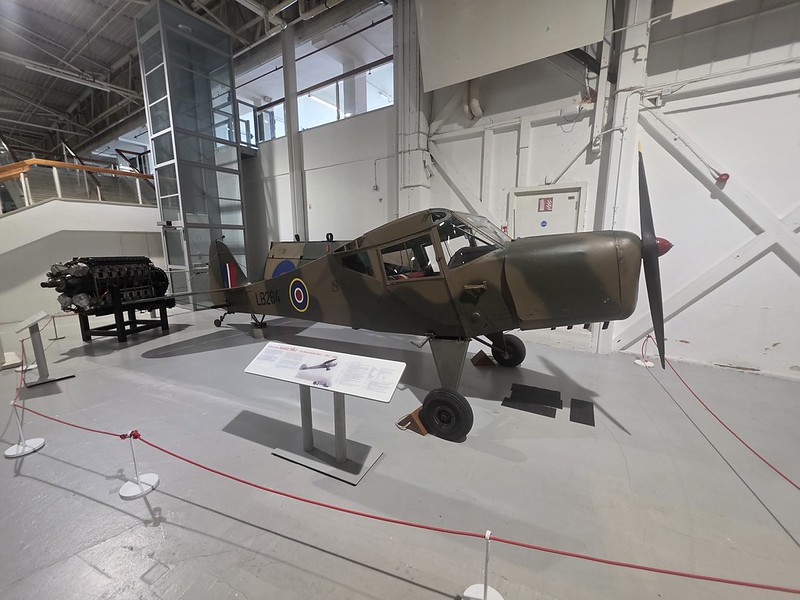
The Taylorcraft Auster Mk1, used as an Air Observation Post from 1942 to 1946, seems like a practical little machine. Its intentions were simple, get into the air, find things on the ground and help artillery hit them with greater accuracy than might otherwise have been the case. It rather feels like the drones that are currently being used in Ukraine and Russia.
Around 100 of them were built and in 1944, the Royal Air Force trained members of the British Army to fly them. I’m not sure whether that was because they weren’t exotic enough for the RAF pilots or were just incredibly easy to fly. There are a fair few of the later versions of the aircraft still about, but it seems there are only a couple of the Mark 1 versions, this one and another at Historic Army Aircraft Flight charitable trust. I think I like understated things, so this was one of my favourite aircraft in the museum, as who needs huge firepower?
Just as I thought I had finished my visit to the Royal Air Force museum, I found they had an art gallery section as well. The whole arrangement here is some substantial that I’ll have to visit again to try and see everything that I missed when I visited last week.
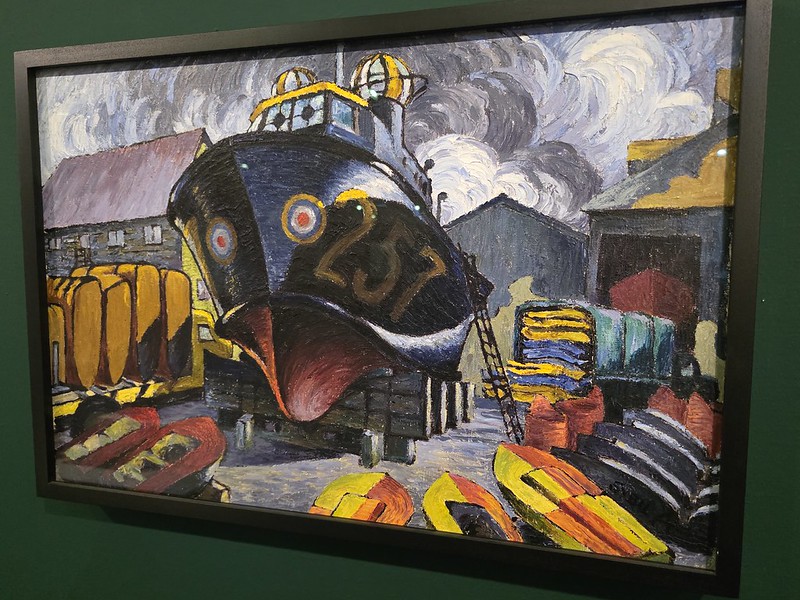
This artwork is by Sybil Andrews (1898-1992) and she painted ‘Air Sea Rescue Launch’ in around 1942, and it is something of a splendid reminder that wartime art was not always interested in giving us handsome fighter pilots staring nobly into the middle distance. There are bold colours and a sense of urgency to the painting, it feels like quite a punchy artwork.
That, really, is the theme that justifies this riveting blog post, which is that the war depended on rescue, repair and the sort of practical work that rarely gets turned into legend. The museum panel notes that this was one of seven paintings Andrews made about boat building while attached to the Camouflage Development and Training Centre at Farnham Castle under the War Artists Advisory Committee, and that she was working for the Royal Air Force as an official war artist. I like it when infrastructure is at the centre, there are enough artworks of moments of great rescue at sea or of battle scenes.
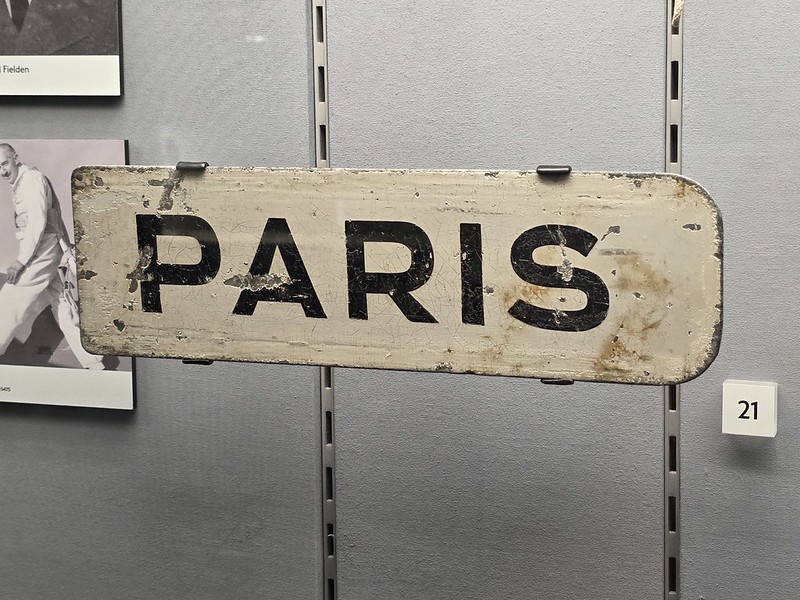
This reversible destination board for Brussels and Paris, dating from around 1937 and once fitted to the steps used for boarding Imperial Airways aircraft at Croydon Airport, is a wonderfully matter of fact relic from the early age of international air travel. That things like this survive at all pleases me greatly, I like the symbolism.
There is something rather pleasing about the simplicity of it with no glowing screens, no urgent gate change announcements, no little electronic dramas and just a solid sign informing passengers that they were off to Paris. Or Brussels. Depending, of course, on which way round somebody had turned it.
I very much like air travel today, but I do wonder just how different it would have been. It would have been a more occasional treat with less security hassle, no worrying about whether bags fitted into the sizer and probably not having to deal with checking in on-line 24 hours before and wondering if the seating Gods had given me a middle seat.
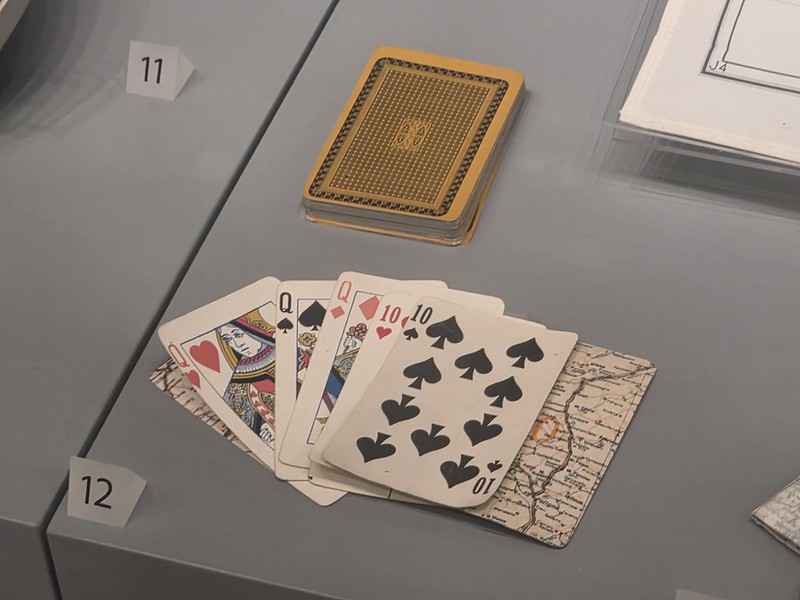
During the Second World War, playing cards were slipped into prisoner of war camps because they looked harmless enough, but hidden inside them were escape maps, allowing captured airmen and soldiers to peel apart the layers and reveal useful geography once the card game was over.
I do wonder how opposing military authorities failed to spot this little arrangement, especially given that wartime censors were not always generally known for their relaxed attitude to suspicious parcels. Perhaps the cards looked too banal to deserve much scrutiny, or perhaps someone simply saw a pack of them and thought that prisoners deserved at least one modest pleasure before returning to the business of attempted escape.
Either way, I like the ingenuity and the museum thinks that these were produced around 1943. The International Spy Museum in the United States notes:
“To date, decks of these cards are said to have helped at least 32 people escape from Colditz Castle and prompted some 316 escape attempts.”
There were some very careless military authorities amongst the German troops letting this lot through.