Category: Caistor St Edmund

  • Caistor Saint Edmund – Photos

    Caistor Saint Edmund – Photos

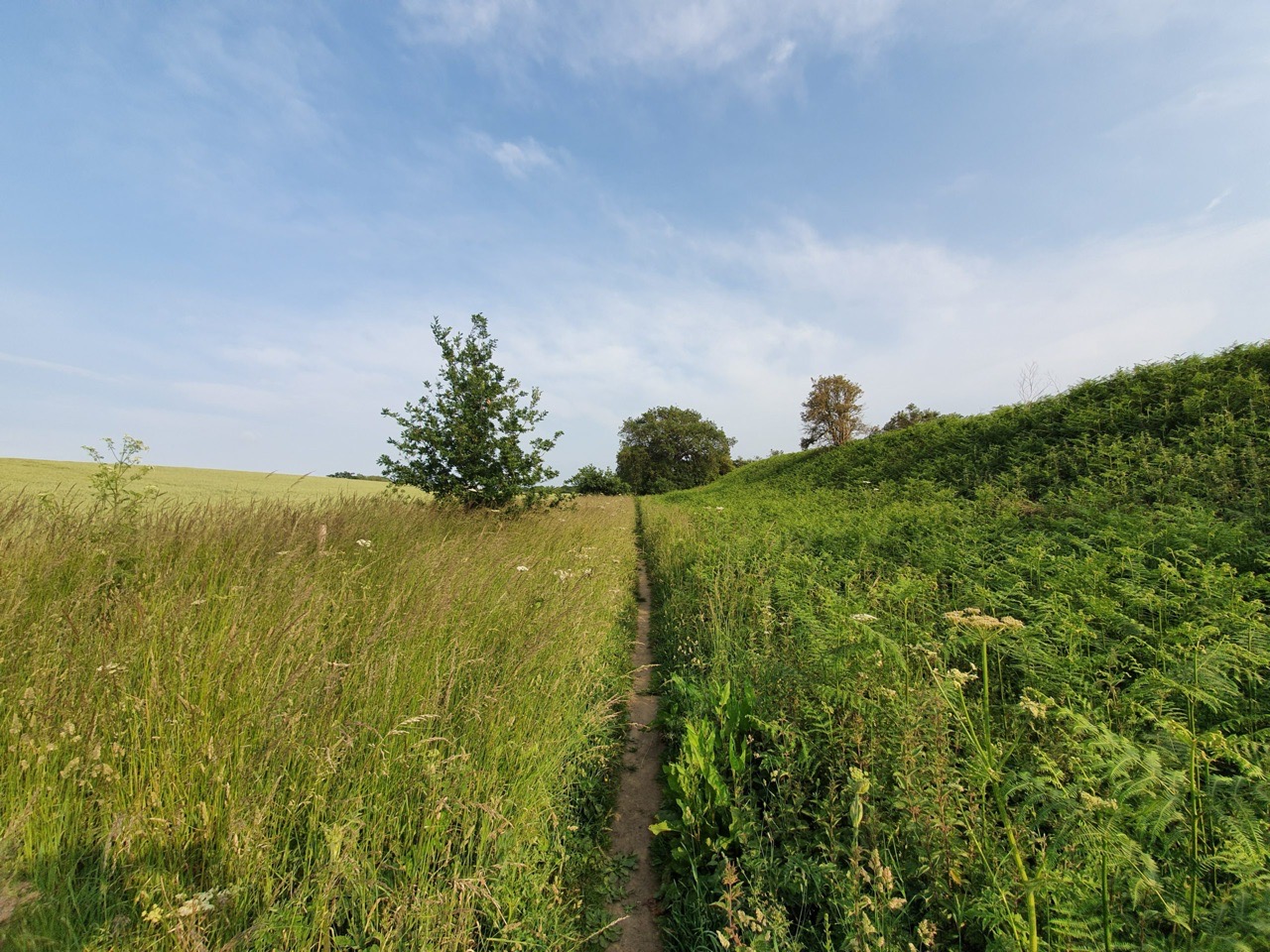
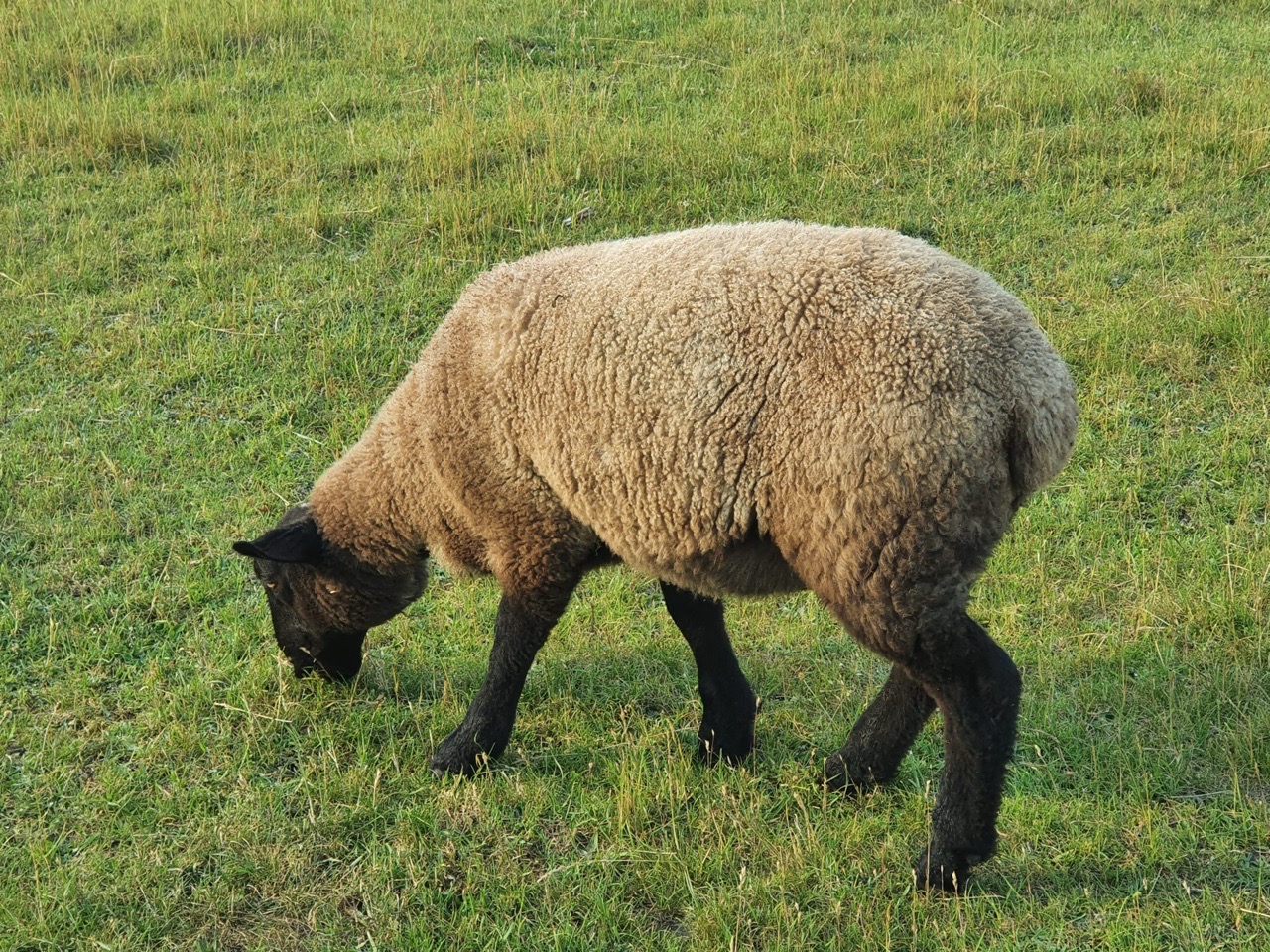
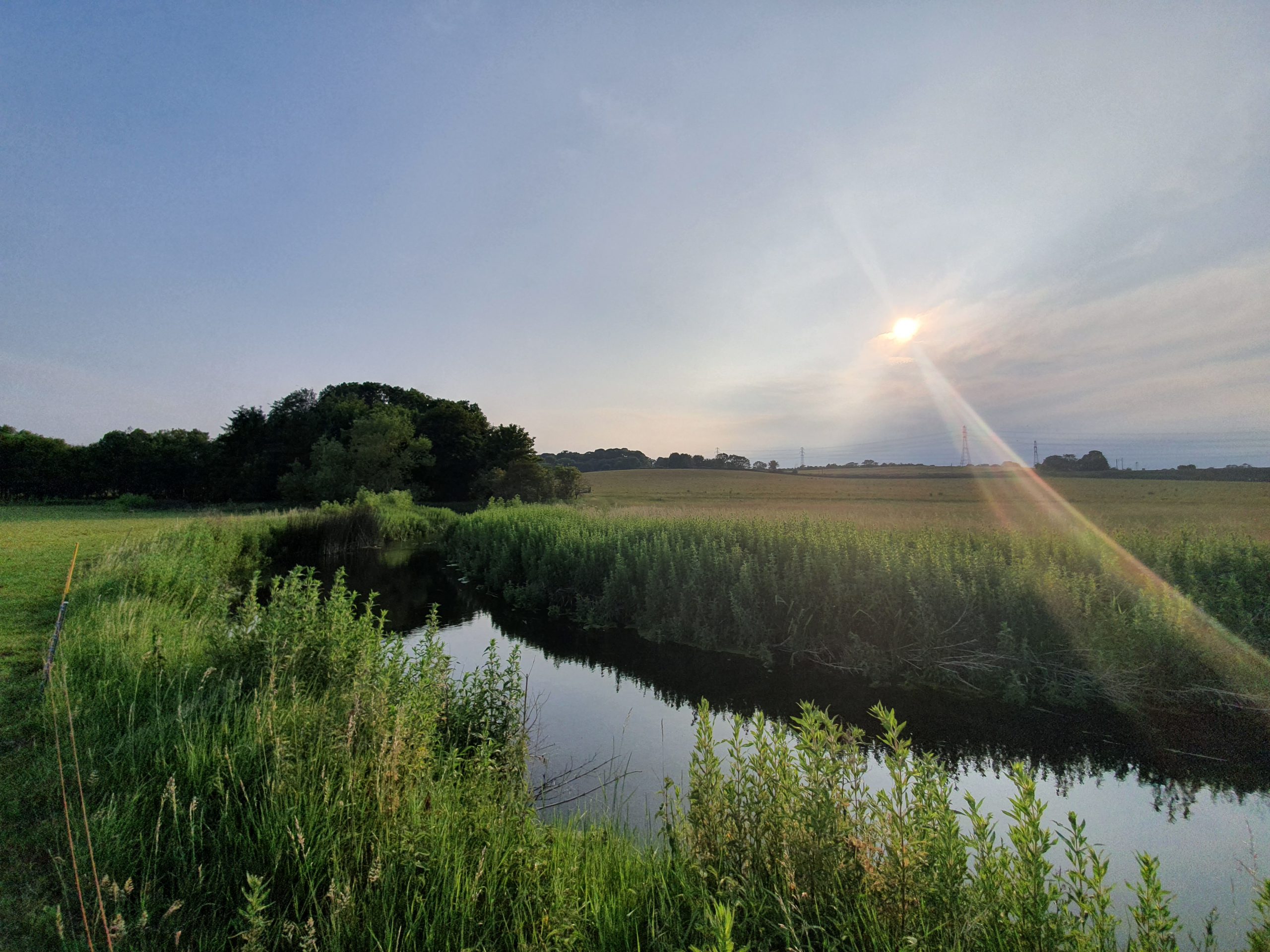
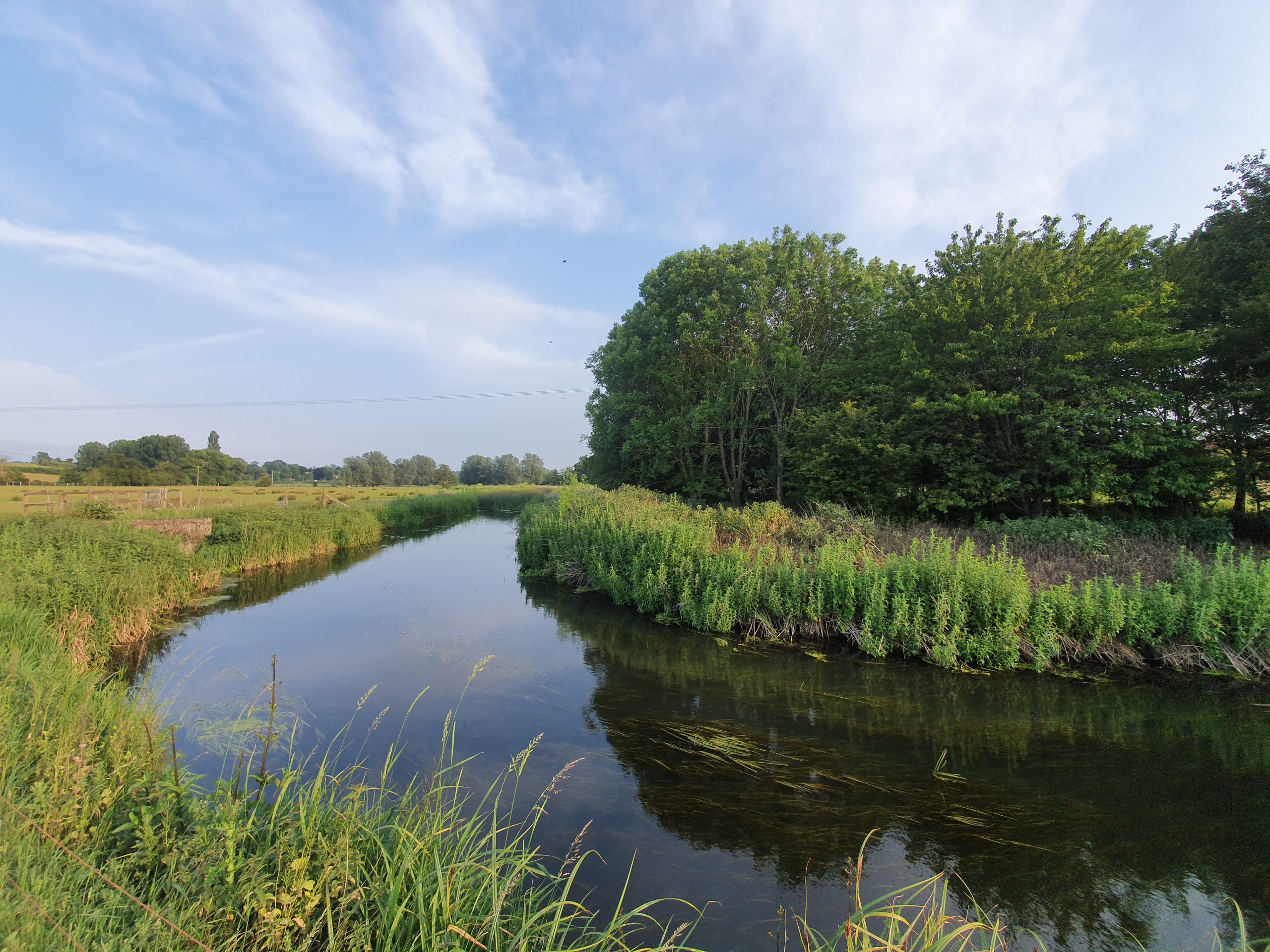
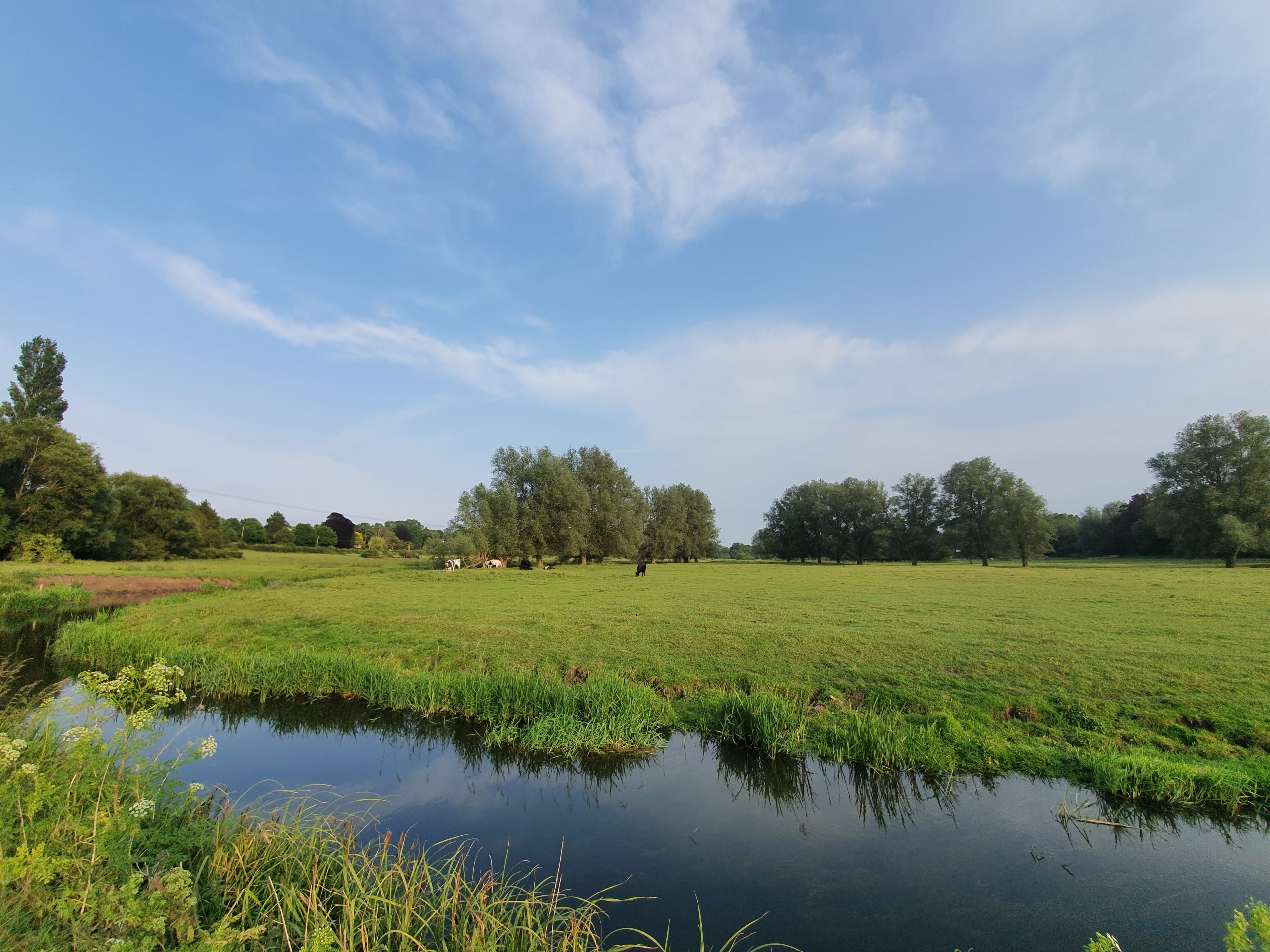
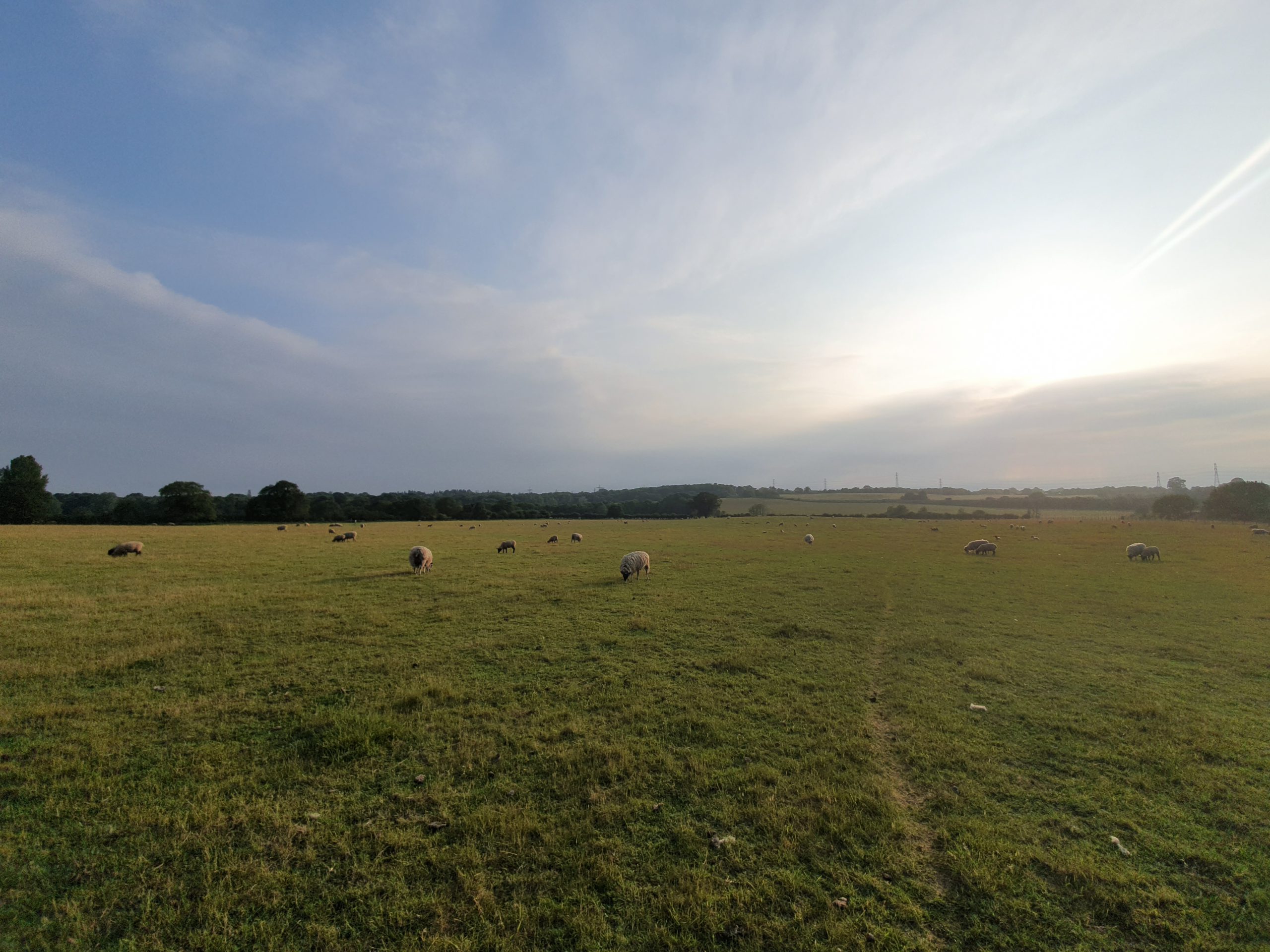
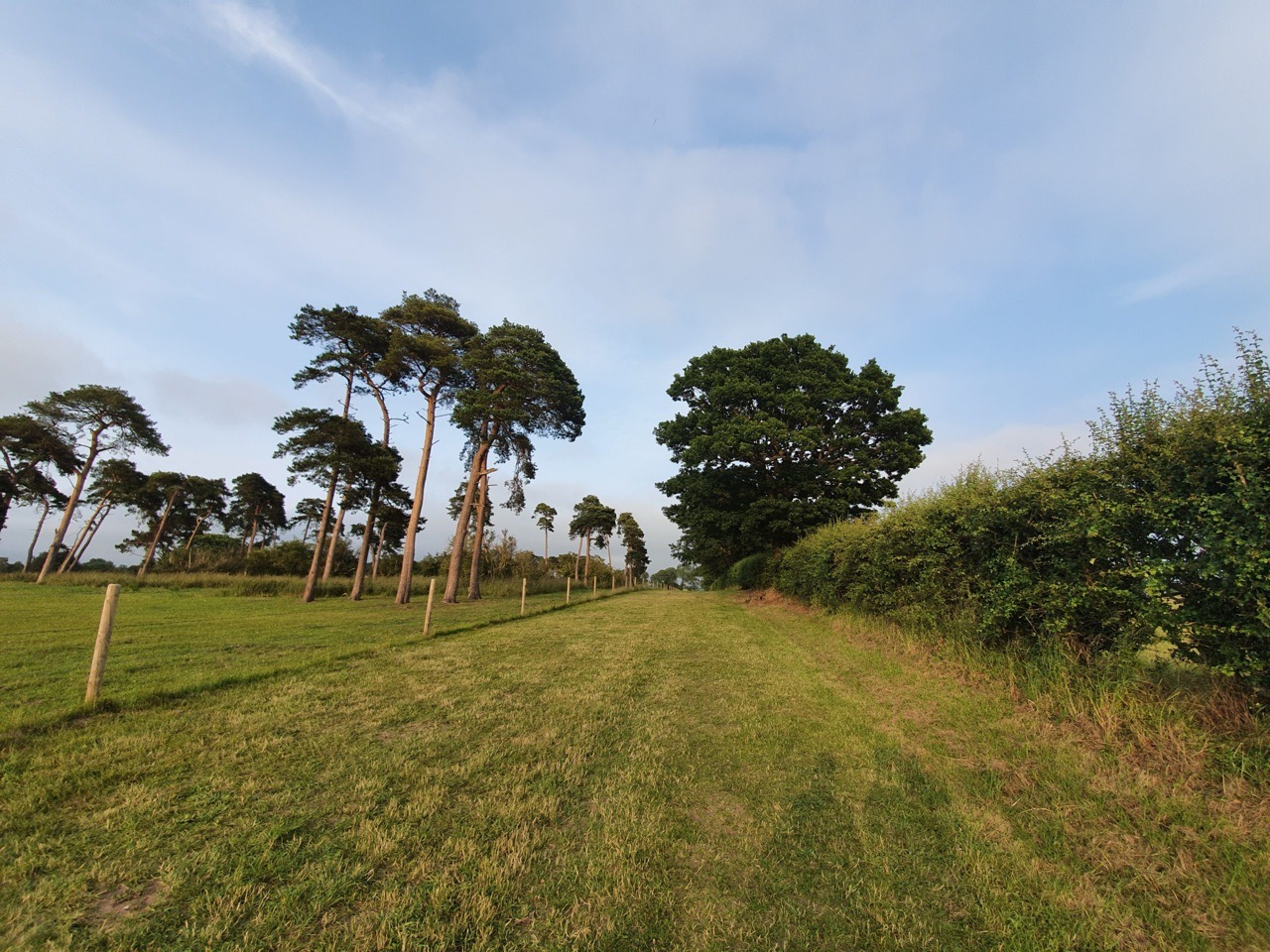
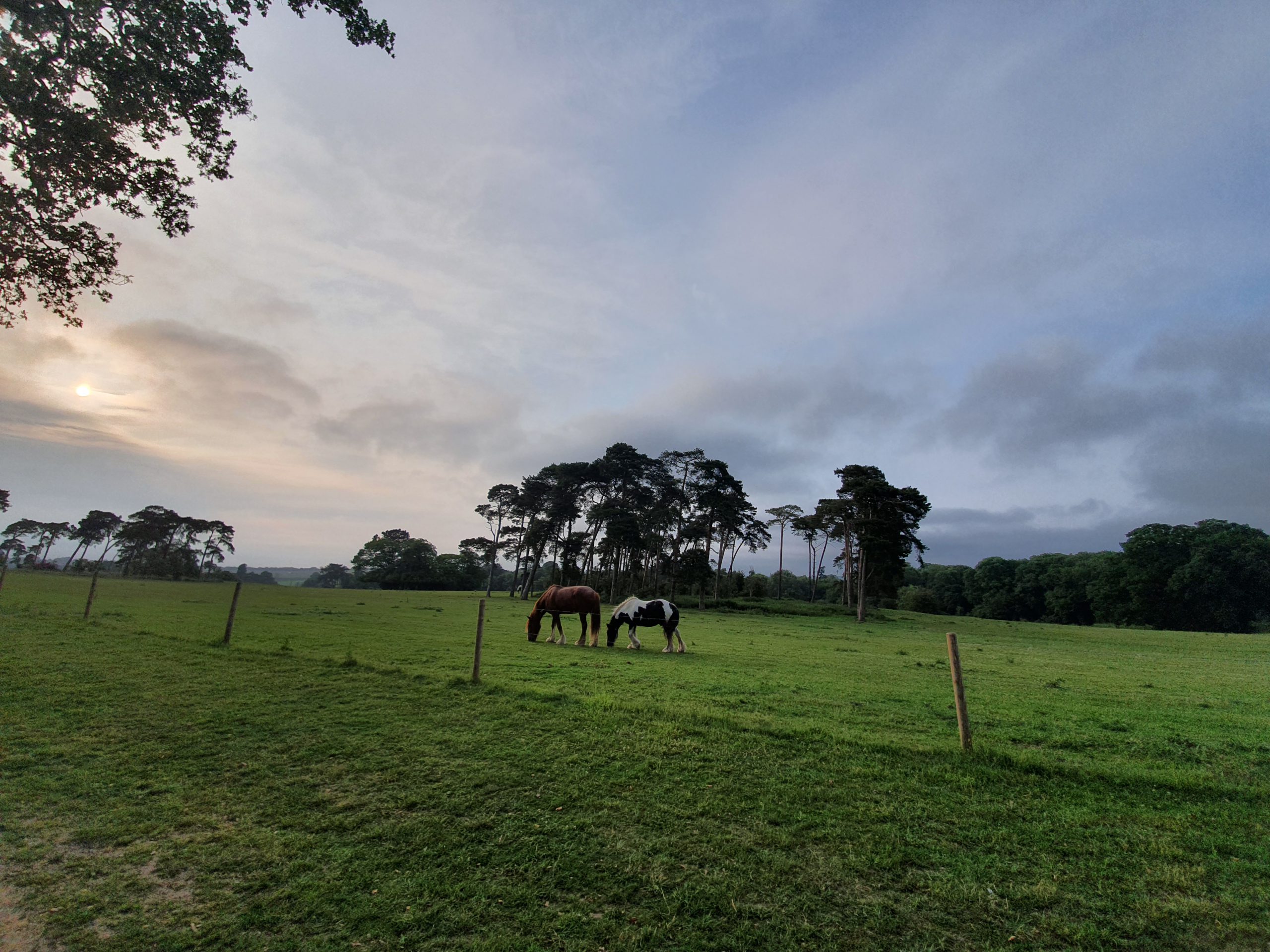
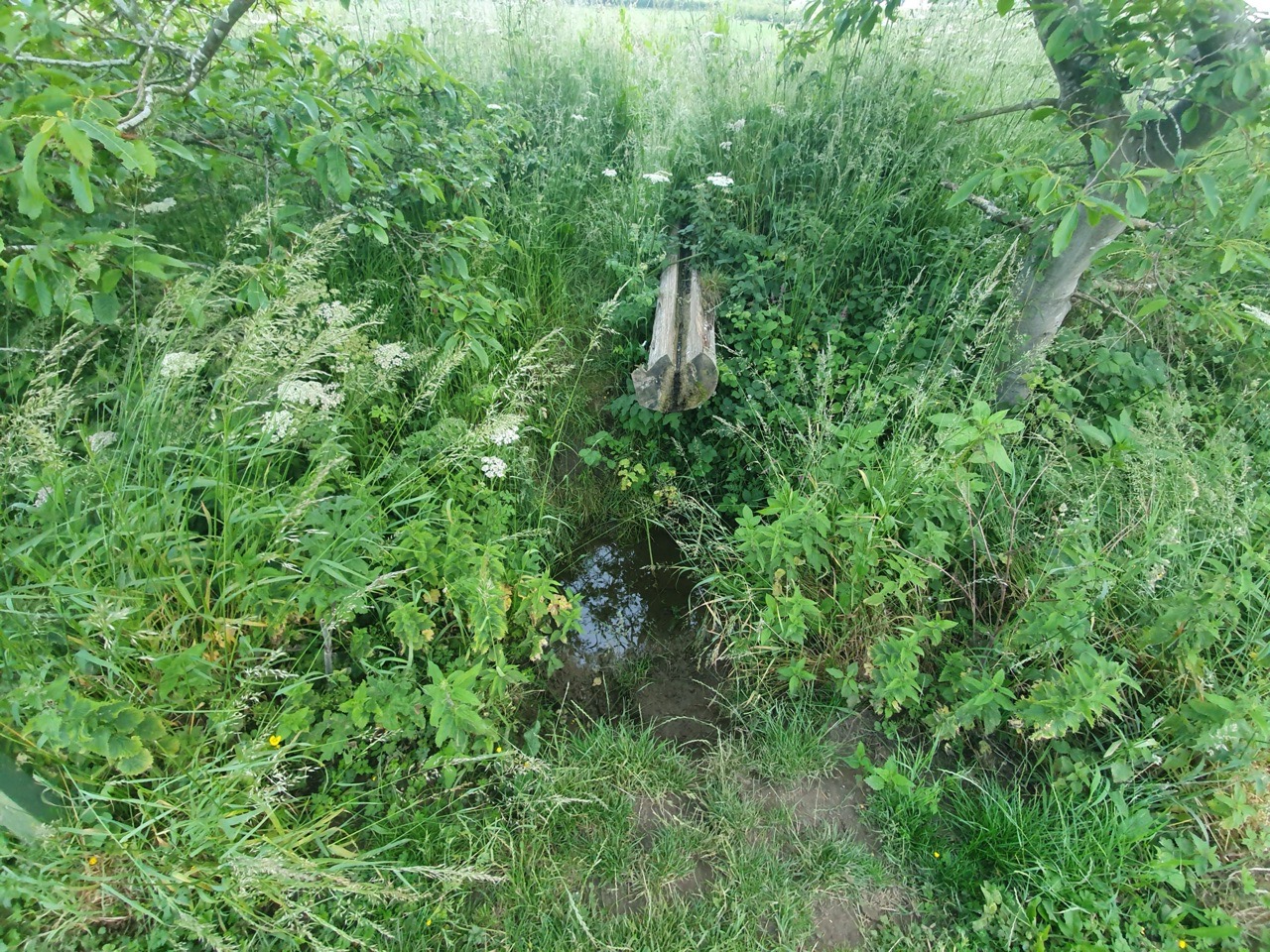
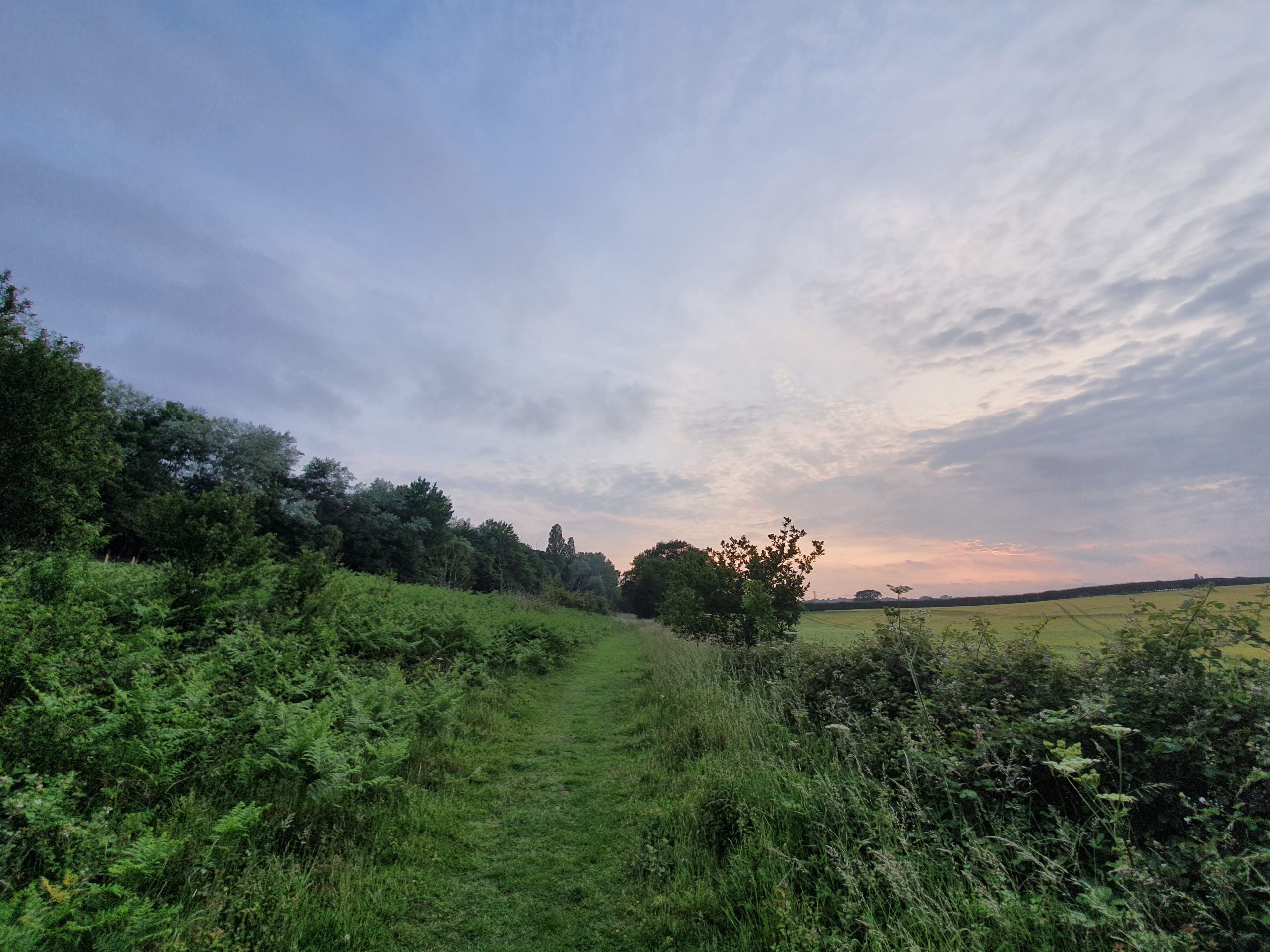
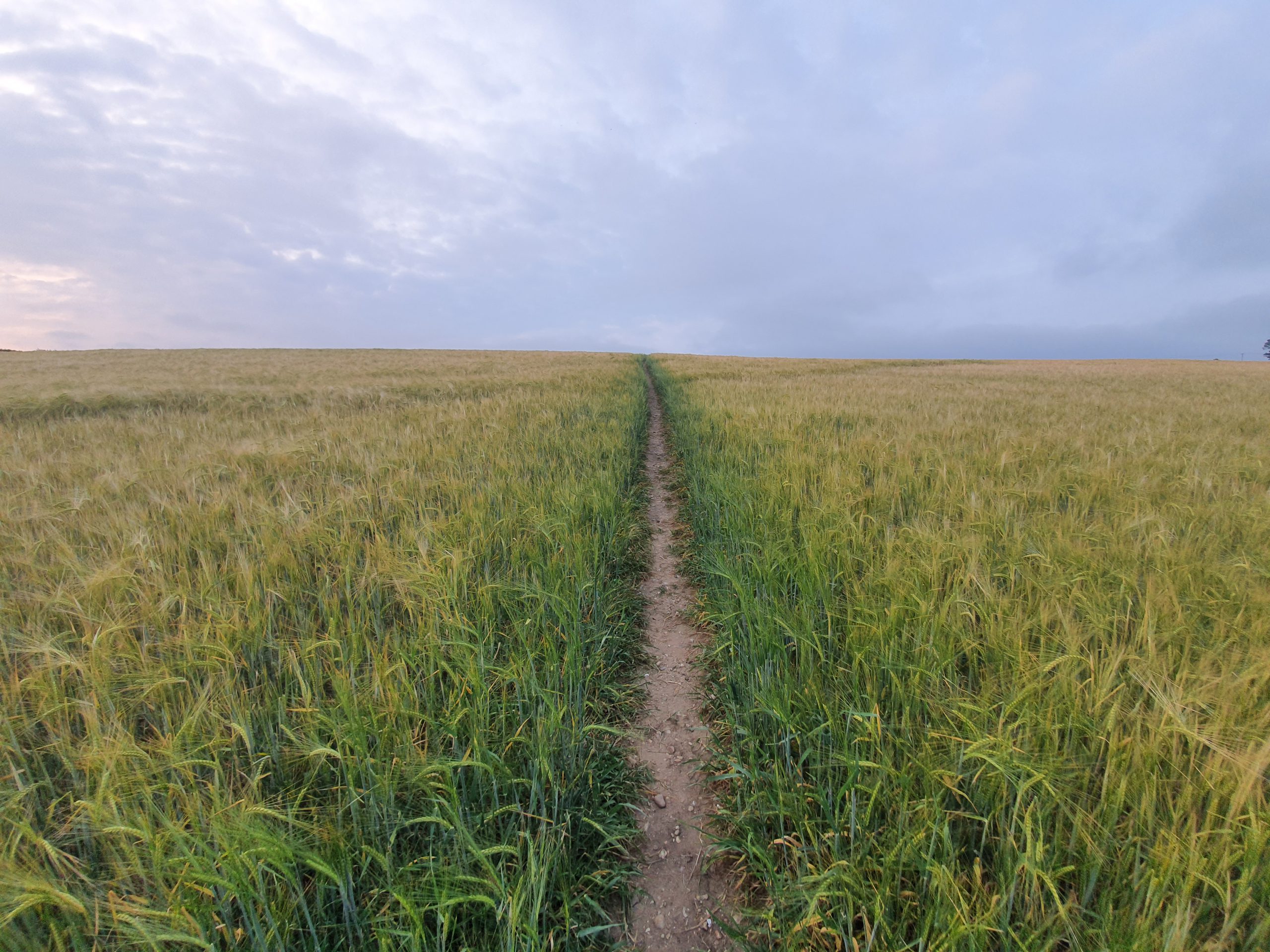
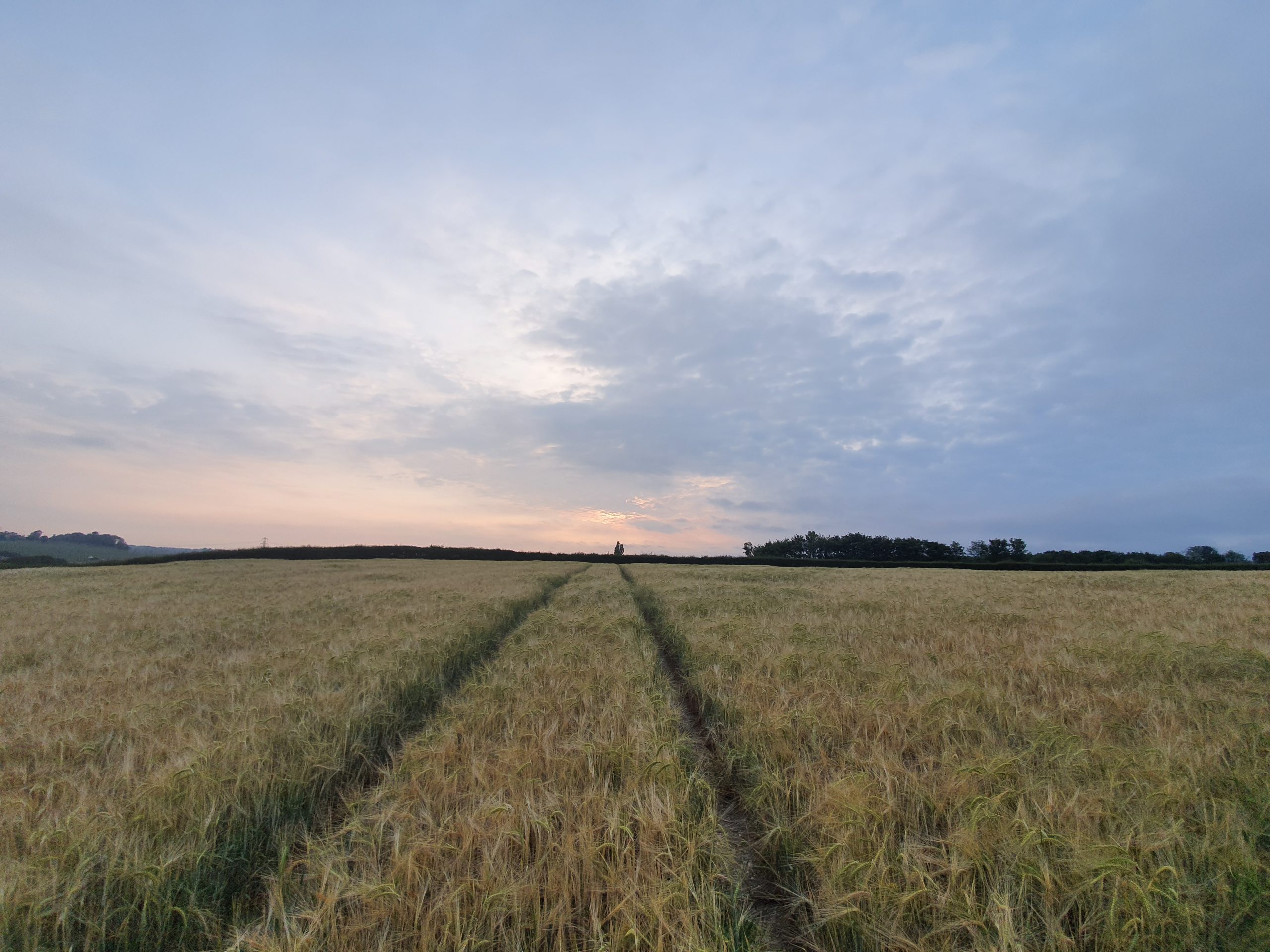
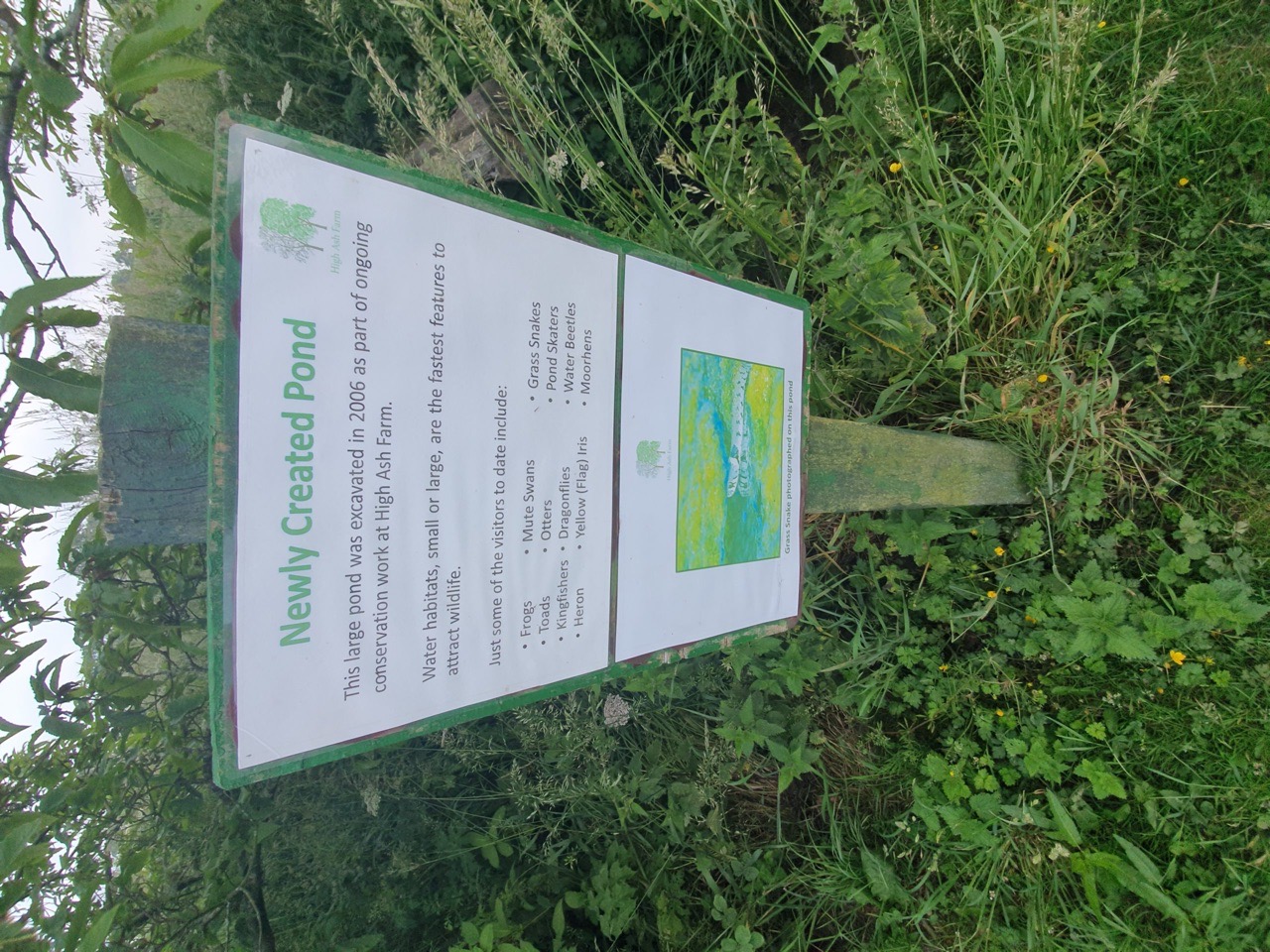
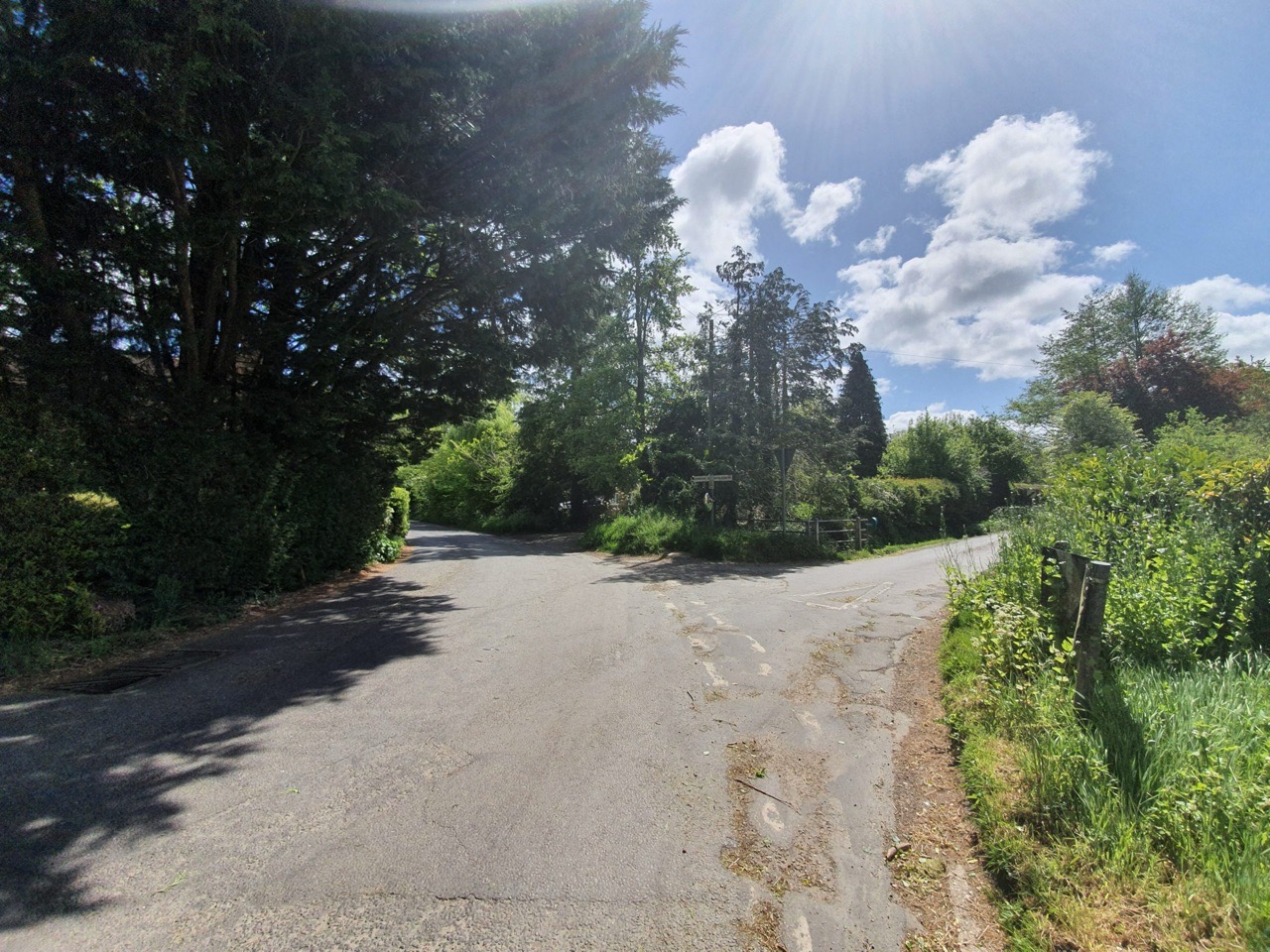
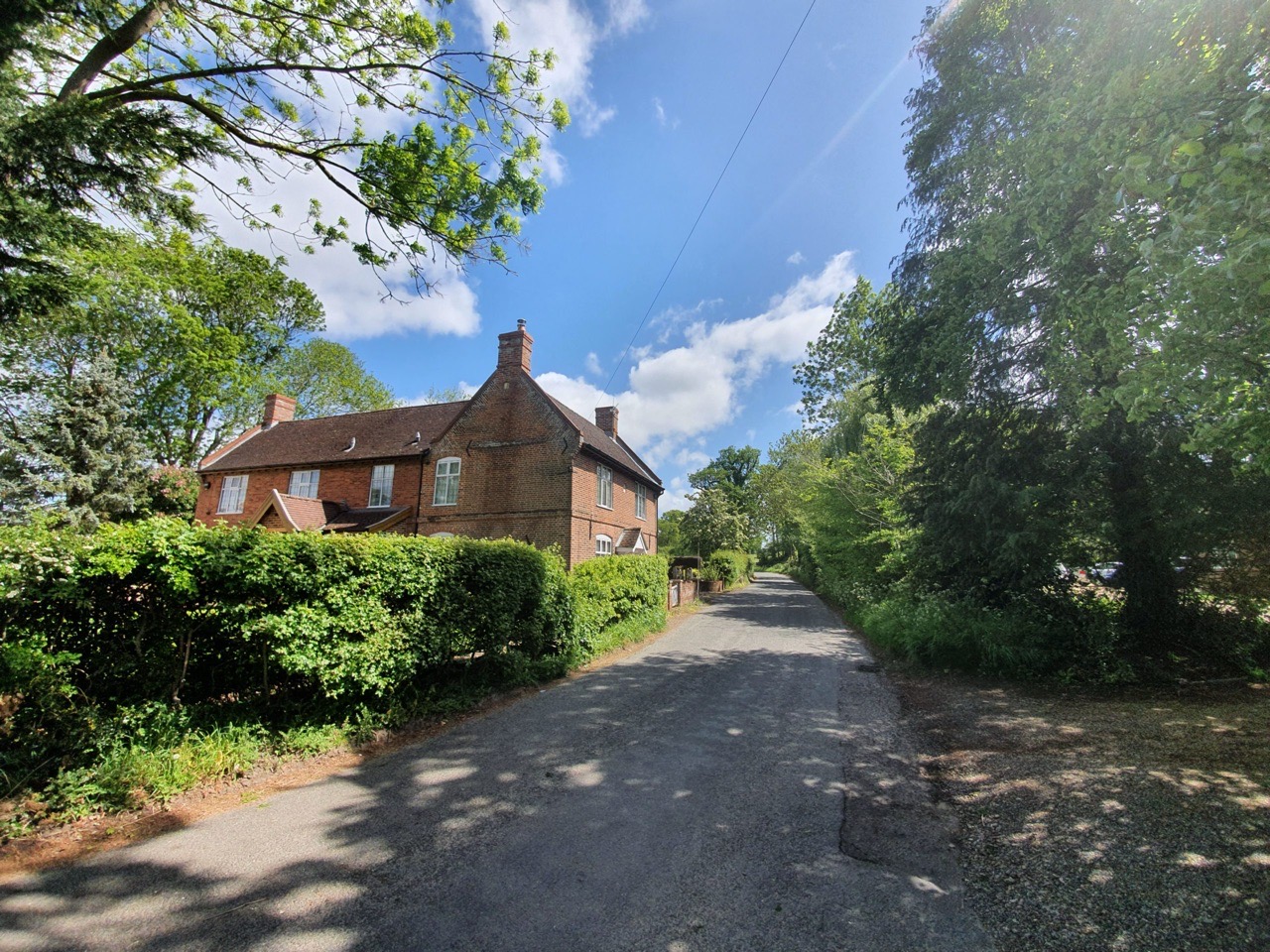
    Just photos in this post, from a walk around the Caistor Saint Edmund area. Could have done without the aggressive sheep stamping its foot in one of the fields, but fortunately, it thought better of attacking us. And we were also pleased not to see the snakes mentioned on a sign near High Ash Farm.


  • Caistor St Edmund – War Memorial (Walter Ellis)

    Caistor St Edmund – War Memorial (Walter Ellis)

    Walter Ellis is one of the names listed on the war memorial in Caistor St Edmund.

    Walter Ellis was born in 1897, the son of George and Eliza Ellis who lived in Markshall which is effectively part of Caistor St Edmund. He joined the 5th Battalion of the Norfolk Regiment and was killed in action in Palestine, on 19 April 1917.

    There was a major action, which was the Second Battle of Gaza, which took place between 17 and 19 April 1917 between the British Empire and France against the Ottoman Empire and the Germans. The 54th (East Anglian) Infantry Division were part of the military force, with the Norfolk Regiments losing a large number of men.

    I’m not sure that Walter lies entirely at peace at Gaza War Cemetery, which is in the troubled Gaza Strip and which has been damaged twice by Israeli bombs over recent years, although they paid for the repairs to be completed to the graves. He’s a long way from home here in a place that he perhaps hadn’t even heard of when he was sent to fight there.

  • Caistor St Edmund – Origins of Village Name

    Caistor St Edmund – Origins of Village Name

    Further to my riveting post about Caistor St. Edmund (by riveting, I mean not especially riveting), I like that the village has retained its full name. This is primarily likely because of the other Caister in Norfolk, so although the spelling is different, differentiating the two locations has probably proved useful over the centuries, so there’s Caistor St. Edmund and Caister-by-the-sea.

    Both places are named Caistor/Caister for the same reason, it’s the old English word for a Roman fort, although it might once have been spelled in different ways, such as caester or castre. The Romans themselves called it Venta Icenorum, meaning the ‘marketplace of the Iceni’.

    The surname Caister, and its variants, derives from the same meaning and it’s most common in England, Canada, the United States, Italy, South Africa, New Zealand, and for reasons unknown, Ecuador. What’s even more interesting, to me anyway, is that by looking at a map of England and its surnames, there is a basic correlation between where Roman sites once were and where people live today with the surname Caister.

    The St. Edmund bit is because the parish was owned by the Abbey of Bury St. Edmunds, with the village church also dedicated to St. Edmund. The village is also commonly known as St. Edmunds, although I’m not sure that anyone much minds which one is used. But, I’m sticking to St. Edmund since it seems to be the official version.

  • Caistor St Edmund – War Memorial (J. Derek Corrould Warren)

    Caistor St Edmund – War Memorial (J. Derek Corrould Warren)

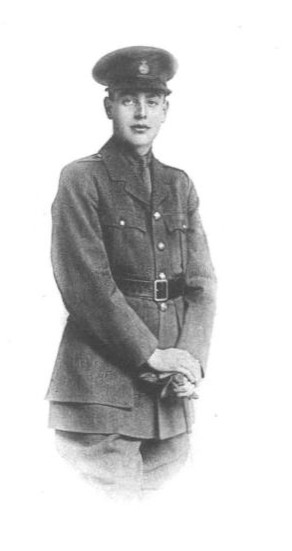
    J. Derek Corrould Warren is one of the names listed on the war memorial in Caistor St Edmunds.

    John Derek Corbould Warren, who was known as Derek, was born in Surrey in 1899, the son of the Rev. John Corbould Warren of Caistor Hall and Agnes Elizabeth Corbould Warren. This was a wealthy family, and although the father was the vicar, he was actually also the Lord of the Manor and owner of much of the village. There was a set-up at the time where the land-owner could appoint whatever vicar that they wanted, hence his appointment was likely partly self-awarded. But, more about him in another post, as he was one of the most important figures in the village over the last century.

    Derek was killed at the age of 18 following a riding accident whilst training at Sandhurst, dying at Surbiton Cottage Hospital on 10 July 1917. His name doesn’t appear on the Commonwealth War Graves web-site, likely because the circumstances of his death meant that his body could be brought back to be buried in the churchyard at Caistor St Edmund. He joined the army early on during the war, serving as a cadet at the Royal Military Academy in Sandhurst. It must have been a difficult day for his father, the Reverend John Corbould Warren, as when he conducted the service at the unveiling of the war memorial in 1922, he knew that his son’s name was on it. Derek was his only son, although he had a daughter, Enid, who later married and lived at Caistor Hall.

  • Caistor St. Edmund – Forged Coin

    Caistor St. Edmund – Forged Coin

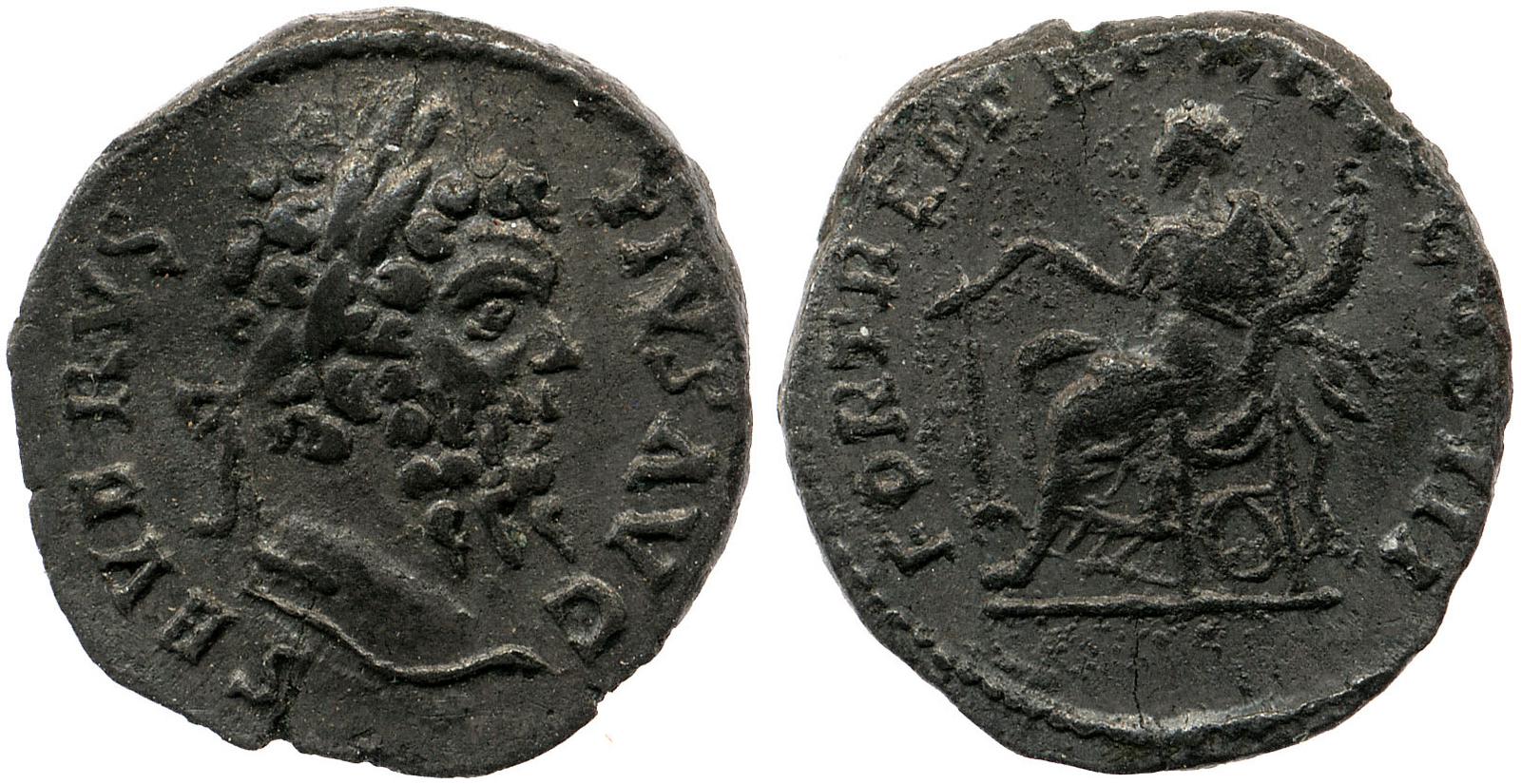
    This coin is in the collections of the British Museum, and the image is copyright of the Trustees of the British Museum.

    It was found at Caistor St Edmund in 1978 and was purchased by Charles A Hersh, who donated it to the British Museum following his death in 1999. The denarius silver coin is a forgery, but not a recent copy, but instead made in antiquity. And, because it’s a forgery, the museum can’t easily date it, but it’s probably from around the end of the second century.

    Forged coins were a problem for the authorities throughout the Roman period and some people only collect these ancient forgeries. I like that at some point that this was being used at Caistor St Edmund, evidence of a fraud committed nearly 2,000 years ago. Fortunately for my understanding, the museum has also indicated what is on each side of the coin:

    On the reverse, there is Fortuna seated on the left, holding a rudder in right hand and cornucopia in left hand. On the obverse there is a Laureate head of Septimius Severus, the Emperor from 193 until 211.

    This coin isn’t on display at the British Museum, but neither are 99% of items in its collections. I hadn’t previously realised though that anyone can make an appointment to have a look at one of their items, so they do remember at least partially accessible.

  • Caistor St Edmund

    Caistor St Edmund

    The village of Caistor St Edmund is located around three miles from Norwich and today has a population of a little under 300. The village is perhaps best known for being next to Venta Icenorum, the Iceni and Roman town which was once of some considerable importance. More about the origins of the village’s name here.

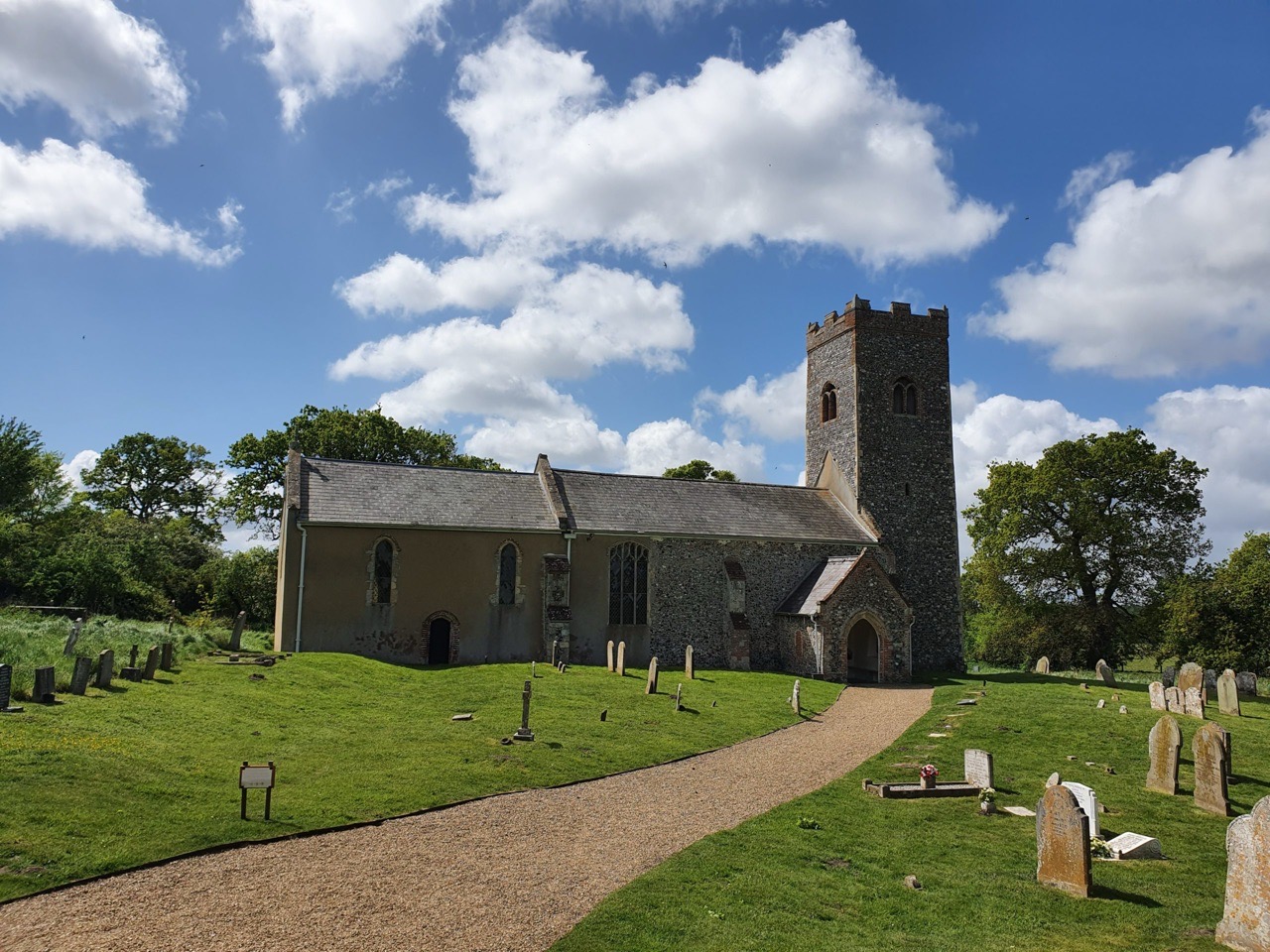
    The village’s church, St. Edmund’s, is located by the remains of the Roman settlement and the war memorial is also located there, which is a walk of around 200 metres from the village itself.

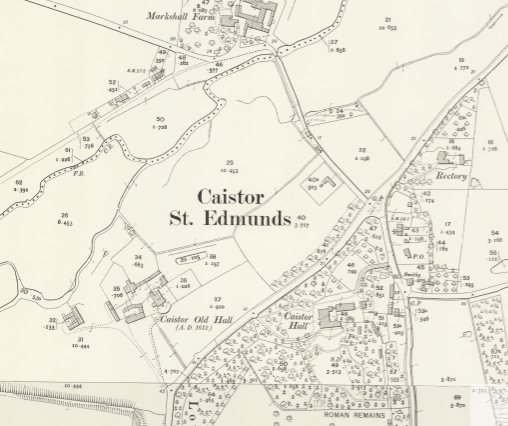
    Here’s the village in 1900 and it’s pretty much unchanged today. The Roman settlement is in the bottom-left of the map and the important large buildings of Caistor Old Hall, Caistor Hall and the Rectory are visible, along with Markshall Farm in the north.

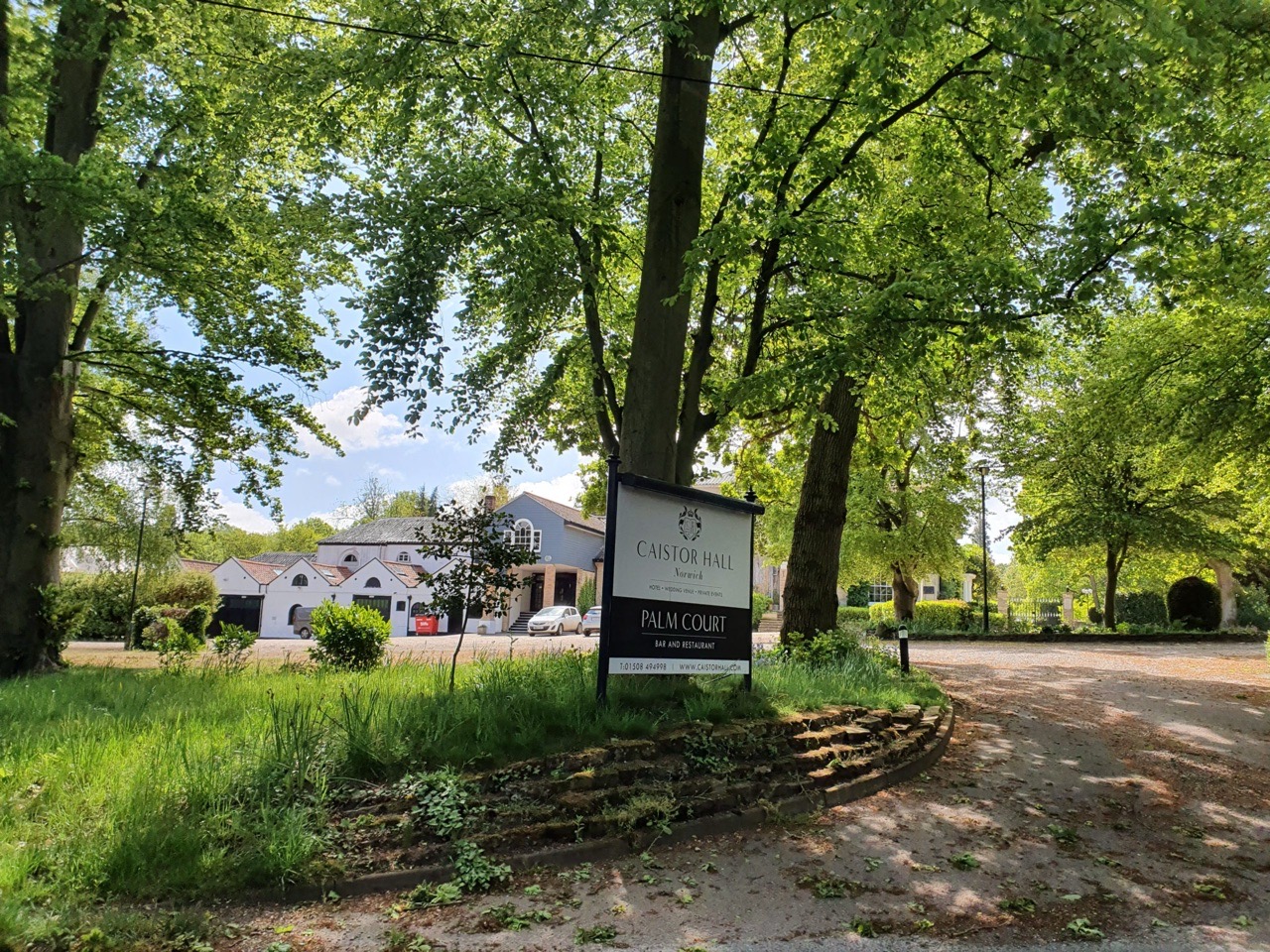
    Caistor Hall.

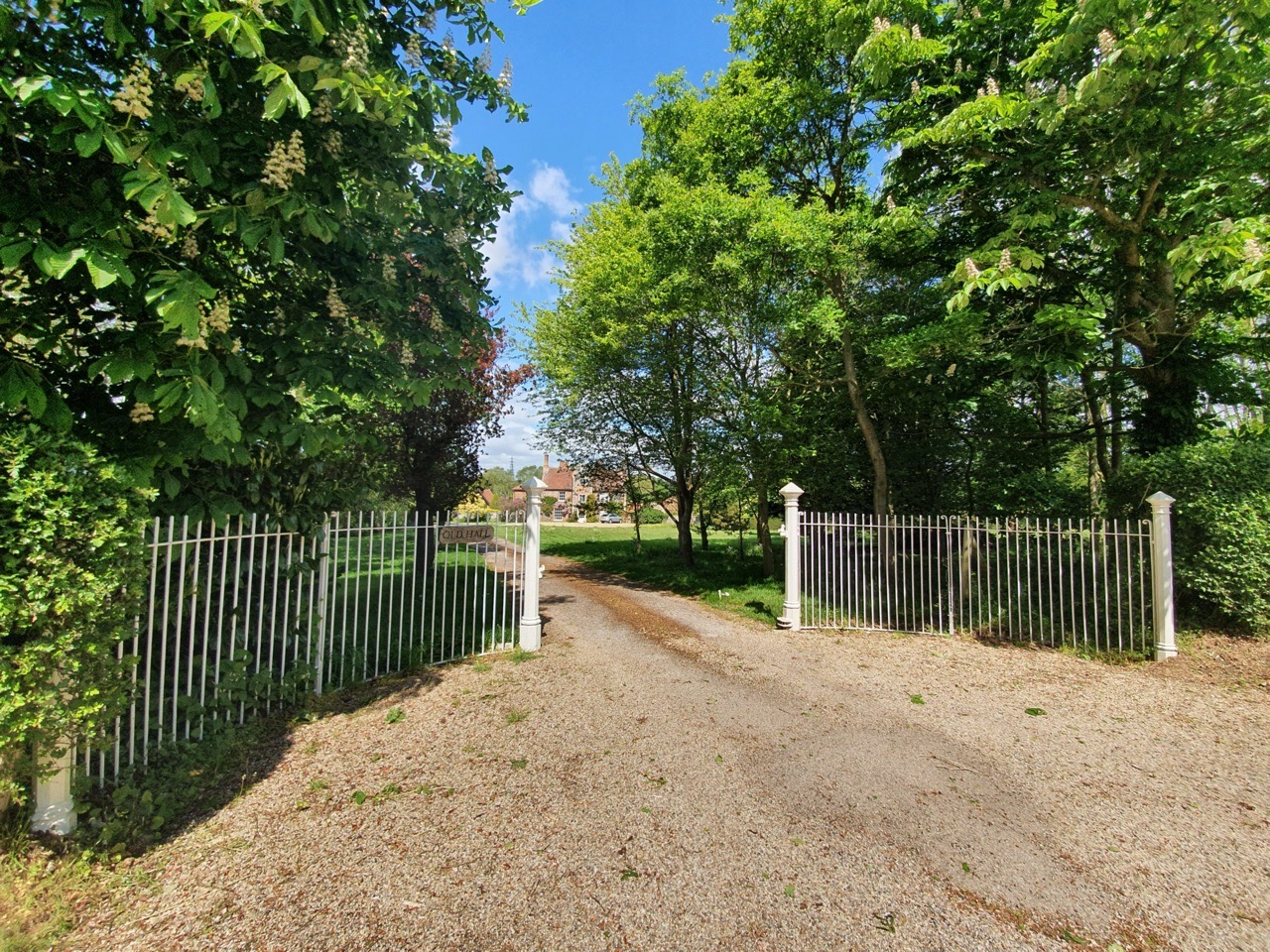
    Caistor Old Hall.

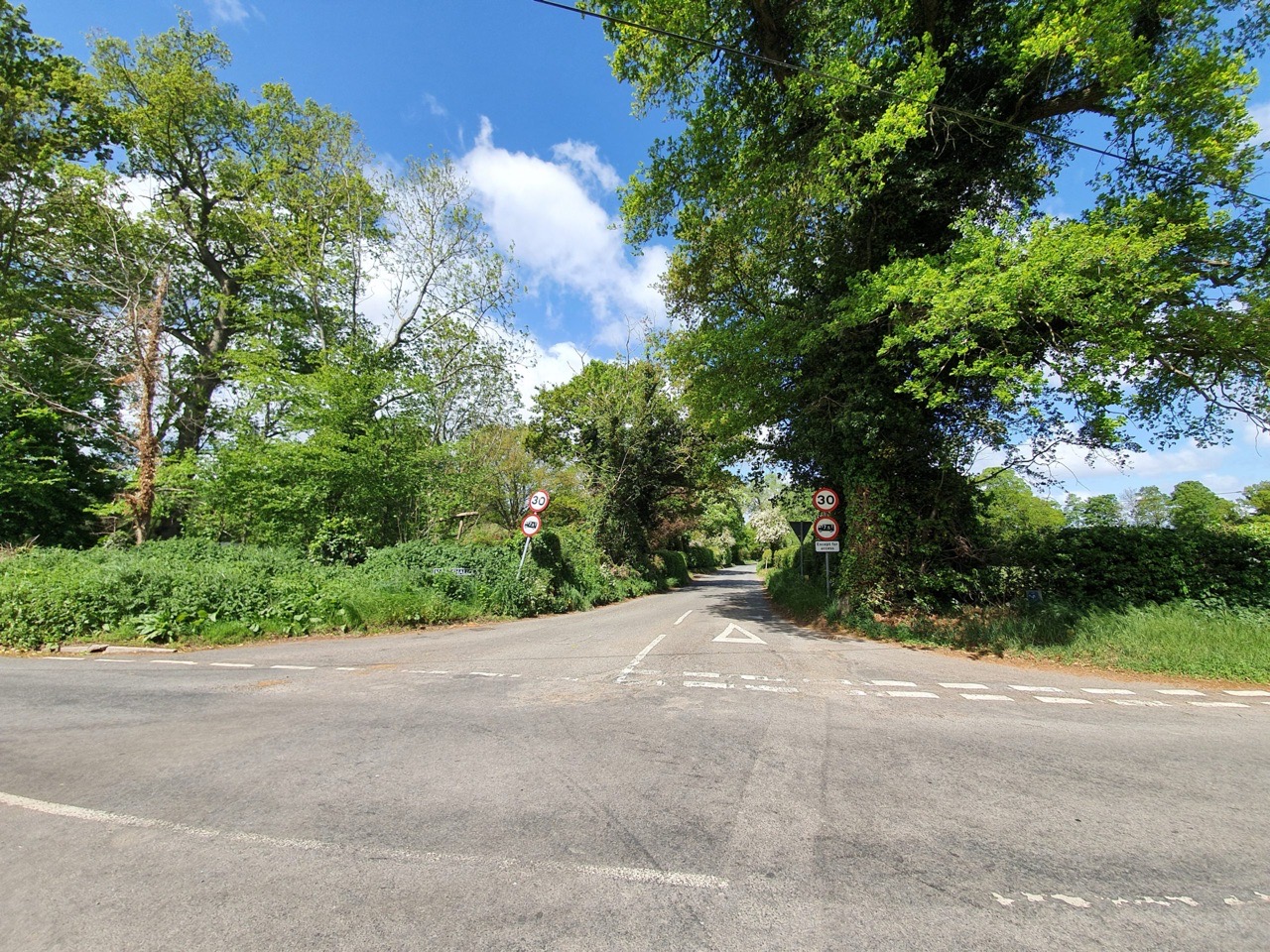
    Visible in the centre of the above map is a crossroads, with the north-south road being Stoke Road, the road to the west being Markshall Lane and the road to the east is Caistor Lane.

    There’s the entrance to Markshall Lane.

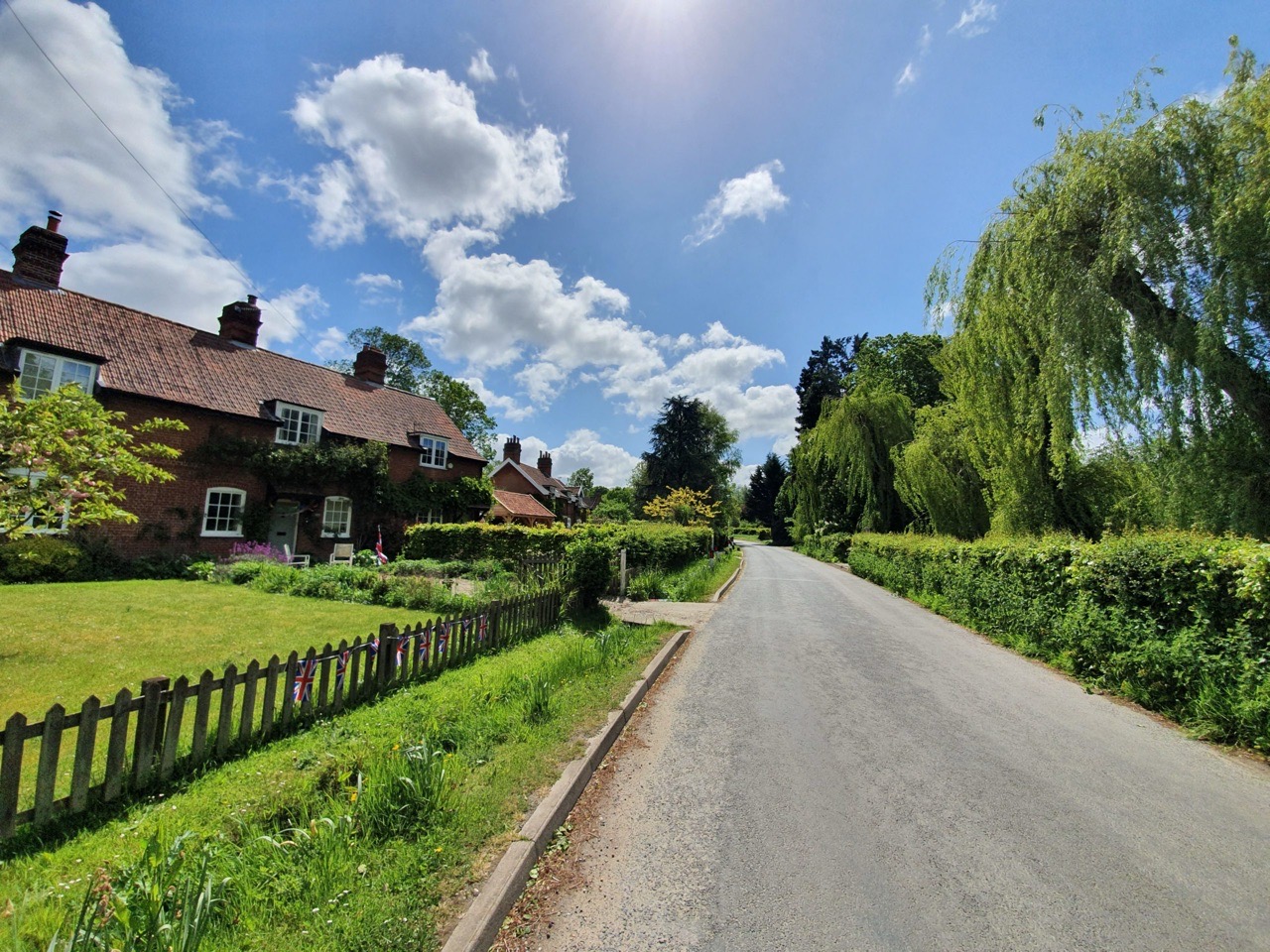
    There’s a row of three cottages at the heart of the town, near the crossroads, with the building in the distance, with the white edge to the roof, being the former Post Office.

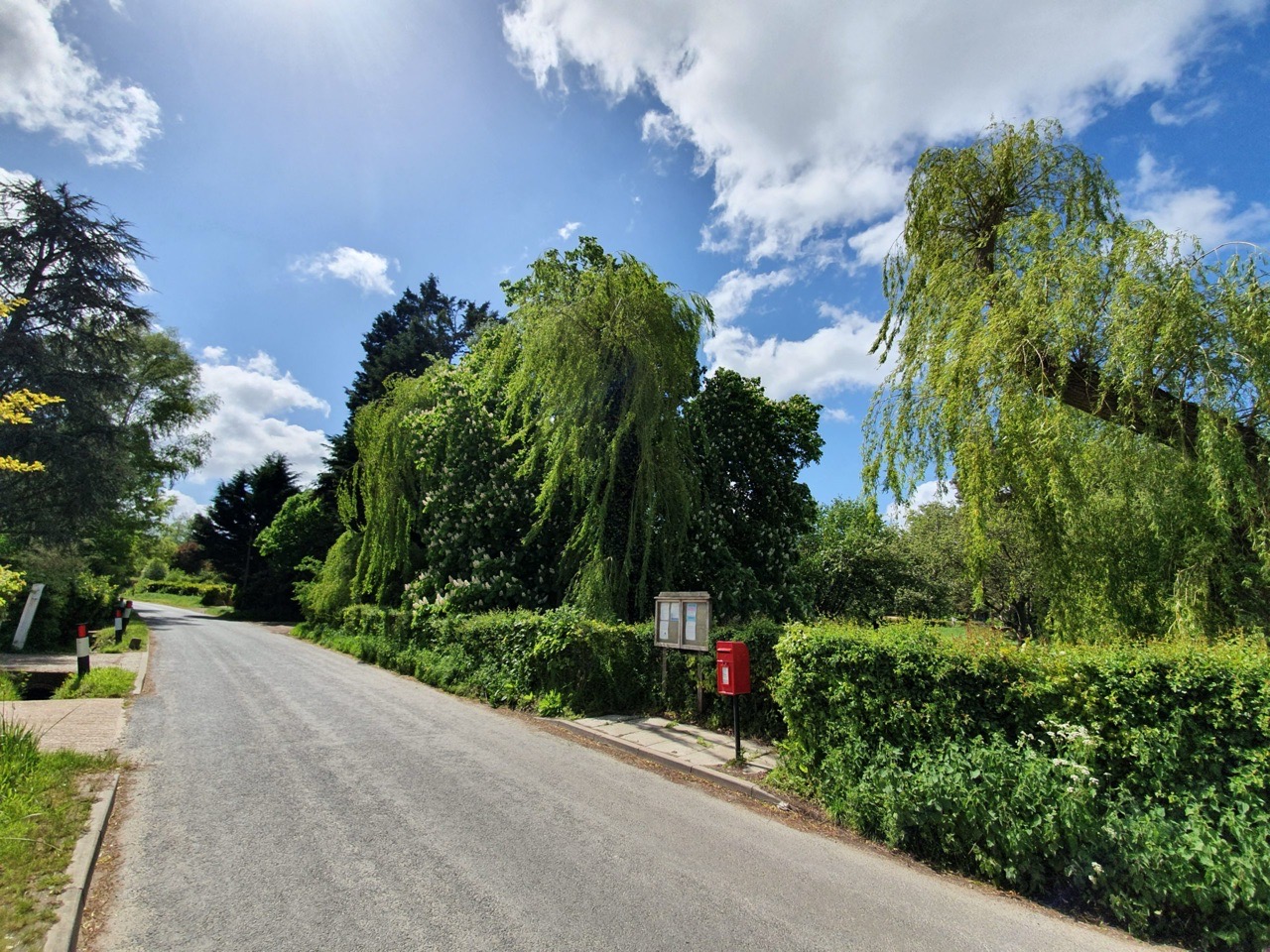
    This is today’s Post Office.

    There’s not much more to the village, Caistor Lane continues to the left, whilst the road to the right leads to villages such as Stoke Holy Cross and Poringland.

    This is the only listed building in the heart of the village, which is Queen Anne Cottage, formerly known as Caistor Cottage. The property was constructed in 1729, for the Cogman family.

    But, more about all of this in other posts…. Since I haven’t worked out most of what I need to write yet  🙂

  • Caistor St Edmund – Village Sign

    Caistor St Edmund – Village Sign

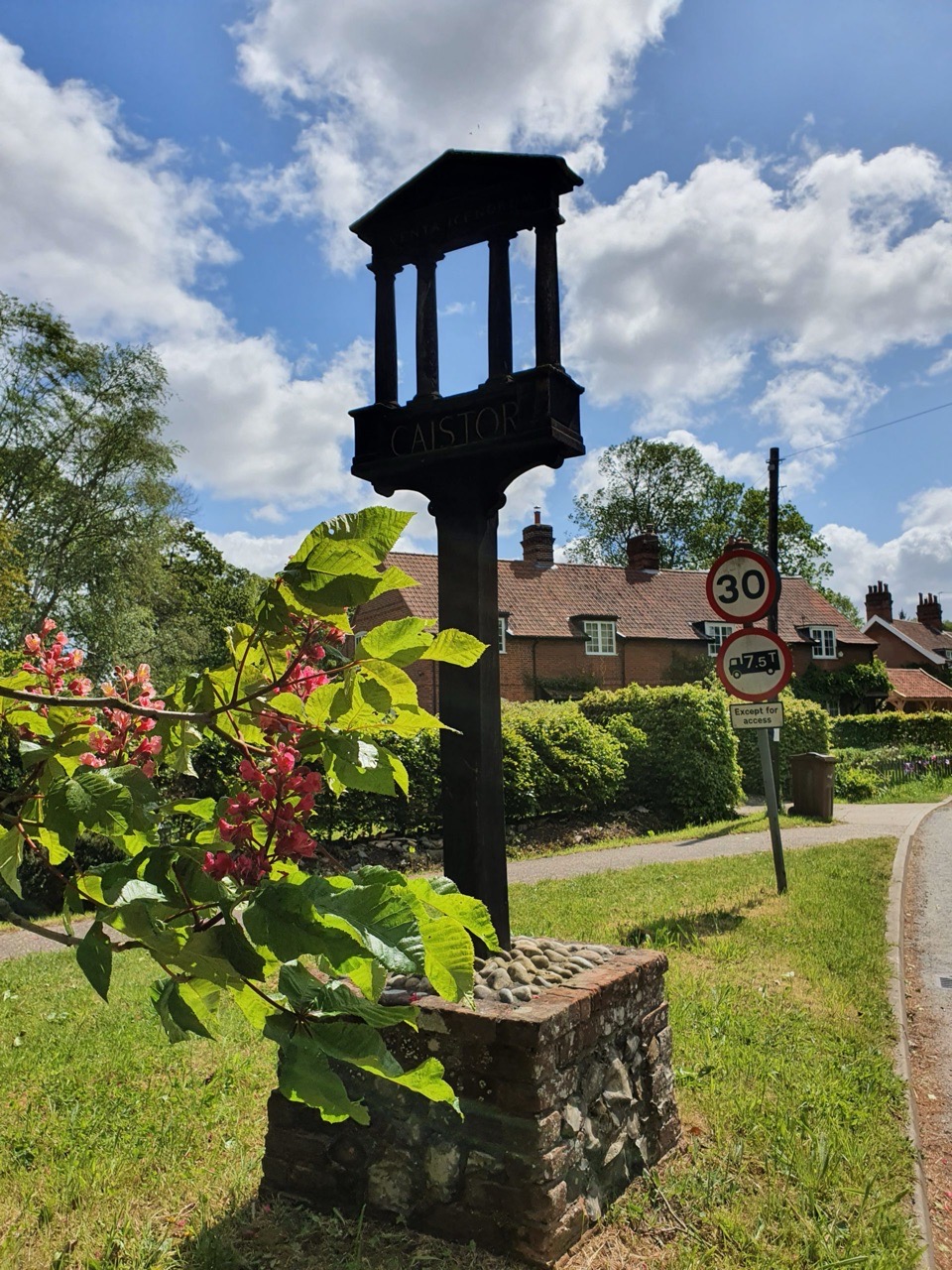
    This didn’t come out as clearly as I hoped, I’ll take another photo at some point. But, it’s a decent village sign with its columns and portico arrangement, a link to the Roman and Iceni settlement which effectively founded Caistor St. Edmund.

    It’s 100 years ago last month that Prince Albert, who became King George VI, gave a speech at the Royal Academy which promoted the introduction of village signs. He was inspired by some local examples that he had seen around the Sandringham Estate and there developed a bit of a national craze in ensuring that nearly every village had one.

    I have no idea when the village sign was erected here and I’m not an expert in such things (or indeed about anything of use), but it’s probably from around the 1970s.

  • Caistor St Edmund – War Memorial (Walter John Blake)

    Caistor St Edmund – War Memorial (Walter John Blake)

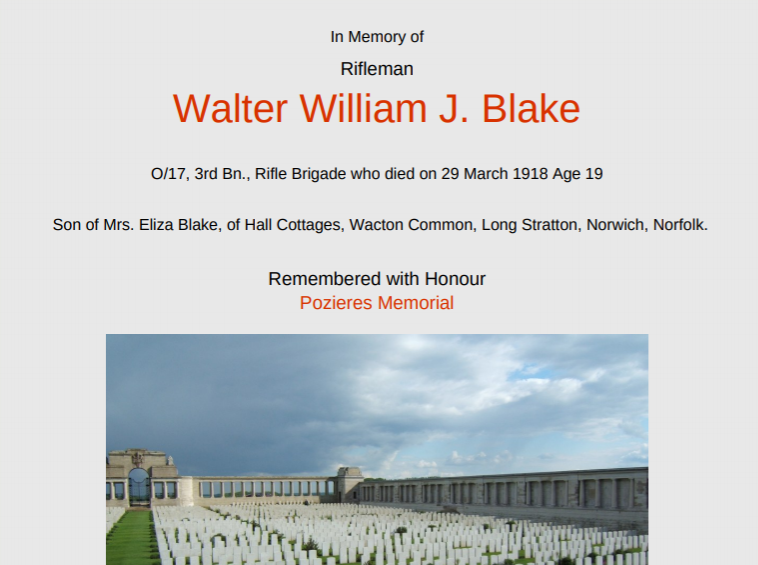
    Walter William John Blake is one of the names listed on the war memorial in Caistor St Edmund.

    Walter served in France and Flanders during the First World War, dying of his wounds on 29 March 1918 at the age of 19. He was born on 26 November 1898 and was the son of Mrs Eliza Blake, who lived in Hall Cottages, Wacton Common in Long Stratton.

    In the 1911 census, he was living in Kimberly, near Wymondham, when he was listed as being a 12-year old still at school, living with his younger brother Leonard who was aged 9, along with his mother Eliza and his father Walter Blake, who was a farm labourer.

    He’s commemorated today at the Pozieres Memorial, which is around five miles from the French town of Albert.  There are 14,700 casualties recorded here and many of those are listed only on a panel as the bodies were never recovered, but they were men in the Allied Fifth Army (renamed the Fourth Army on 2 April 1918) which was driven back by the Germans. As Blake is listed only on a tablet, I’m assuming that his body was never found.

    I haven’t ascertained where he lived before going to war, it must have been in the village as I can’t see any other connections that he had to Caistor St. Edmund.

  • Caistor St Edmund – War Memorial (Charles Edward Back)

    Caistor St Edmund – War Memorial (Charles Edward Back)

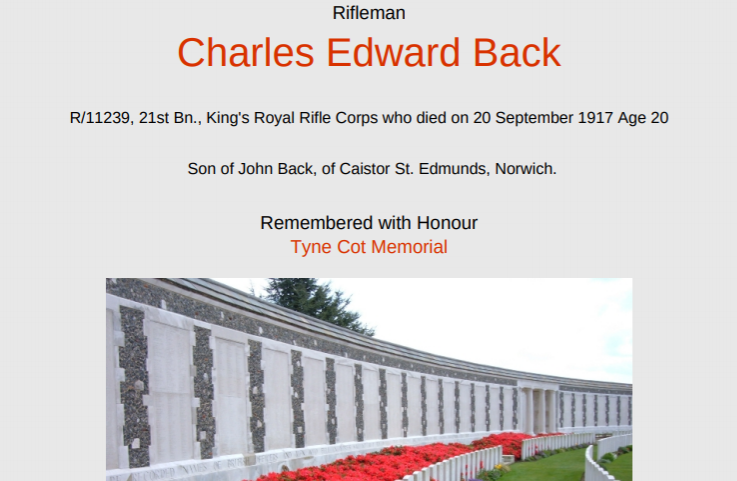
    Charles Edward Back is one of the names listed on the war memorial in Caistor St Edmunds.
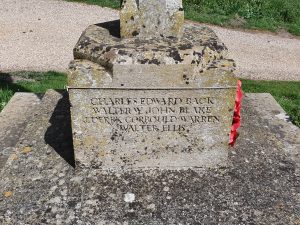
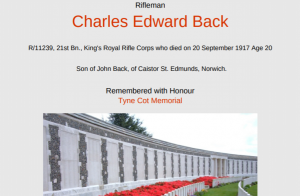
    Charles Edward Back was a rifleman who died at the age of just 20 on 20 September 1917, having started his military career serving in France in 1915. He was born in Poringland, the son of John Back, and they both worked as herdsmen (or cowman as John was listed as in the 1911 census). In that 1911 census, Back was aged 14 and was working as a yard boy, and he lived with his sister, Mabel Anne Back who was aged 12 and was a schoolgirl.

    Going back to the 1901 census, Charles and Mabel were listed, with John as the head of the household, along with Frederick Robert, who was aged 12 at that time (Charles was listed as being 4, Mabel as 2). Sadly, Frederick Robert also died in the First World War, dying in Thessaloniki in 1918.

    Rolling back further to 1891, it was clear that this was a bigger family than I had at first thought. For the first time, John Back’s wife is listed, Elizabeth Jane Back, with John working as a gardener at that time. There are also more children on the census list, Fanny aged 13, George Harry aged 11, Maud aged 9, Emma aged 2, as well as a 2-year old Frederick Robert. As well as all of these, in the census before, Albert and Kate were listed.

    So, something went wrong between 1891 and 1901, and it transpired that Elizabeth Jane Back died in 1895, at the age of just 46. So, I’m not sure who the mother of Charles Edward Back was, and although I can take a stab at that answer by looking at the 1901 census, guessing parentage doesn’t feel entirely appropriate.

    Back to Charles and the First World War. Since he is buried at Tyne Cot, that means he would have likely been involved with the Battle of Passchendaele, with the date of his death suggesting he was involved with the Battle of the Menin Road Ridge meaning he was one of 20,255 people dying in that battle.

    The above photo is taken on the day that Charles died, at the same location, although the photo shows a different regiment.

  • Caistor St Edmund – War Memorial

    Caistor St Edmund – War Memorial

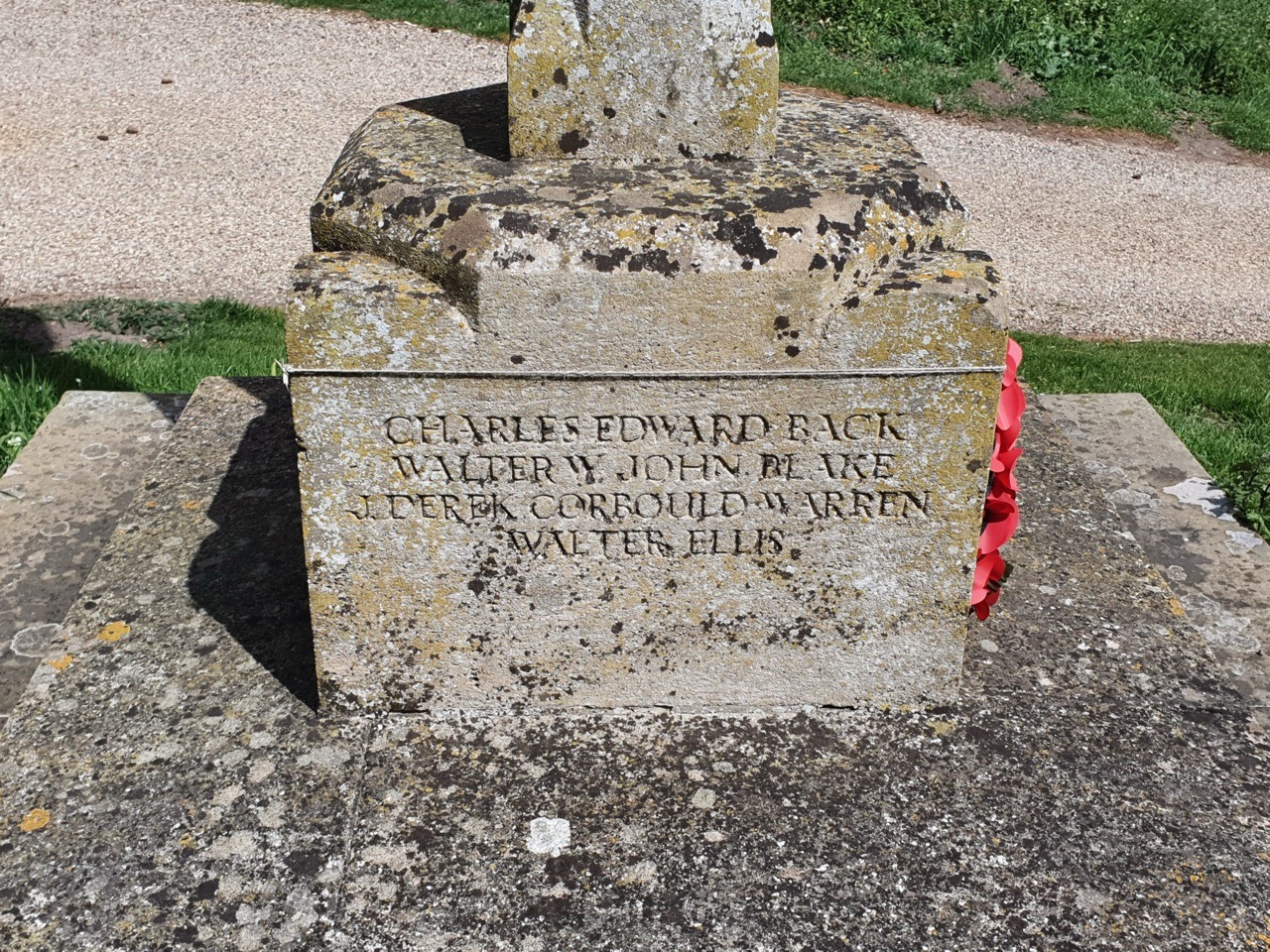
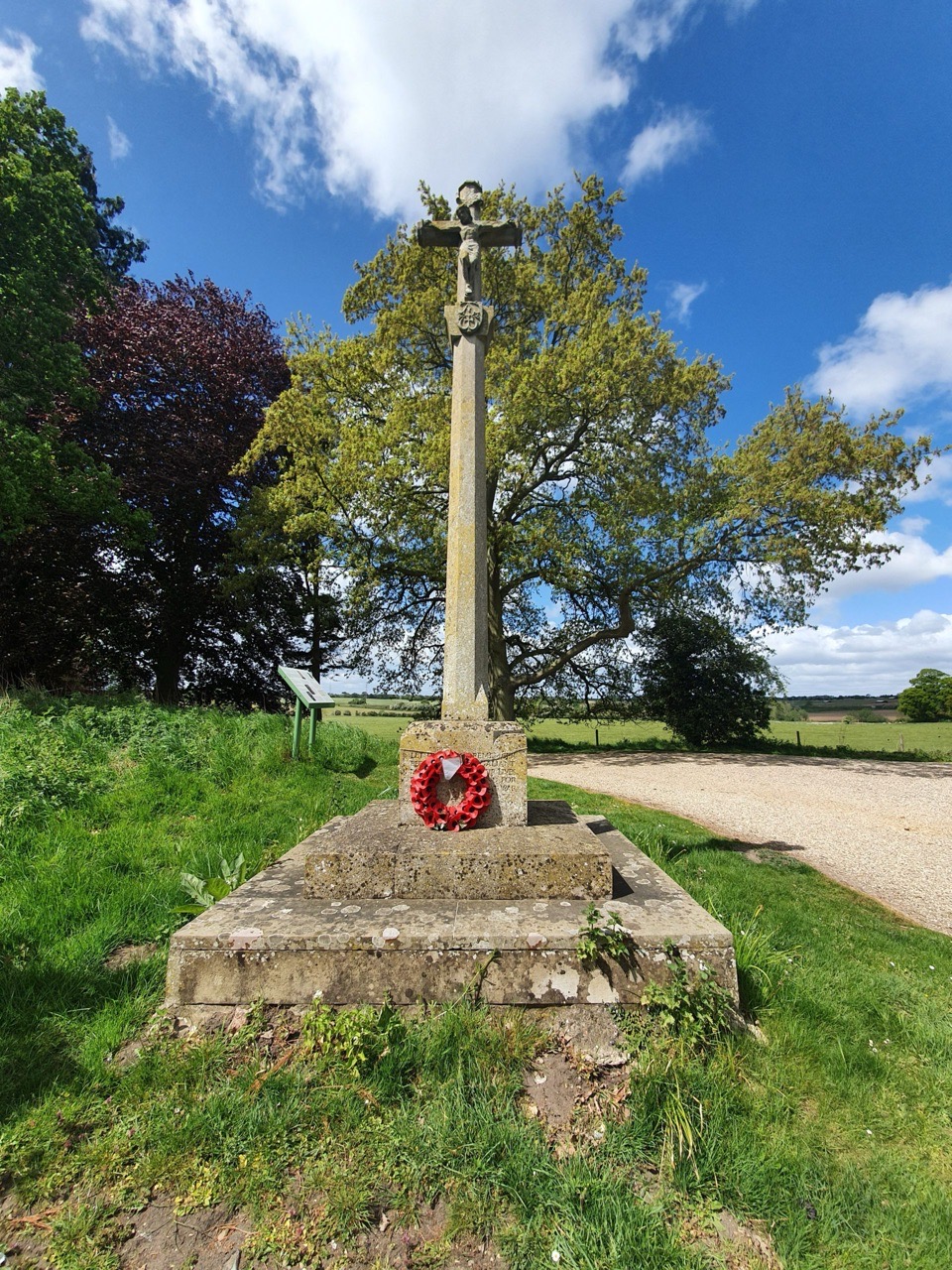
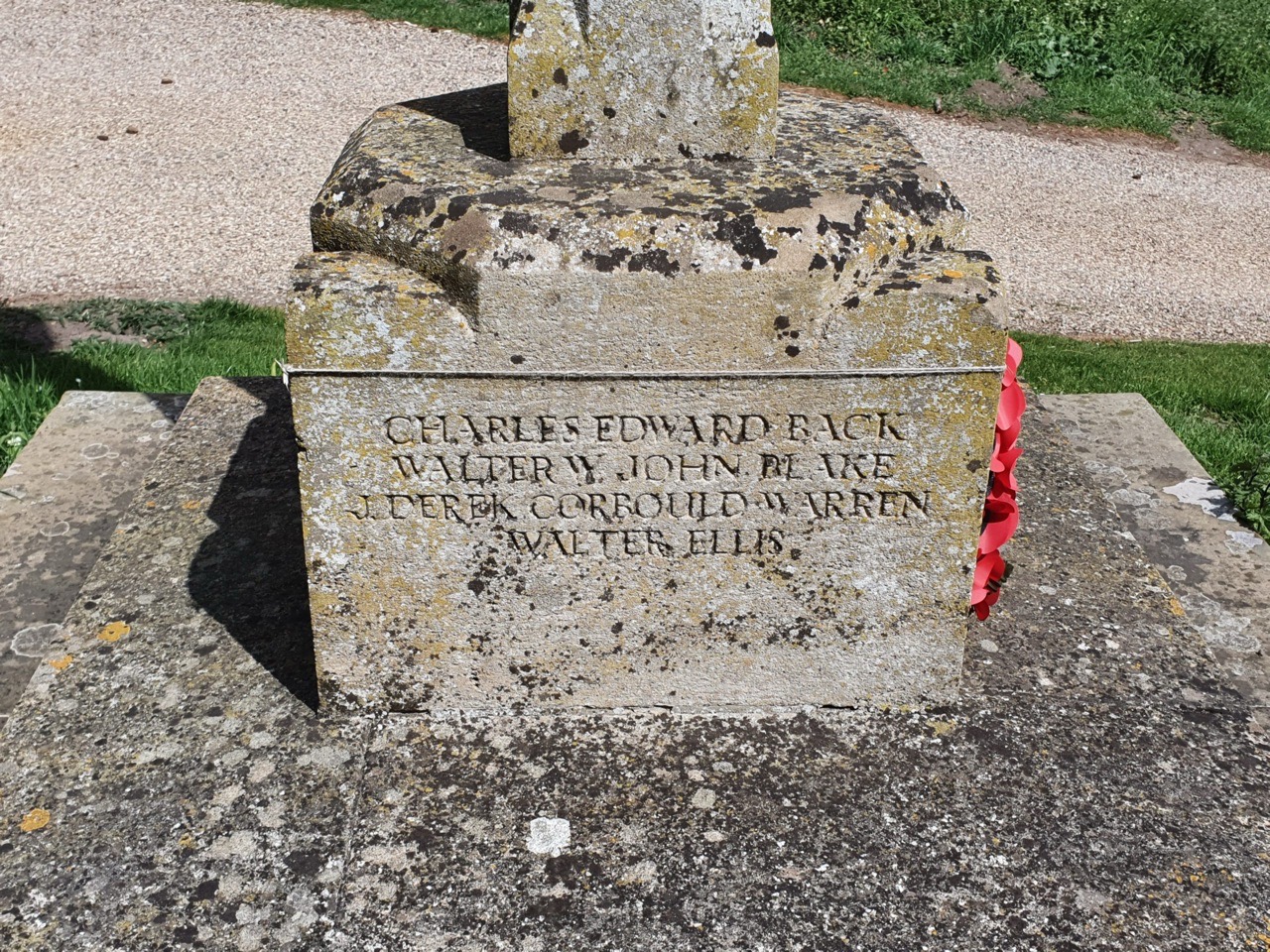
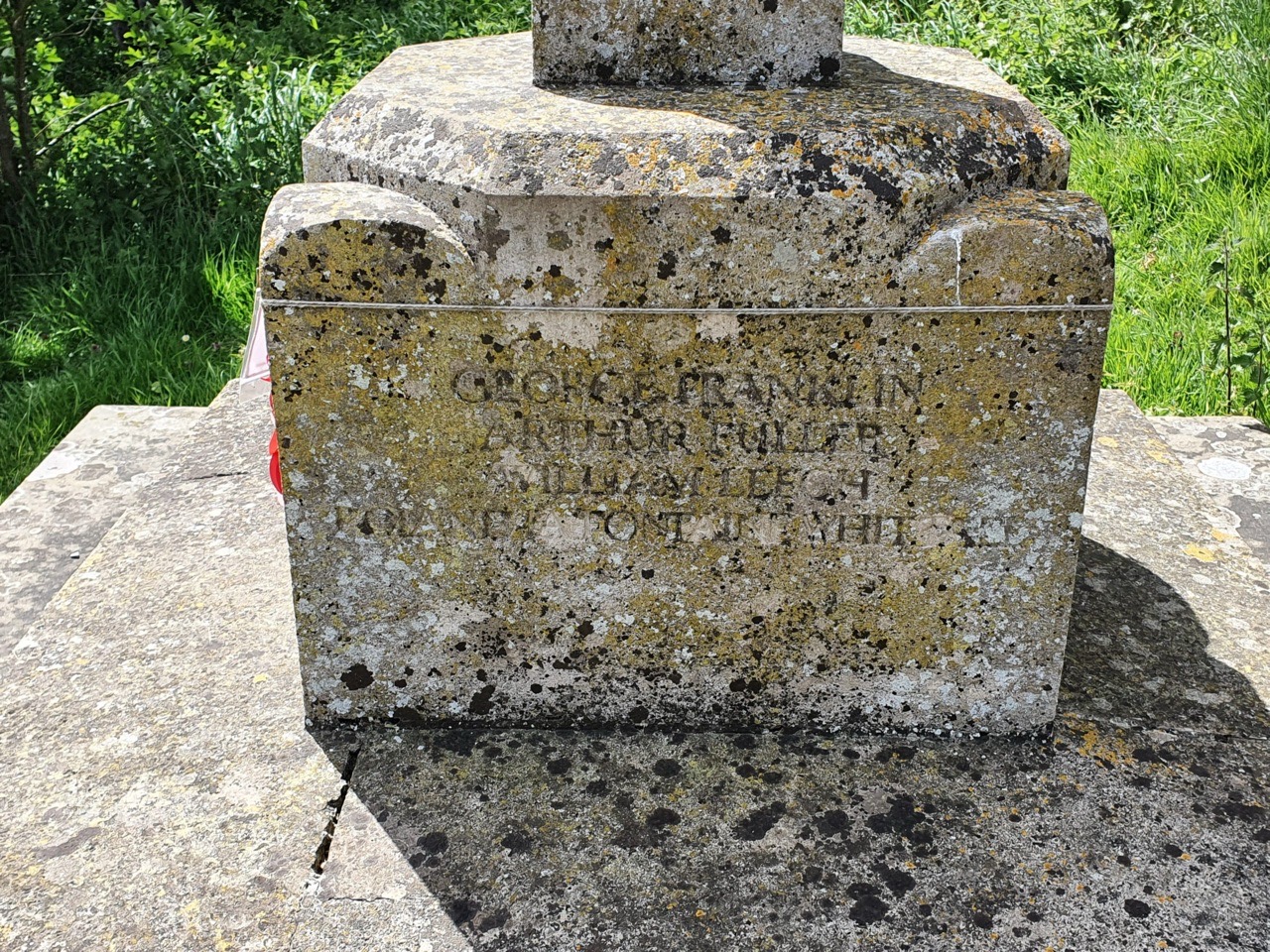
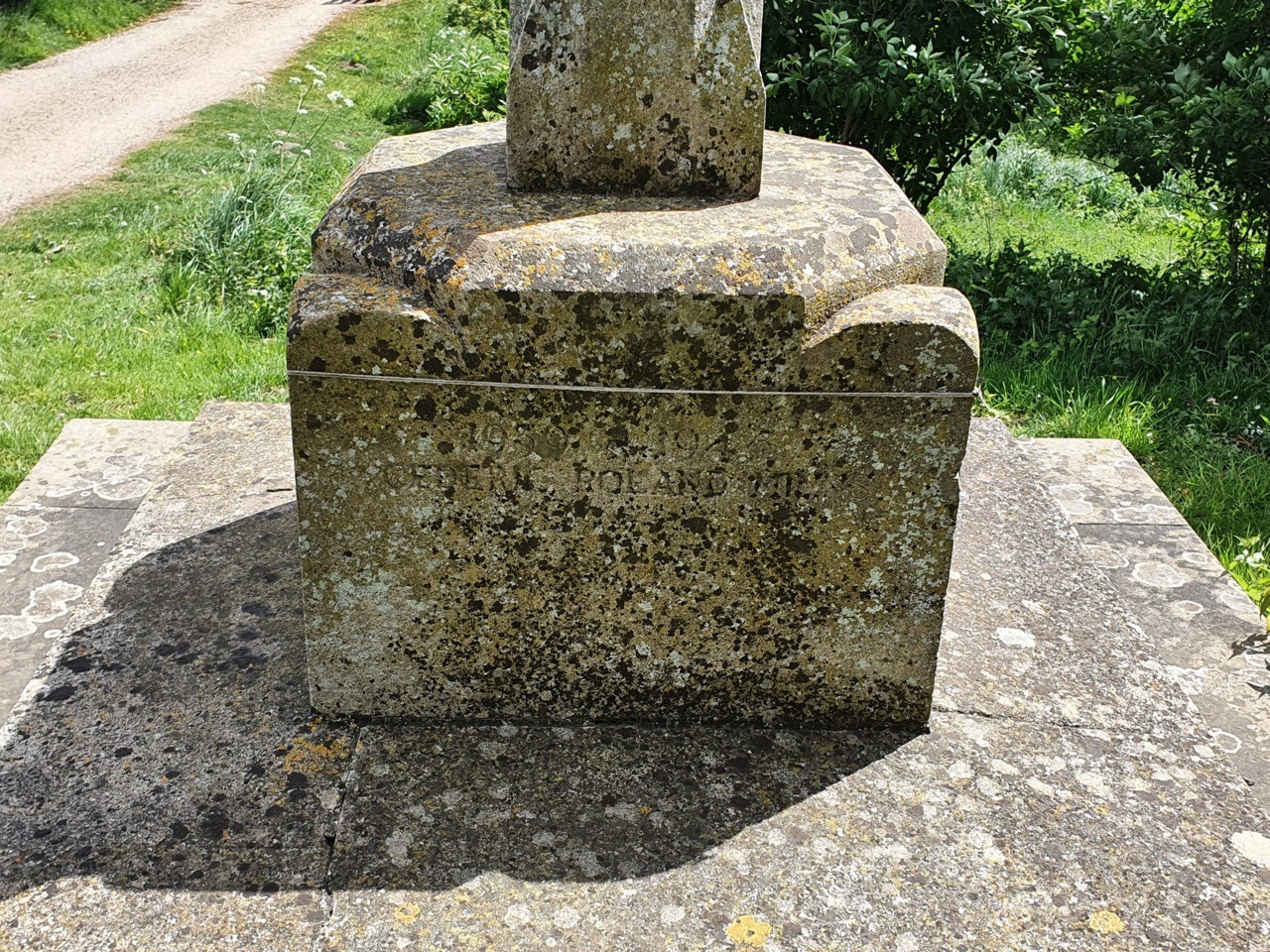
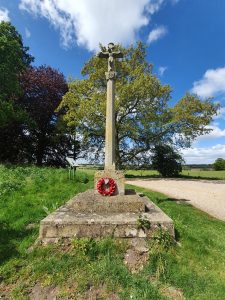
    The war memorial in Caistor St Edmund is located near to the entrance of the Church of St. Edmund. It was unveiled in 1922 at a ceremony overseen by John Corbould Warren, with eight names listed on it, including Warren’s son. There were only 32 households in the village at that time, so this was an enormous loss to Caistor St Edmund.

    Fortunately, the war memorial is well looked after and there’s an information board with some details about the eight men who died, as well as another one later added to the memorial who died in the Second World War. Given that, I’ll post individually about those who died, partly to help me understand something about what this village looked like just over 100 years ago.

    Charles Edward Back.

    Walter John Blake.

    J. Derek Corrould Warren.

    Walter Ellis.

    George Franklin.

    Arthur Fuller.

    William Leech.

    Roland La Fontaine Whittall.

    Cederic Roland Minns.